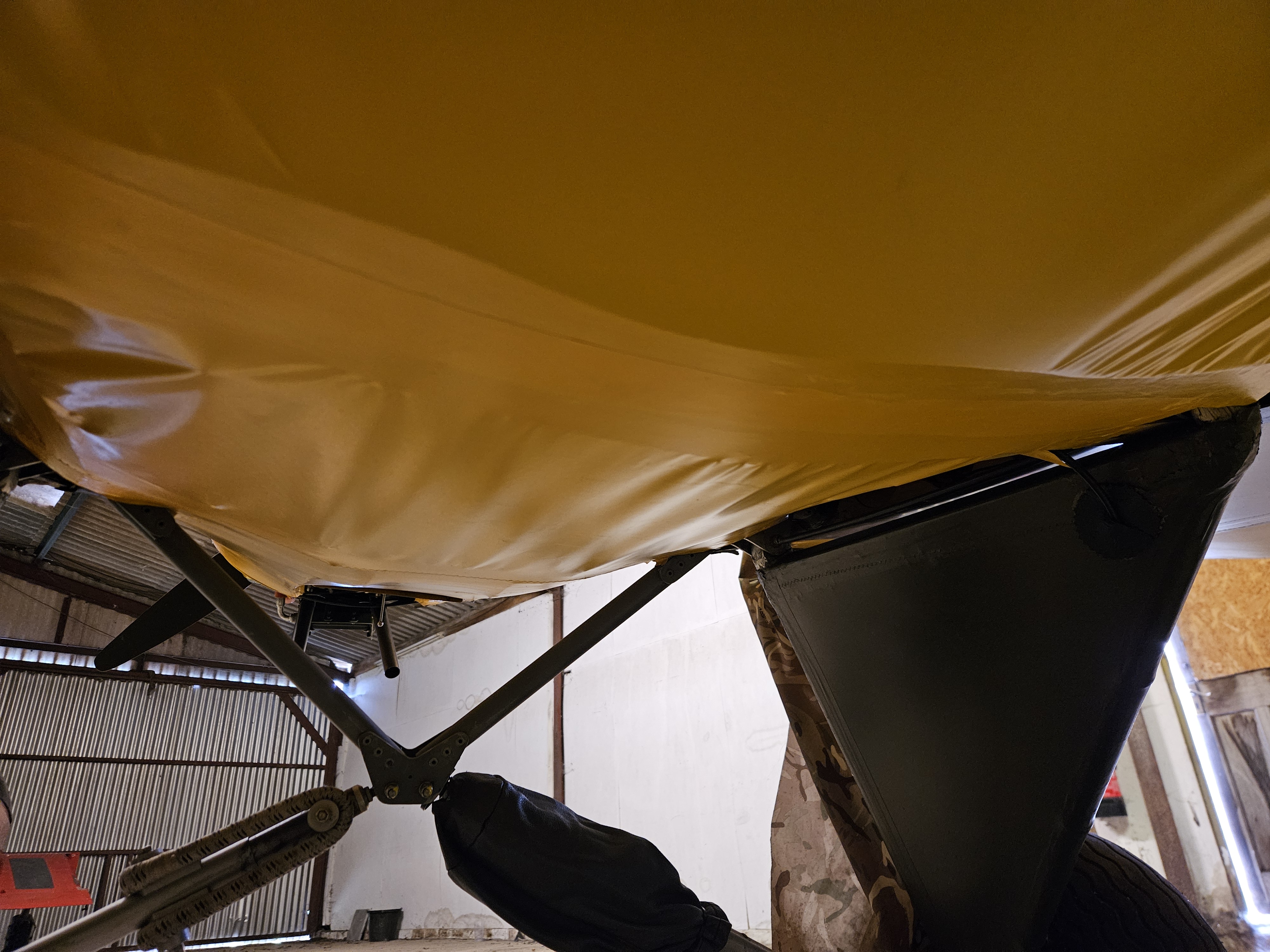
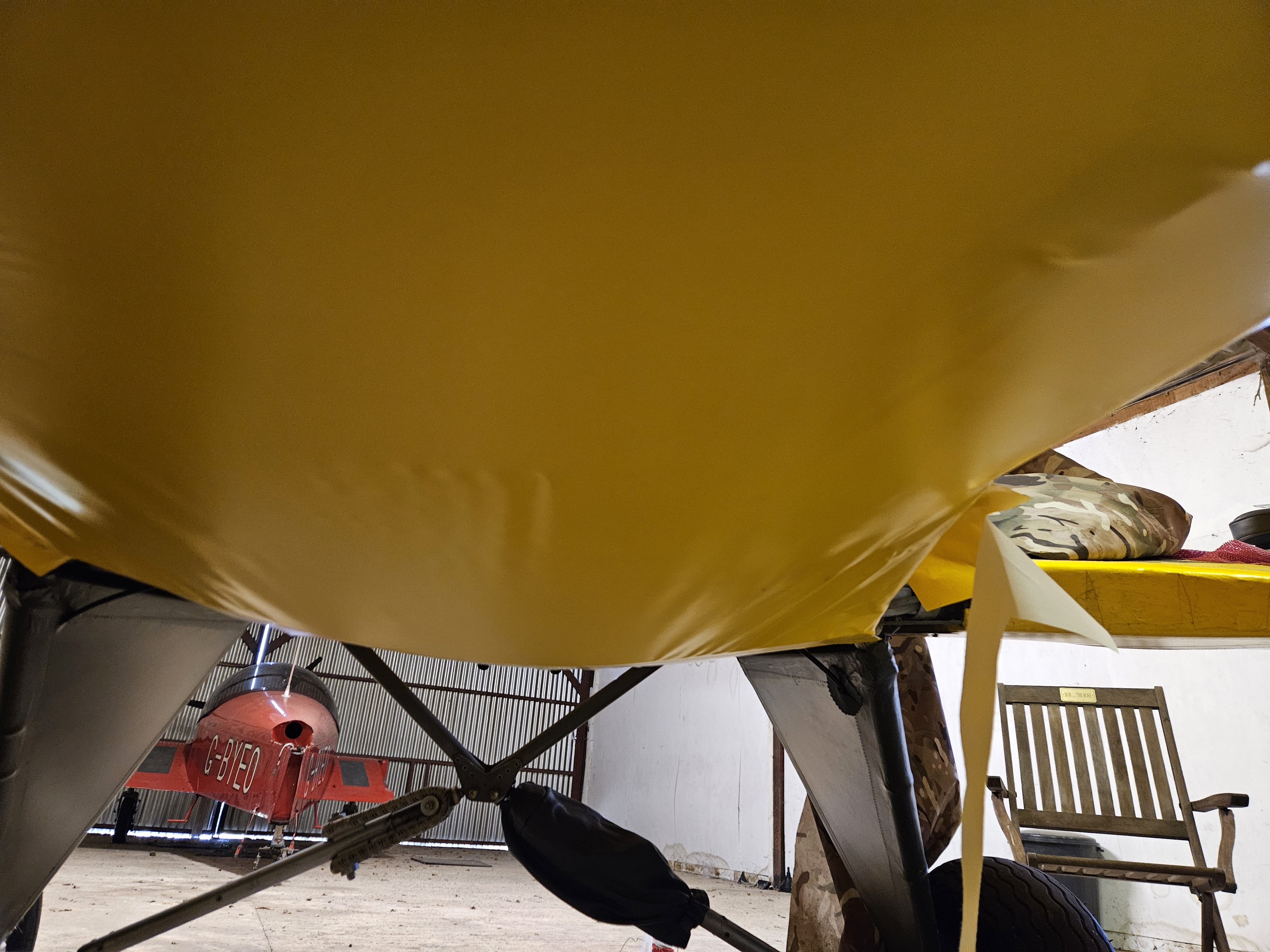
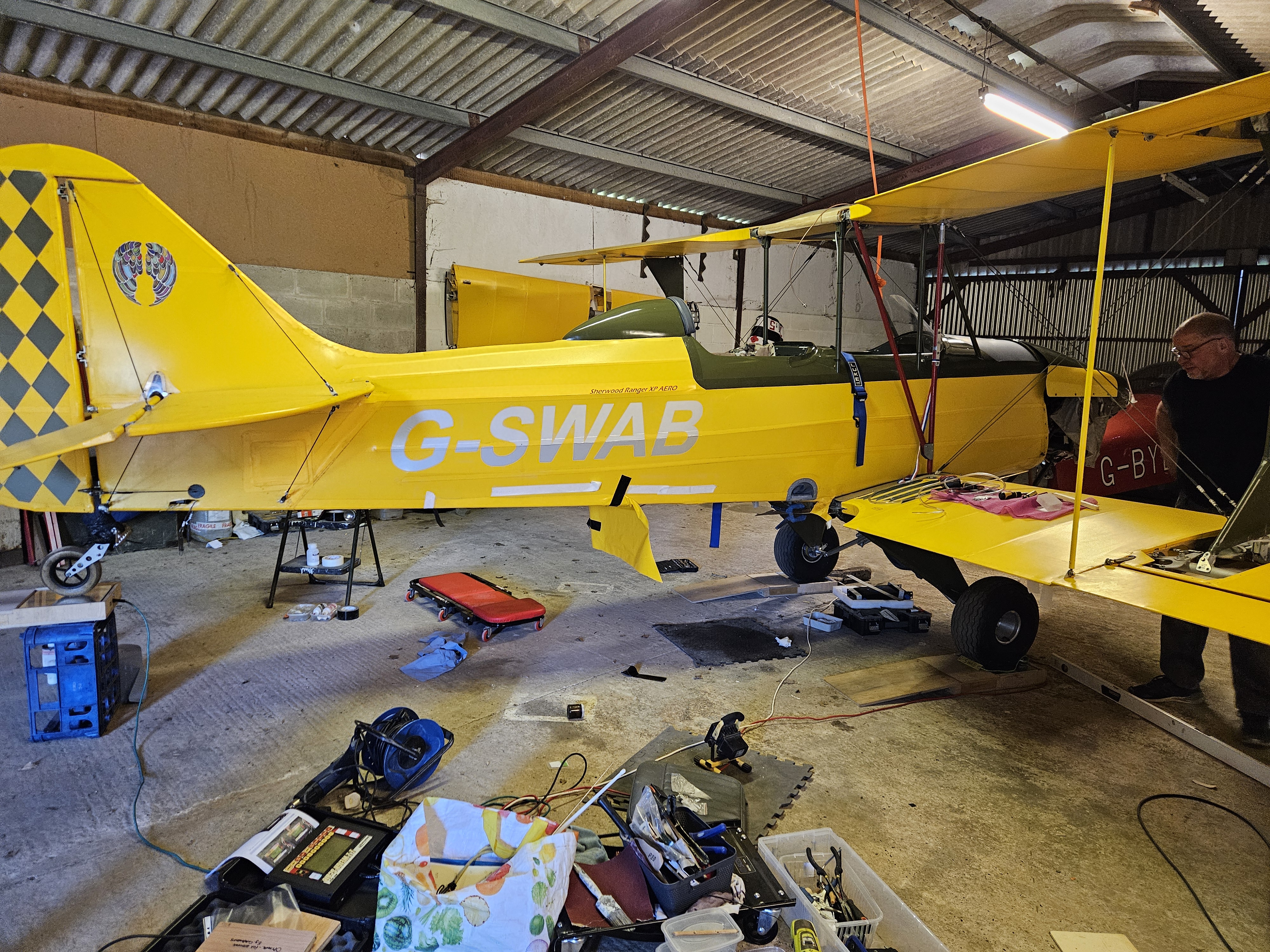
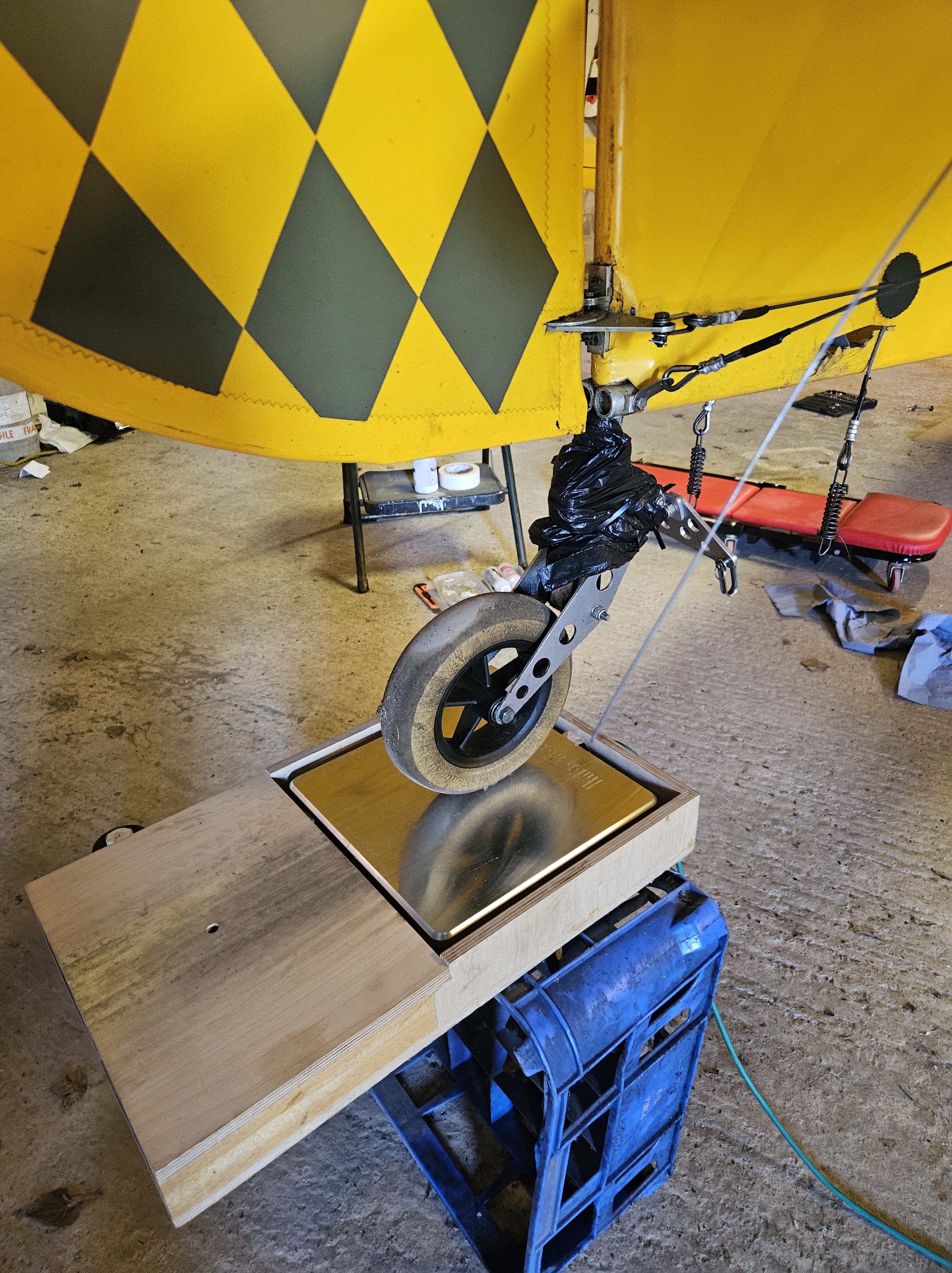
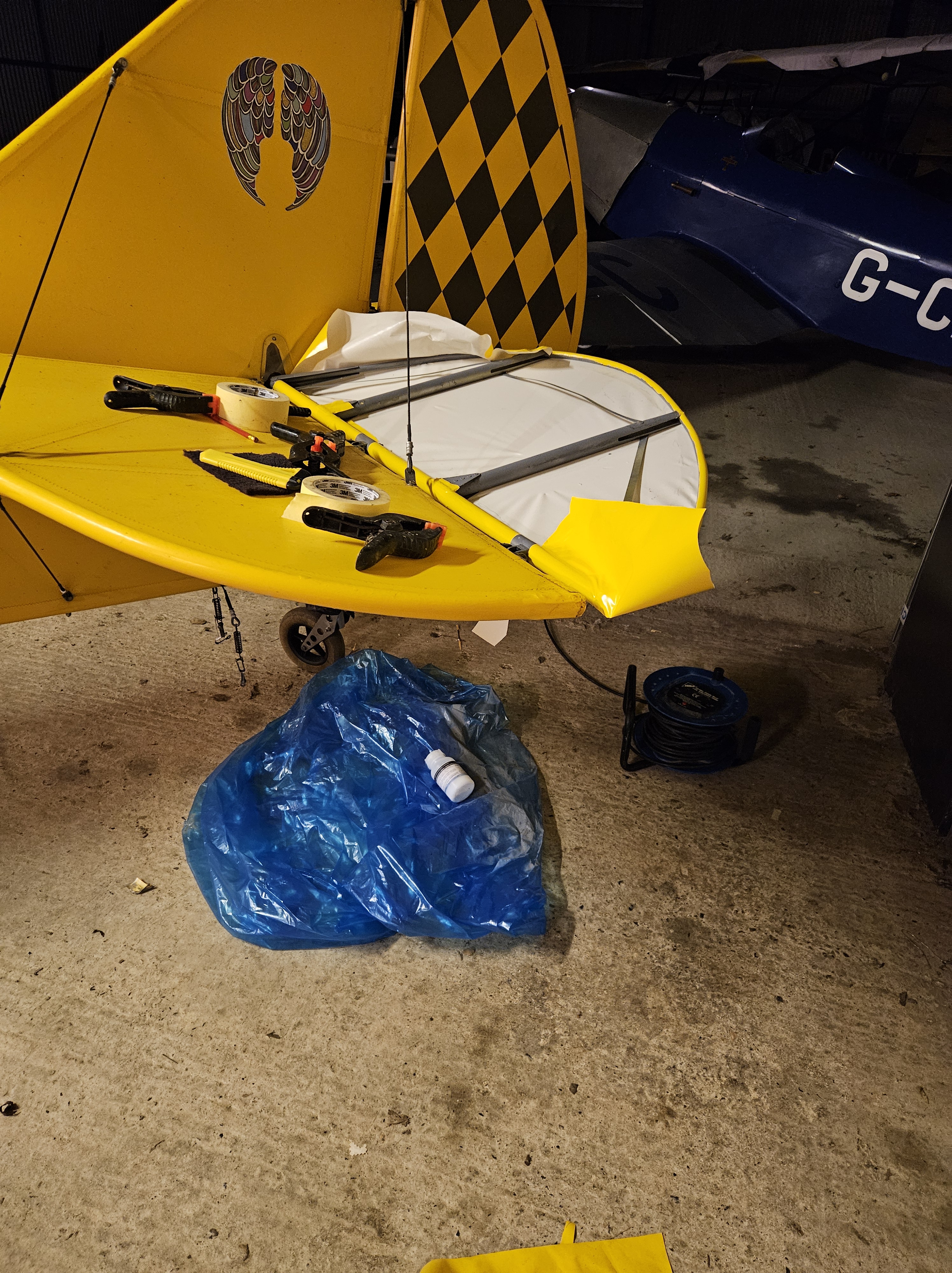
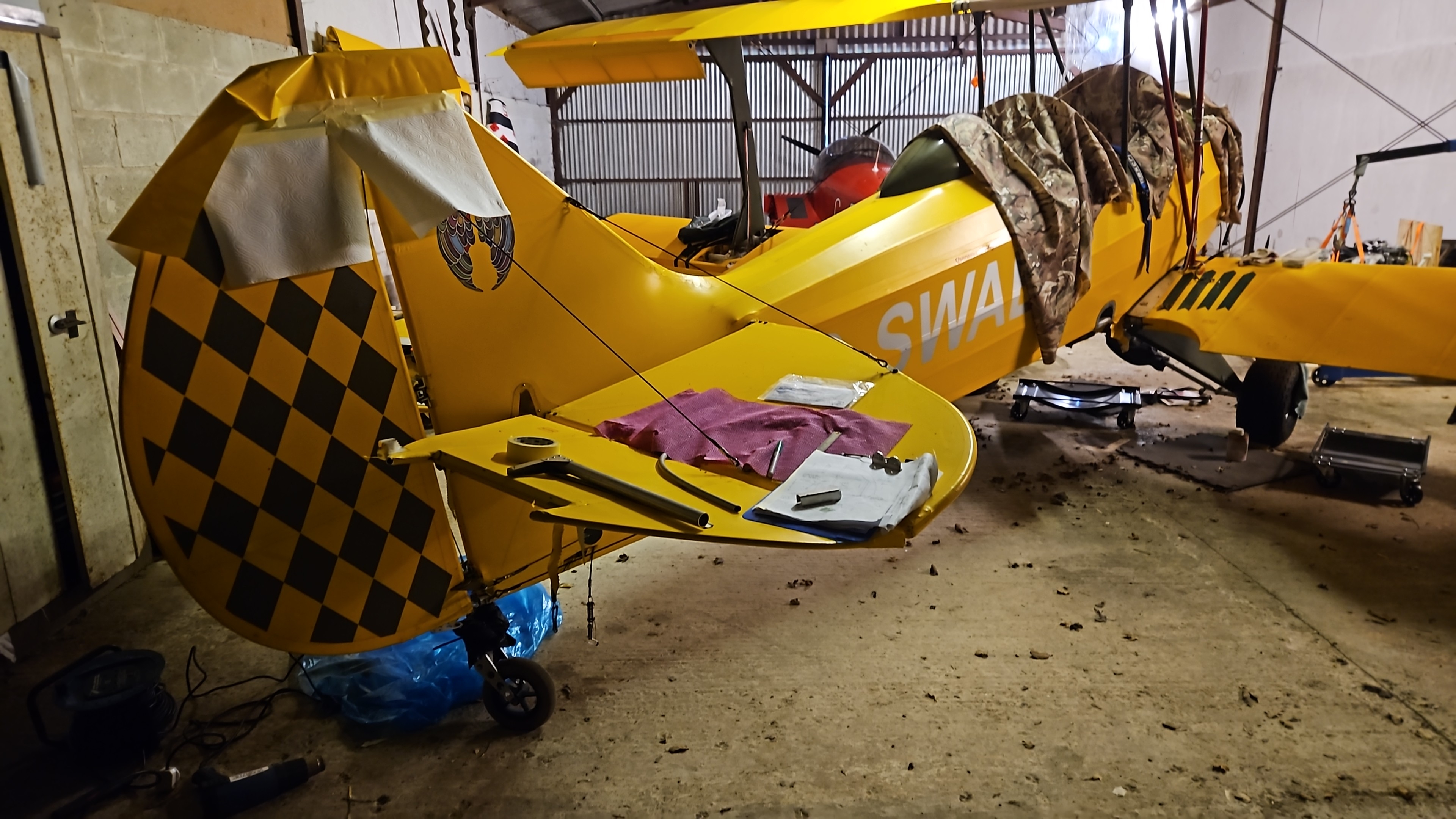
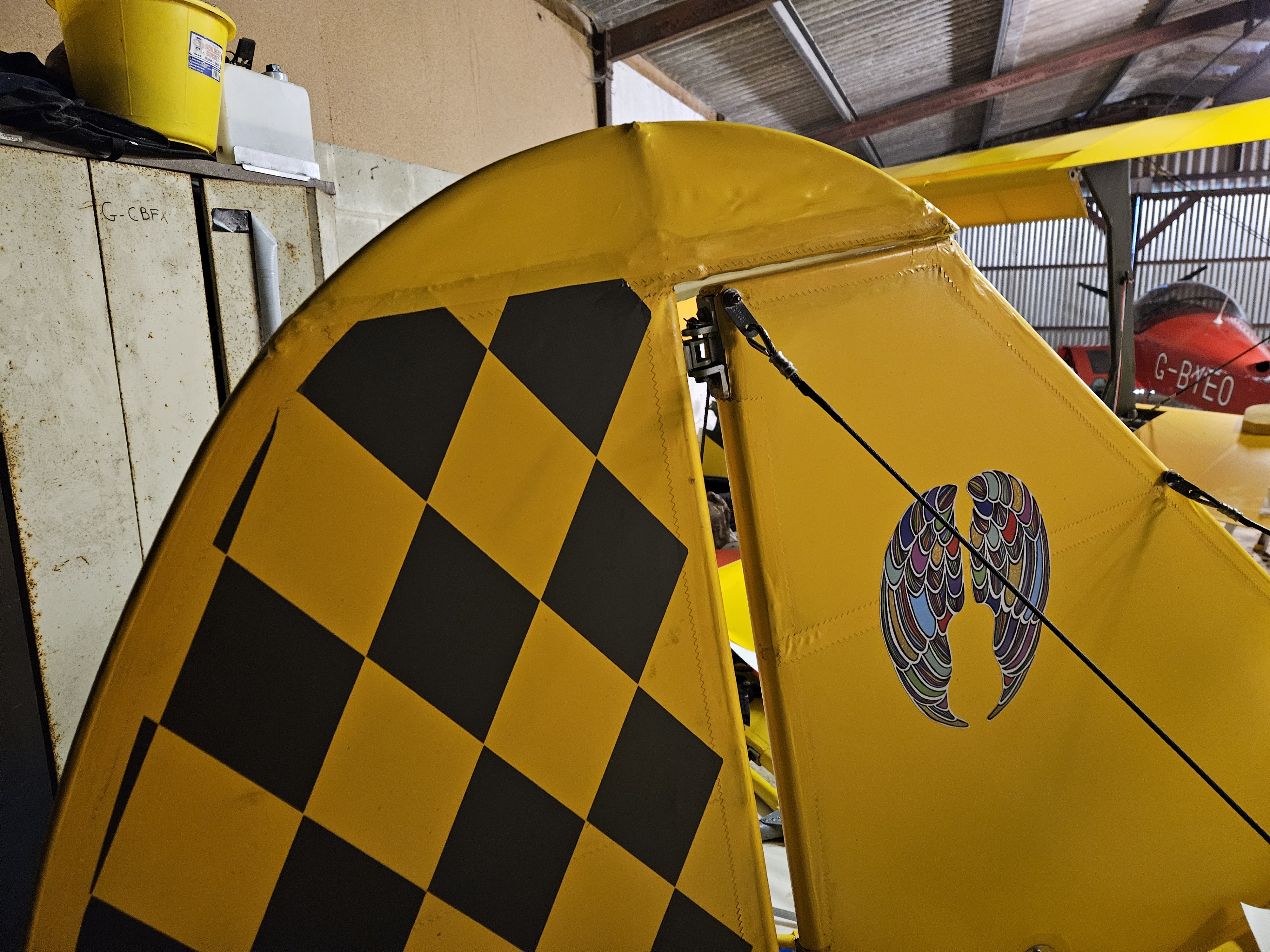
Having covered the first set of (4) wings nearly 7 years ago I’d forgotten how fiddly it can be 😊
Its a mix of frustration and sheer delight as the heat gun tightens everything to perfection
All the little bits in between are the challenging bits …
Making sure all ‘hard’ edges are chamfered down
Making sure you mark the templates for both Top and Bottom covering before sealing one side down
Checking that you have pre glued the wood surfaces as dried off surfaces don’t look like they have been prepped
Getting sufficient pegs or tape to hold wings down whilst you pre mark the glue areas
Getting the overlaps right.. in terms of size (top always goes OVER the bottom)
One key thing to remind myself .. once you have trimmed and pre glued and let it go off and get to the exciting stage of fit .. don’t charge ahead and try to tackle and shrink straight away
The shrink rate is about 25% and can easily pull the tag points away if they haven’t been allowed to cool
Having had the repaired wing back for a few weeks I have had time to replace aileron mounts, prep the bare wood (repaired) sections and add new rear strut support mounts, it was time to remove the wing (Port Upper) and drive it home.
Safely in the garage, I could finish off the material landing plates where the glue had eased out and present some new Cub Yellow Oratex up to mark up the undersurface of the material where Oratex glue needed to go.
The first time i did this (some 7+ years ago) I overmarked the underside and the marks showed through in parts. This time I used feint marks with a chinagraph lead so as not to make too much of an impression.
The underside of the upper wings have 2 large (removable) inspection panels so I’m changing from using a full length piece of material (root to tip) as its quite wasteful.
Instead, I’m terminating at the panel where the rigging cables and strut fixing plates are.
This saves quite a bit of material as well as making the size of the material you are working with more manageable and less like a slippery eel !
I usually leave the hotmelt glue to go off overnight although I know you can use a heat gun to accelerate the drying.
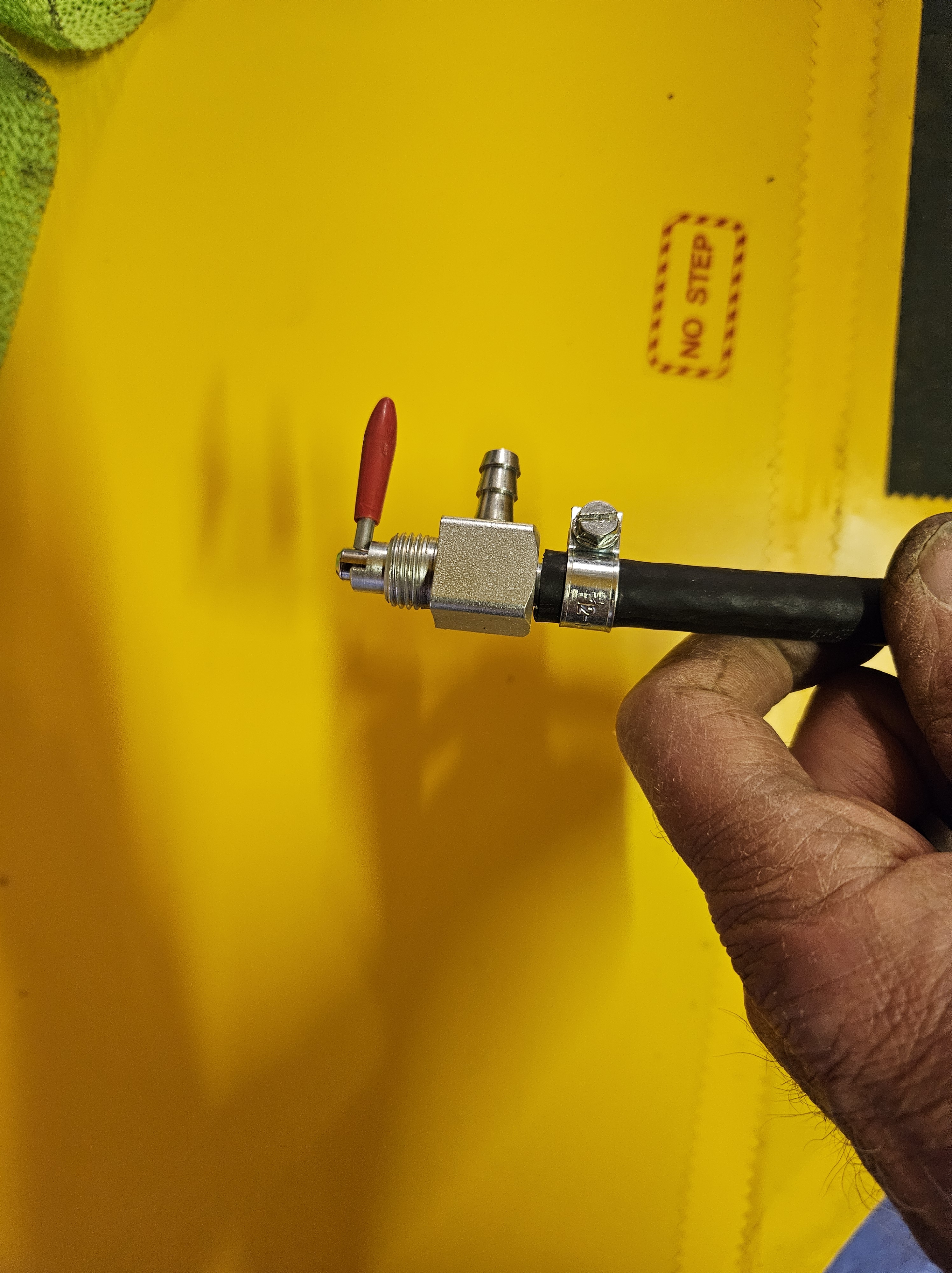
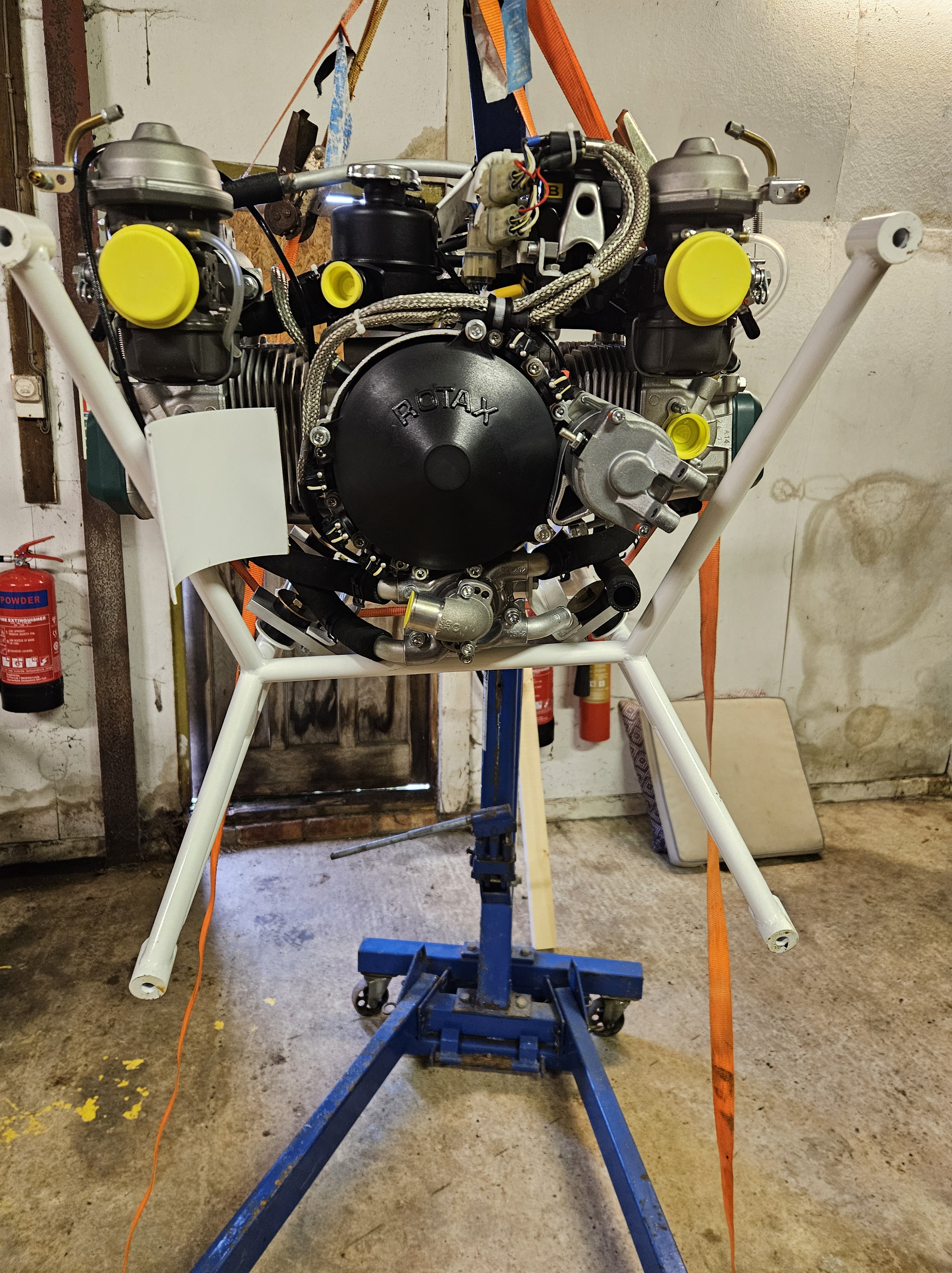
One of the things I’ve been concerned about is that the new Rotax 912 and new engine mount have meant that the coolant tubes run is too close to the engine mount bolts and the coolant exit pipes (that leave the water pump).need to angle slightly to ensure the coolant rubber tube misses these
A bit of research has identified how these pipes can be loosened and angled
Still struggling with the cooling system on a Kitfox IV w/ 912ULS.
In order to get the final hose installed from cylinder 4 to the water pump, I need to adjust 4’s cooling inlet fitting by about 10 degrees so it’s not pointing directly at the engine mount. There’s no way to install a hose without a kink in it otherwise. (Old hose had significant kink.)
Looking through the MM, I don’t see any text about removing or adjusting those fittings. There is a star next to them (page 336), but I find no correlating star in the text.
Going back a few pages to the water pump disassembly and reassembly, the same part numbers can be removed after heating to 180 degree F cleaned and re-assembled with a minimum of 5 turns and Loctite 243.
Is the procedure the same for the cylinder mounted elbows as the water pump? Am I missing something in the MM text?”
Seeing a LinkedIn colleague post something about the early days of the Schneider trophyseaplane races reminded me of an amazing 2nd visit, my first being over 30 years ago, to the beautiful museum just N of Rome at Lake Bracciano
Years ago, when I first visited as a 20 something youngster, these were kept in a dark old wooden shed, covered in dust and dirt
Now, with a state of the art building and polished floor, they are very much looked after
The restore continues at a pace that is slower than I would ideally like ..
There are quite a lot of ‘moving parts’ in this project and it’s nit just a case of ‘go out and buy sonething’
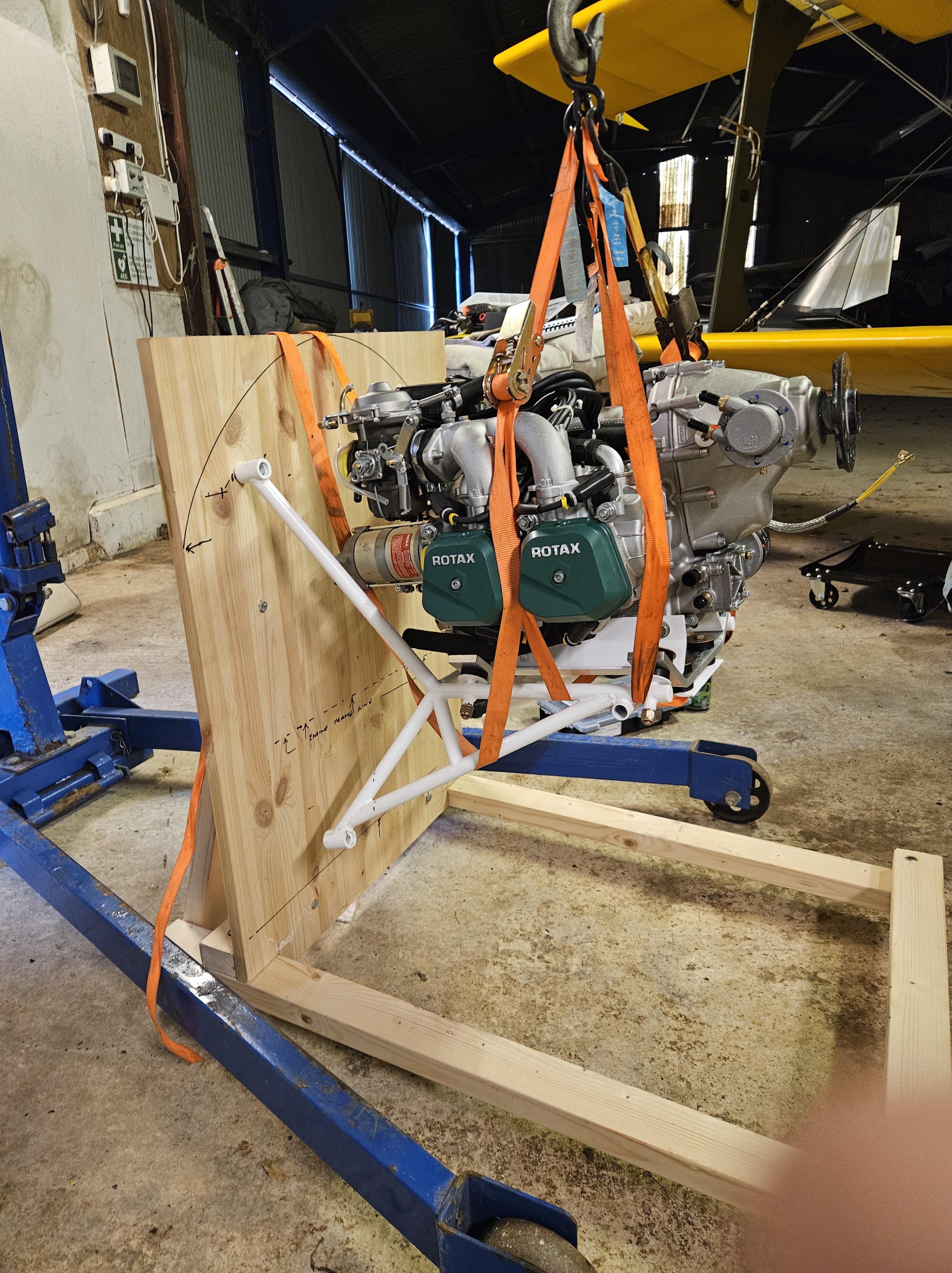
The engine is in .. but may need to come out again so we can see if it’s possible to angle one of the rear cooling pipes to make the pipe feed miss the mounting brackets … getting the engine in ..with all it’s rubbers and multiple angled brackets and bolts was a bit trickier than the ‘out in 30 mins’ Jabiru !
Bob, at Priory, suggested leaving the engine in its mount and simply removing the 4 mounting bracket bolts from the bulkhead .. way easier
The repaired wing is now hanging in my garage at home to allow final finish and prep for recovering
The upper tank edge ribs are in place and capping Beech strips going in which has meant I can now measure the balsa rear trailing edge. This will then allow the ply Oratex landing plates to be fitted and the running of the fuel line from the top tank downwards.
At the same time, I’ve had Will helping review what is the best way to repair or replace the scuffed Oratex on the tail feathers.
He decided that removing back to a rib line was best bet, which means a bit of cleaning up, glue application will give me a good strong termination point for the small repair above (rudder) and outer edge (elevator). Ironically, both these were scuffed NOT in the crash but in the claim lift to turn her back over from upside down
The elevator trim tab is almost complete and just needs the hinge shaping around the tube-rib
Finally, the change of some aileron mount end brackets- which was spotted by the factory, will be completed in the next few days.
My very dear friend Christophe who lives just South of Paris has been a great help !
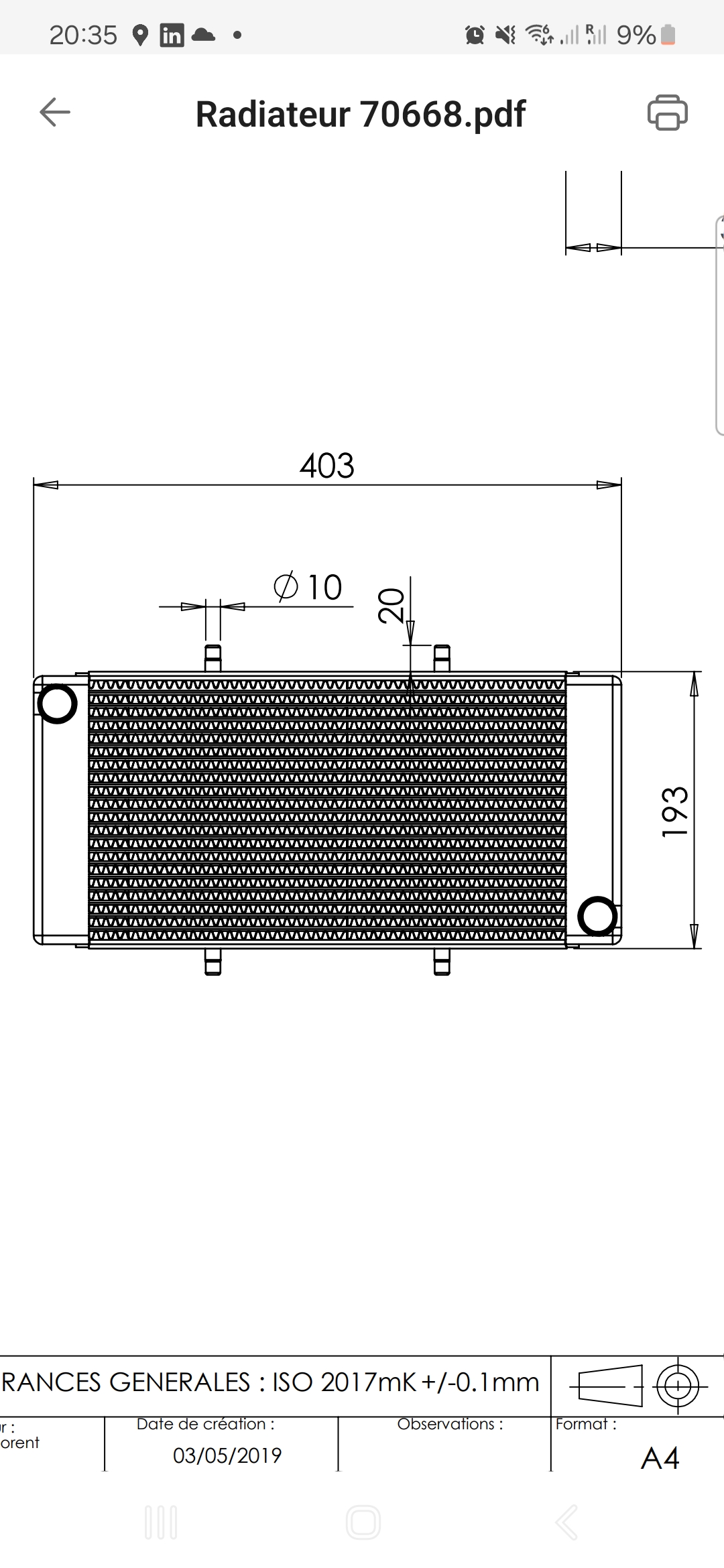
I have been working closely with him to help contact possible sources in France who have several Rangers with conversions to Rotax 912s and so have exhausts and cowls and cooling specs that could really help progress…
Having stripped the slightly damaged wing completely of Oratex covering and a more detailed inspection we collectively agreed it should and could be repaired.
This would entail drawing out a proposed ‘repair scheme’ which Algy and The Light Aircraft Company did noting how the damaged leading section of Rib 2 would be sandwiched either side for the spar to the nose ..leaving the old part in place as a KT point and added residual strength.
This has made a super string excellent repair job and, with the addition of a full new Rib 1 we were nearly ready to go.
To gain access however, we had had to remove the partially damaged 1mm ply leading edge so this required new scarfed sections to be made up and fitted.
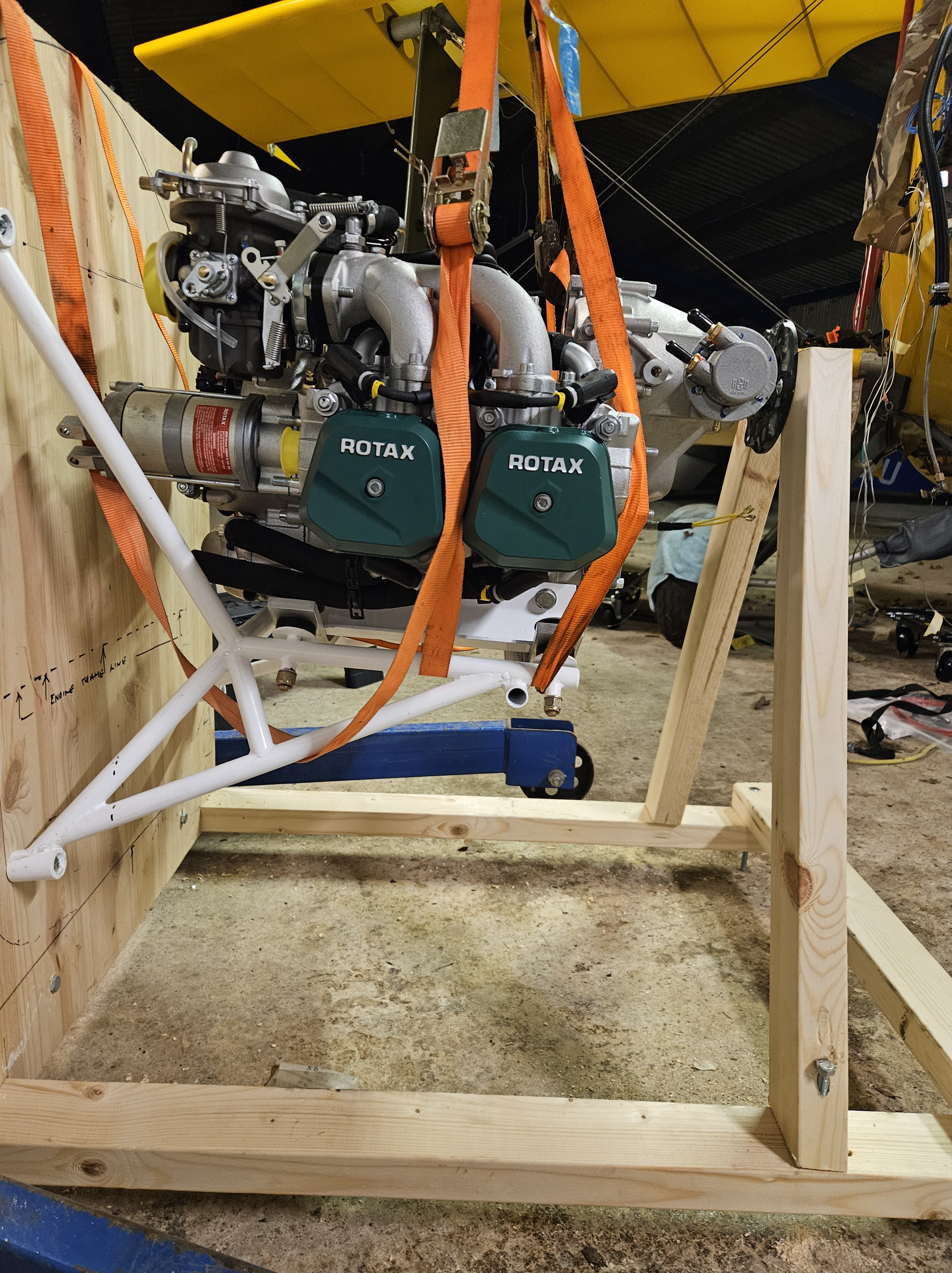
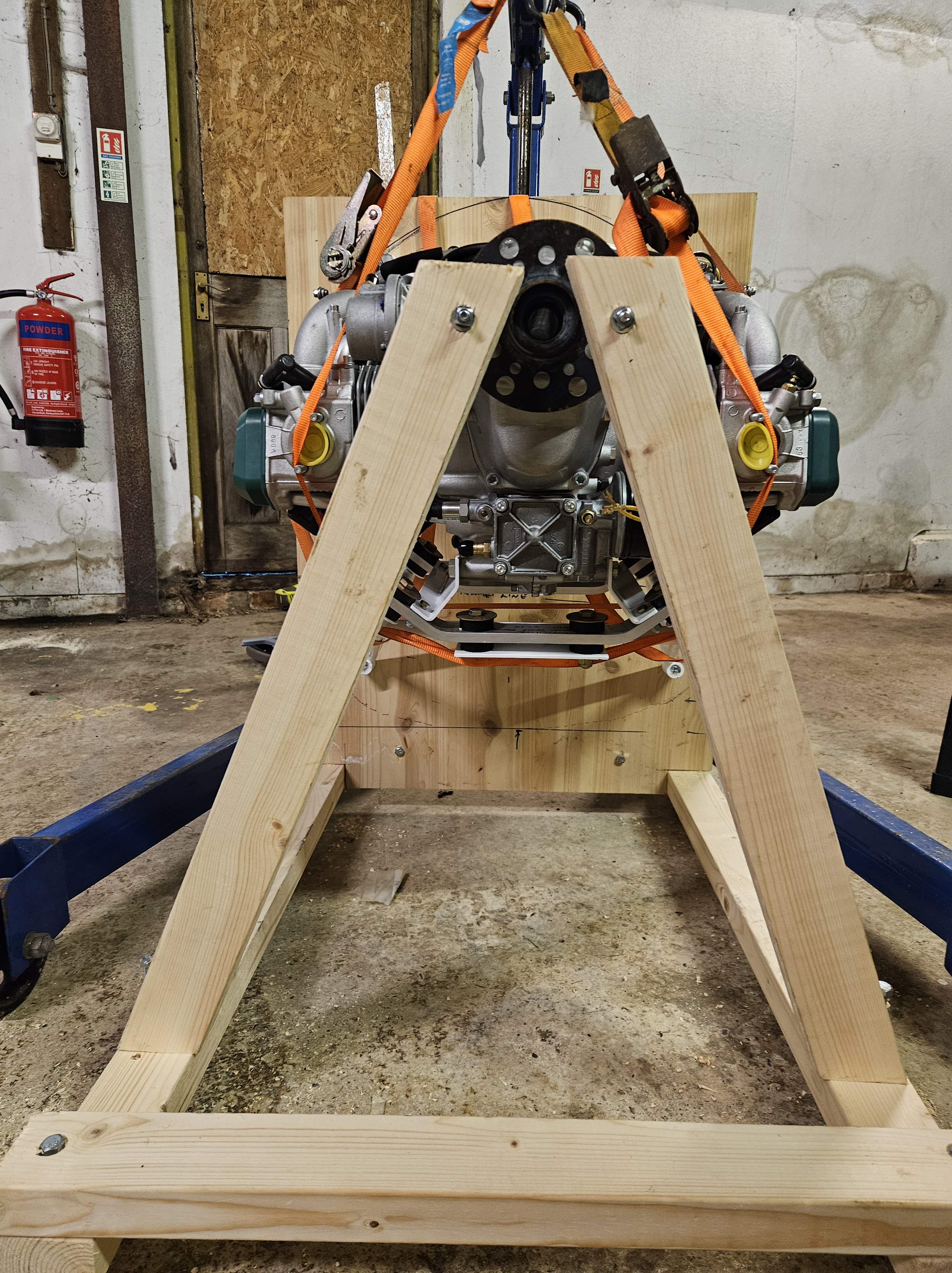
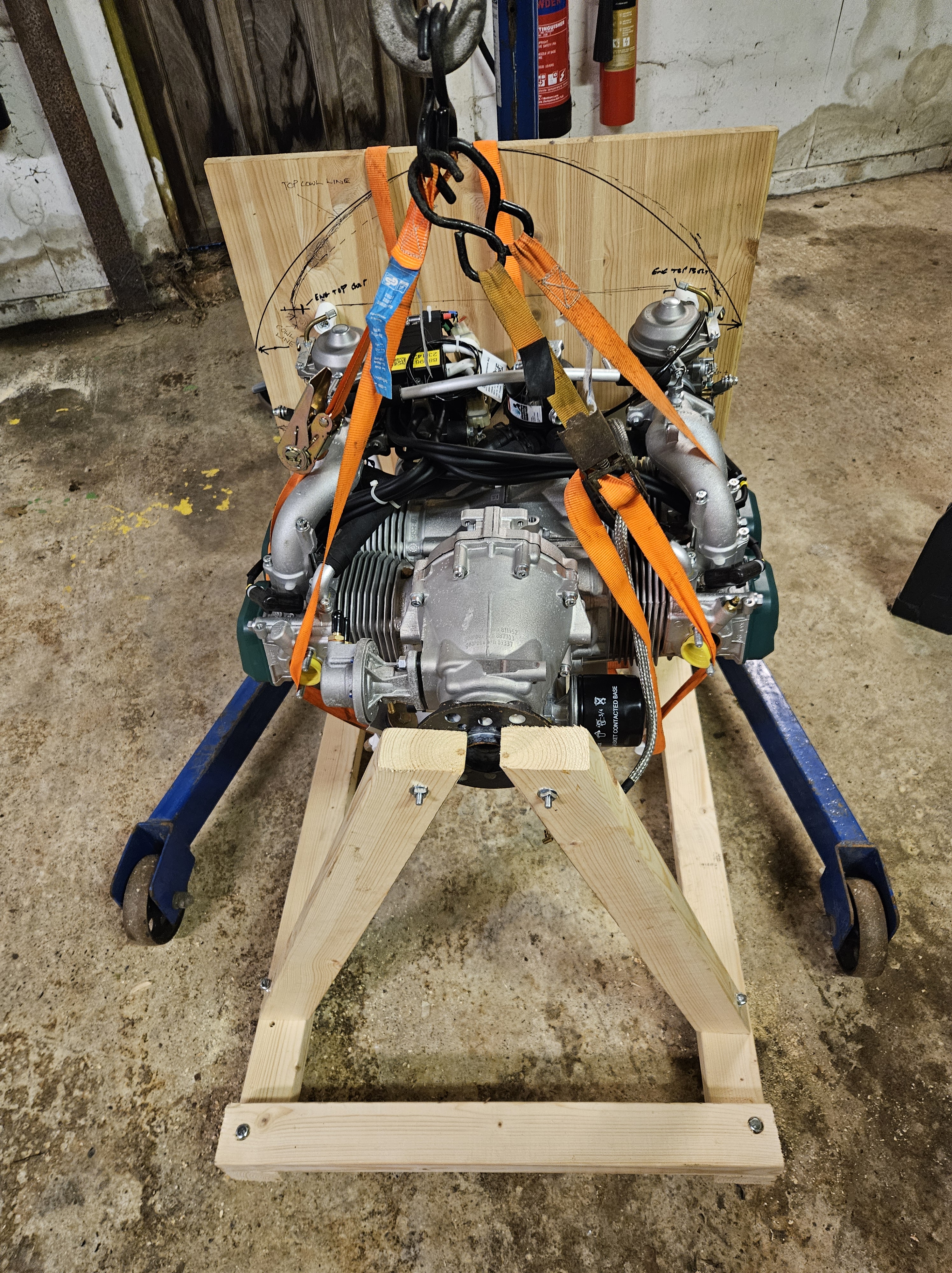
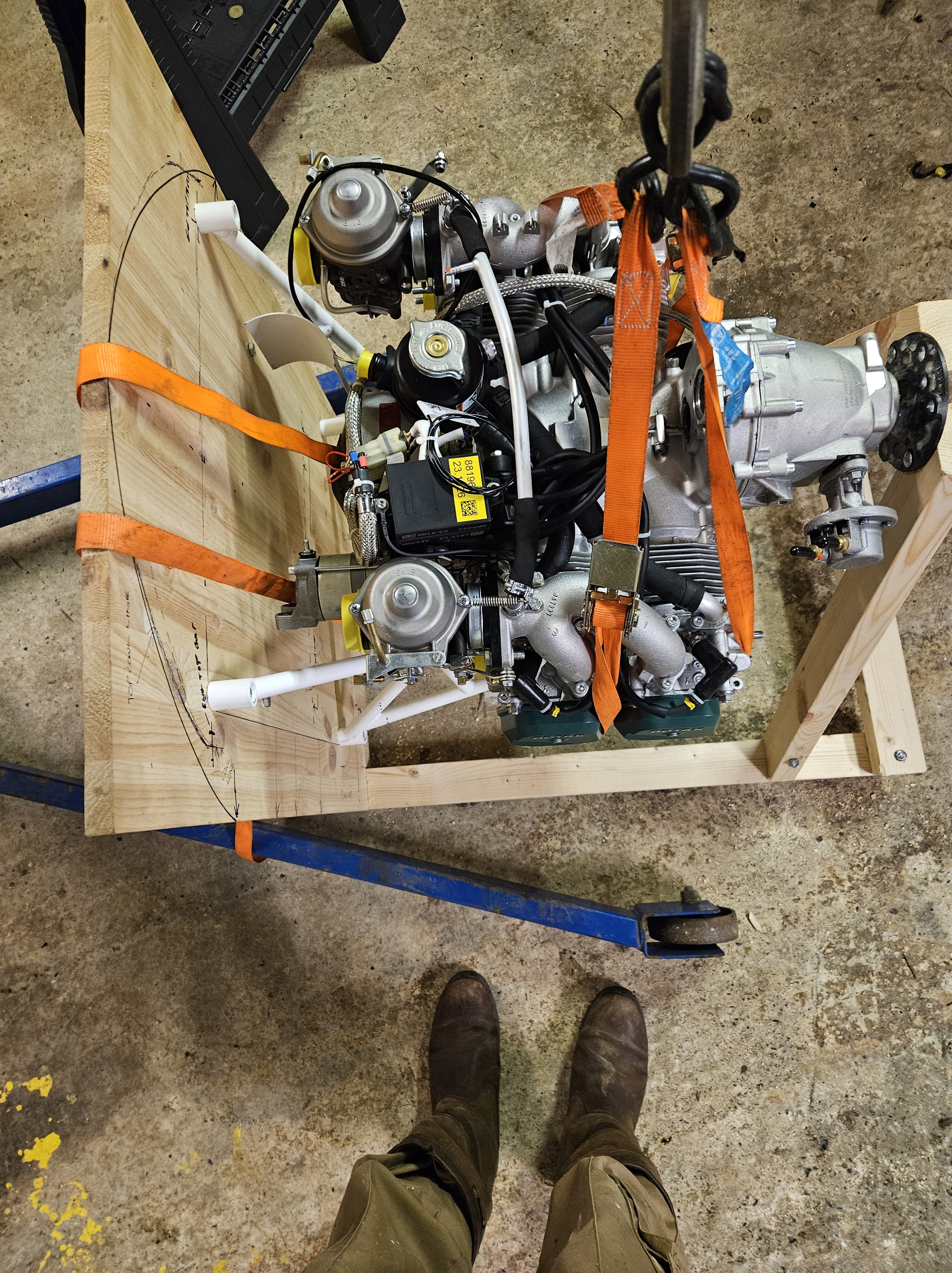
Just 107 days after the incident.. we had the first test fit of the new Rotax engine.
Having fitted and removed the old engine several times, I had got used to the design and features of it, so this new and more complex and modern engine presented some challenges.
The brackets and flanges provided by The Light Aicraft Company had been beautifully finished and coated and, along with a pack of bolts and washers we set to work.
The question was .. should we fit the combined bracket to the engine mount first and then offer the engine up OR fit it all to the engine then offer the engine into the bracket ?
It was a problem .. we tried the former .. fitting the brackets and rubbers neatly to the frame .. then realised this left very little room for manoeuvre as the mounting rubbers impeded the angled engine side plates from allowing a gentle lowering of the hoist to seat the plates.
So, after removing and re hoisting .. we made the engine bade cradle up and fitted it to the lower engine brackets.
Although positioning the (rear) long engine bolts through the rubbers was slightly tricky they slid in.
The run of a couple of the cooling pipes is going to need adjusting but, after taking advice from TLAC, it seems that the flange on the outlet pipes are able to be slackened, turned and reset .. with appropriate use of loctite.
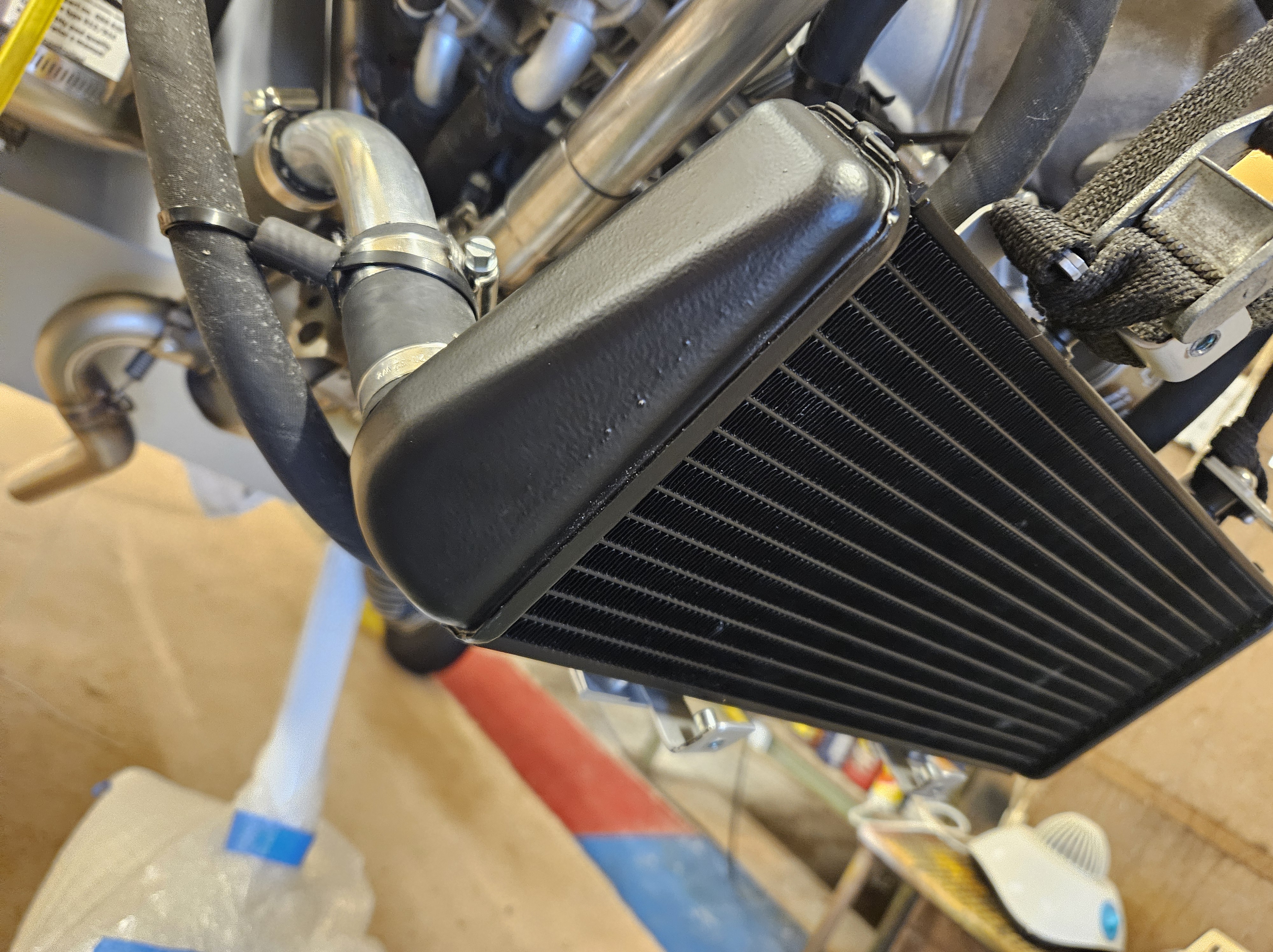
One thing I wanted to check was if the large oil cooling cylinder would fit. The securing ring was released and the chamber offered up from below and then reintroduced the top pieces in situ. Fitted a treat and was held (temporarily) in place with an extended cable tie pending sourcing suitable long jubilee steel straps.
Last week, saw the Jabiru engine coming out and being put in a car for its nip up to Yorkshire for ground checking
We still haven’t located a definitive reason for the inflight engine stop … and this trip was to strip down key parts to check for such.
It is always good to spend a day with Kevin Hyam … at Beverley. His knowledge is vast and is a genuinely nice guy to work with. He had another chap working with him rebuilding a classic engine from every bolt upwards .. a positive work of art as the pictures show.
We mounted my Jabiru engine ‘nose down’ ..having had it supprted and strapped down in the back bucket seats of the BMW .. didnt quite fit in the boot ! ..We stripped a range of items down to check … all looked fine .. Kevin also removed the fuel pump and completely refurbished it adding a slightly softer spring to aid pressure. His neat tool for setting the diaphragm placement was really clever.
Valves and gaps were checked along with the entire ignition circuit
Some of he new parts that Kevin is engineering are really smart, not relying on the vagaries of foreign imports and bringing more and more under U.K. abased design, manufacturer and fit can only bode well !
Returning home with a ‘fit’ engine was a relief .. this engine is now destined for my sons rebuild Jabiru project
A few days later, I return to Priory to begin labelling all the existing firewall forward wires ahead of decoupling the mass.
The engine mount is a useful platform on which to locate and mount and secure cable runs. These all have to be clipped, marked and moved to clear the way for the engine cradle removal.
I still marvel at the relatively small 4 bolts that hold the engine mount in place. I seem to remember that the size of these bolts EACH have a sheer strength of something like 14,000kg !
The bolts duly removed … and after nearly 7 years since they were originally fitted …and the old frame simply slides off.
The new (Rotax) mount looks pretty sturdy compared to the old mount and slips easily into position.. ready to take the new shiny Rotax 912 ULS any day 😊
The Light Aviation Authority have come back really quickly … thank you Ben….
So today, about 10 minutes after Sam and I removed the Jabiru 2200 fro the airframe for ground checking, I received an email from the LAA approving all the stress analysis from The Light Aircraft Company (TLAC) and my approval to install and begin the full process of putting the Rotax 912 ULS 100hp engine in ❤️👍
The engine was ordered and we await delivery schedule.
I hadn’t realised it comes without a silencer so will need to plan that when I get it mounted and some idea of the cowl fitting.
Off to Yorkshire tomorrow to get the Jabiru ground checked and run out checks.. this is going to go into my sons Jabiru aircraft rebuild.