Here is a slightly fast approach around August 2019 …
It was slightly choppy conditions but I planned a touch and go and … as you can see … the touch was ok but the starboard wing lifted a little as the approach speed was too fast .. 😊
A mile of runway can take you anywhere
Here is a slightly fast approach around August 2019 …
It was slightly choppy conditions but I planned a touch and go and … as you can see … the touch was ok but the starboard wing lifted a little as the approach speed was too fast .. 😊

The other day was a very cold but at least clear day so I half filled the smoke oil tank with baby oil and ratcheted the securing strap up for its first proper air test.
I’ll need to source a better power plug connector .. these ones with crimped spades that push into plastic connector blocks are very weak … but should be ok for initial test.
Having run an initial 1 second ground test to make sure the pump operated from the rear cockpit switch I set off to get in and warm the engine
Getting in was its usual squeeze in the winter.. with around 5 layers on .. its cosy though and you soon dont feel the cold as everything gets going
I’d pre briefed I think it was Russell in ATC that I’d like to do a circuit just to make sure all fittings were stable and my feet remained clear of all fittings in terms of rudder access and pump … and then advised I’d like to do a straight pass over the runway at around 800′ to try the smoke …the idea being that if anything was to happen .. I could dead stick down ..
All went fine and setup the approach for the first 800′ overly… slight thing to factor was an ATR had just take off as I was on short final so I was advised to turn before I flew through his prop wash at the end of the runway .. not a problem as I usually turn just before the end to clear the centre line
Anyway … my little wing mirror I fitted a few weeks ago revealed zip coming out of the back .. tried the switch several times and nothing…
Did 4 more circuits and finished with a usual very tight 1 min circuit to land … the ATC controller was awesome as I called close downwind she cleared another FlyBe ATR to take off and he was pretty slow to move so I held a few more seconds until I saw him roll then wing over on a nice tight right base and touch down just a few seconds after his wheels left the ground…
Thanked ATC and wished a Happy New Year and taxed in to check why the oil wasnt working …
Checked all fittings and switches and fine …the realised.. doh … to prevent any spillage I’d turned the flow valve fully off … this means loading the tank is a nice dry affair ….
Anyway .. valve duly turned on and a hop back in and clear prop .. restart …and hey presto .. smoke … not as billowy as I’d like.. but smoke
Stopped the engine hopped out and found a very wet undercarriage…so it’s too rich
Turned mixture , flow down from 2 full turns to 1
Hopped on again …and restart… not much smoke.. but less liquid …
So need to check what flow valve setting is optimal and also emailed Smokin Airplanes in US to see what is best burn rate for oil on this type of.engjne … prob better at revs around 2700 vs on hard standing around 1800
Watch this space ….. 😊

It’s been such rubbish weather during the past few months , and the odd day it has been good we have been in the U.K. ..
Top that with a drop dead CAVOK day with 3kts … and it was Christmas Day .. and Jersey airport was shut ….
Mind you .. we all need to count our blessings … the airport DID open … briefly …. to let a medivac aircraft fly in from Guernsey .. an Aurigny aircraft, to pick up a sick person then fly them to the U.K. .. usually Southampton .. fingers crossed all worked out ok …
A few shots from the last days flying of 2019 … pretty cold .. so usual 4 layers top and bottom … plus a life vest on top of a flying suit and sheepskin … that was tight in the cockpit !
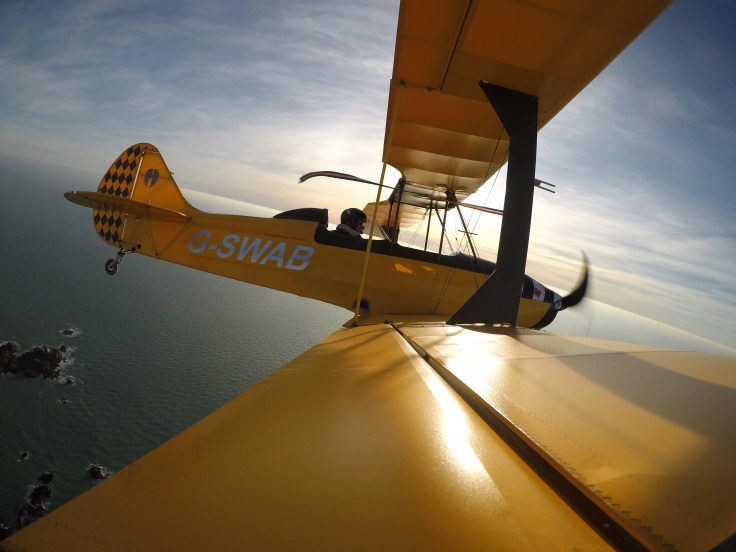
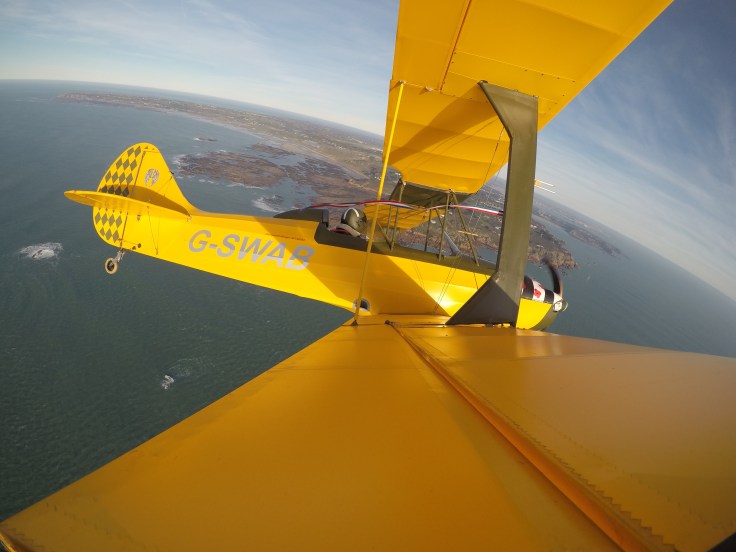
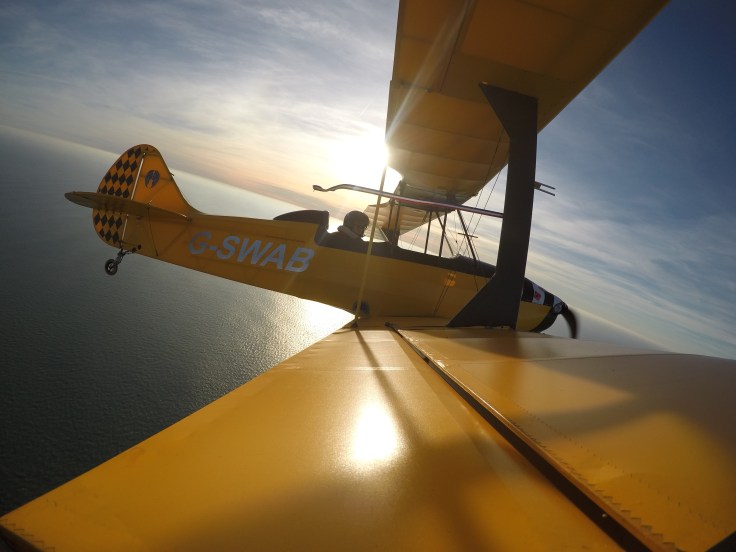
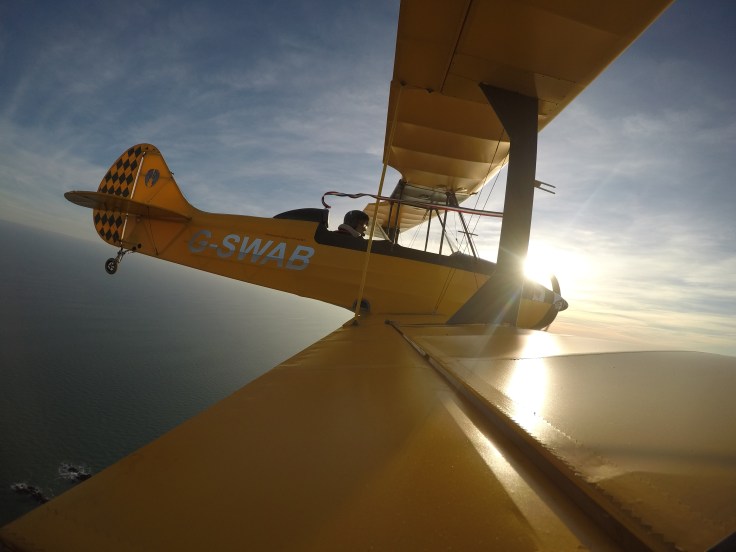
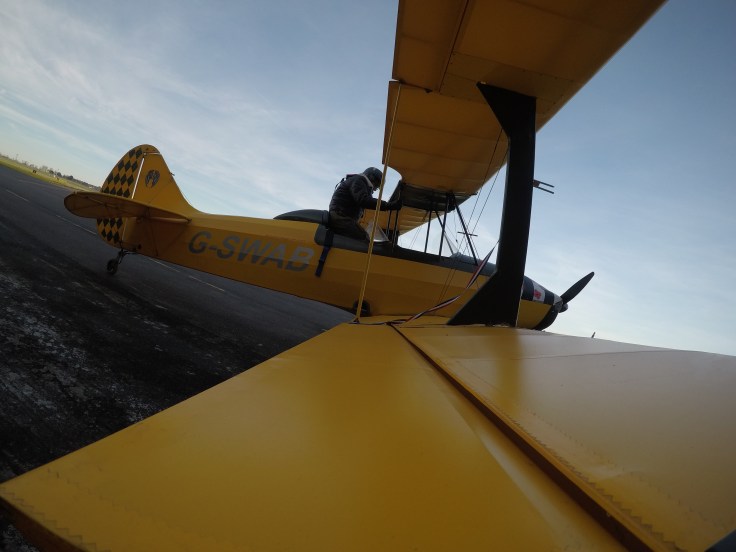

It’s really useful to study some of the earlier go pro footage from earlier in the year ..
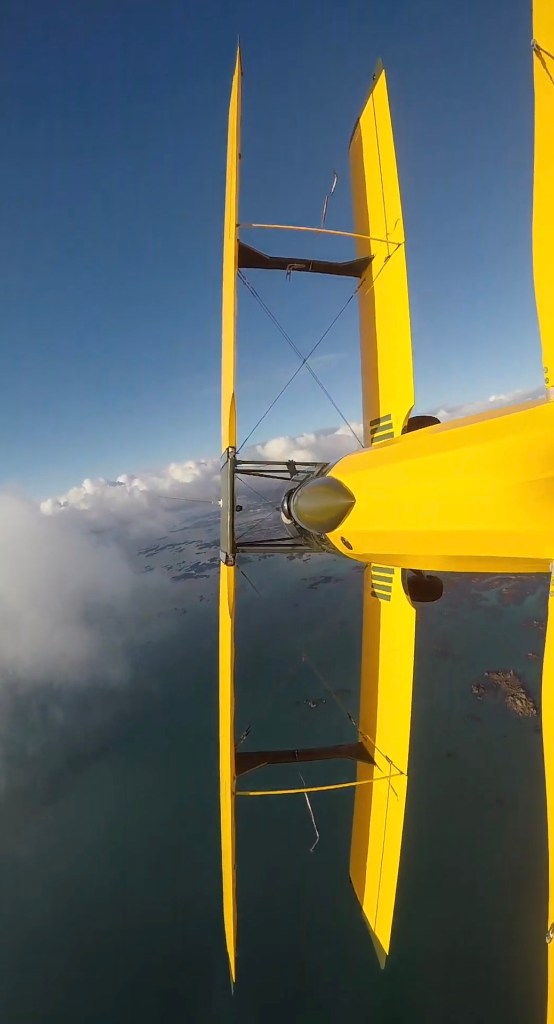
Using stills from this you can see how accurate, or otherwise, you are in holding angles or turns …
The sun on the wings shows a straight line … but not quite 90’ with the horizon …

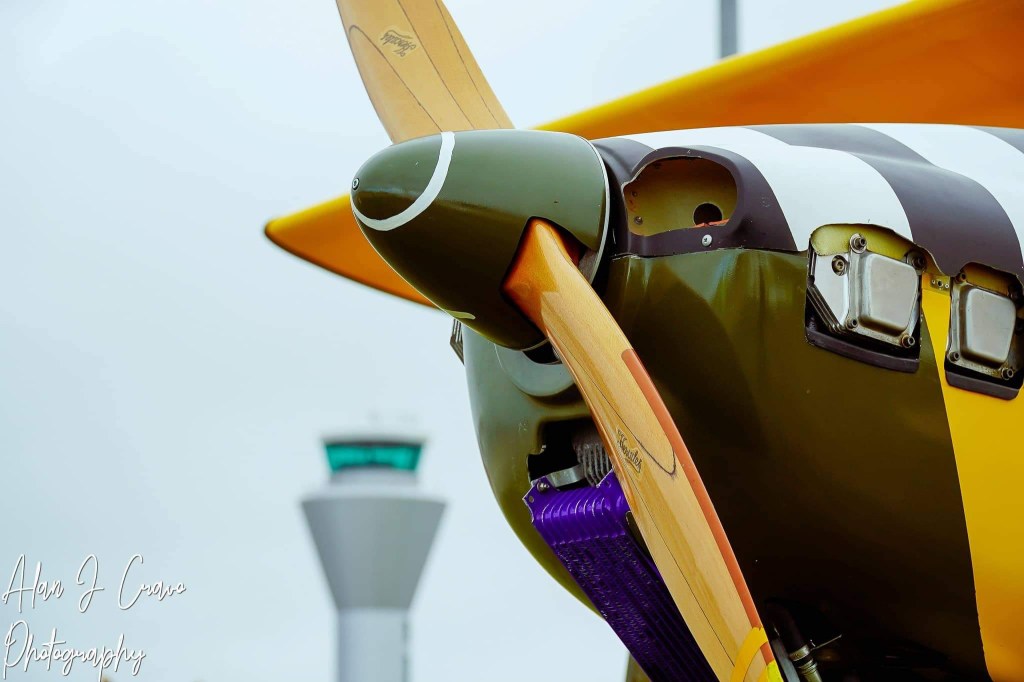
A local guy (Alan Carvo) in Jersey has a real eye for a different angled shot and very kindly sent me some images that he took at the static display at this years Jersey International Air Display … I’m hoping to arrange some nice clear landing shots with him in exchange for a flight and some fun flying around 🙂
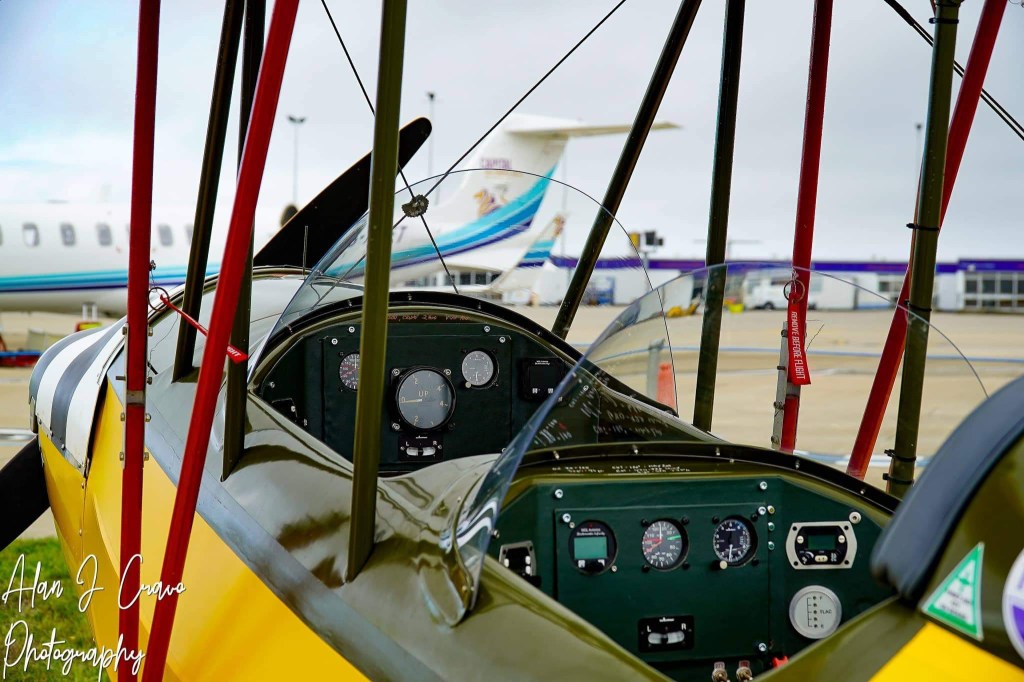
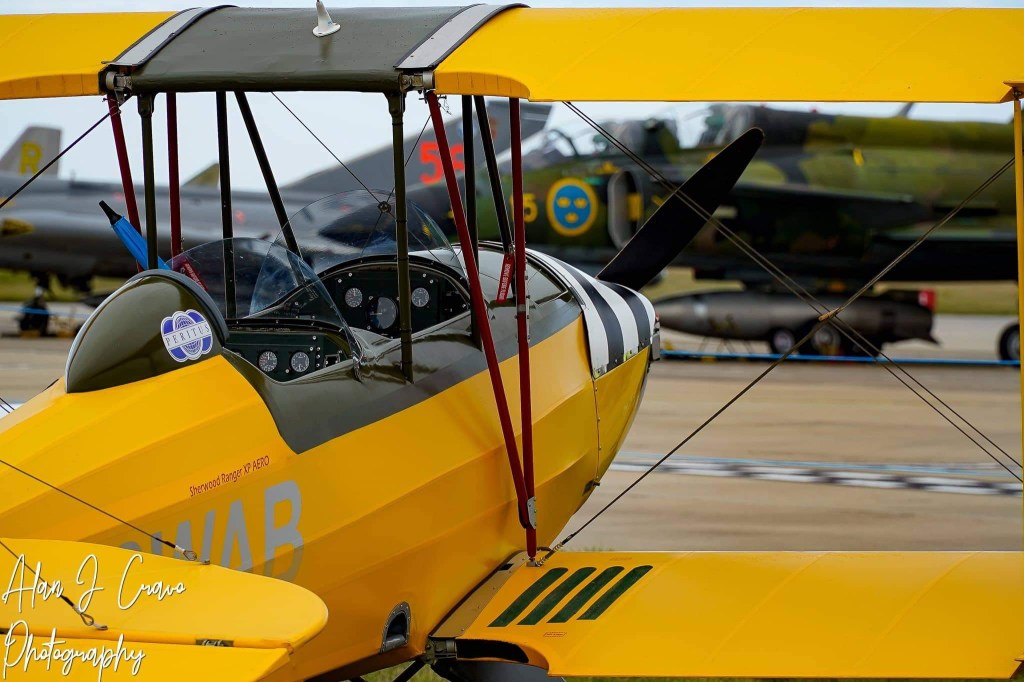
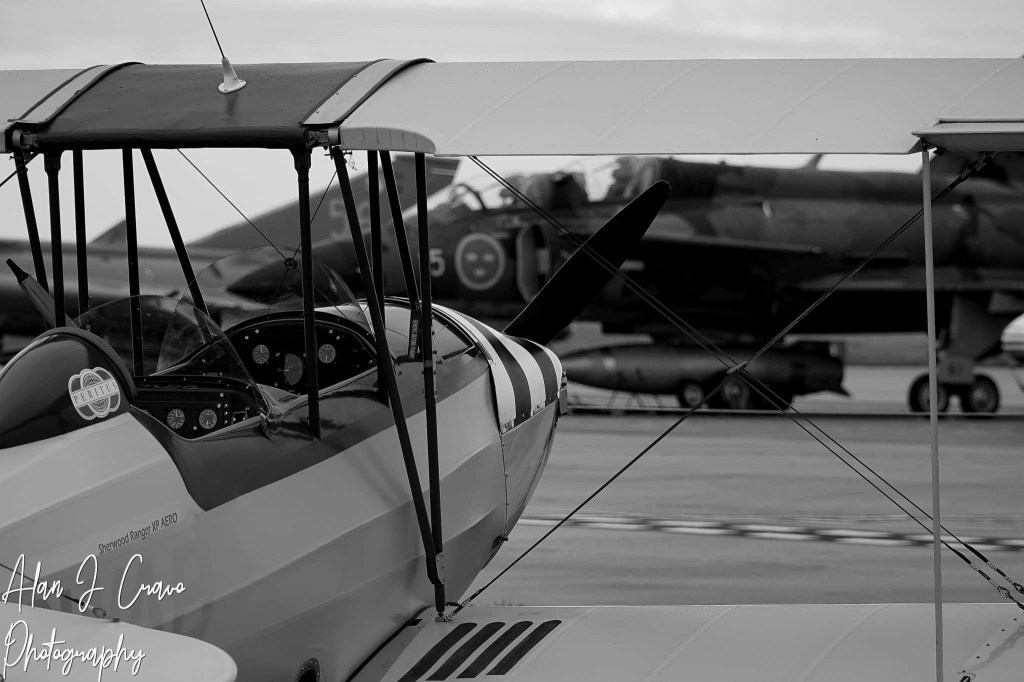

Slight update on the paint job on my temporary 2nd cowling
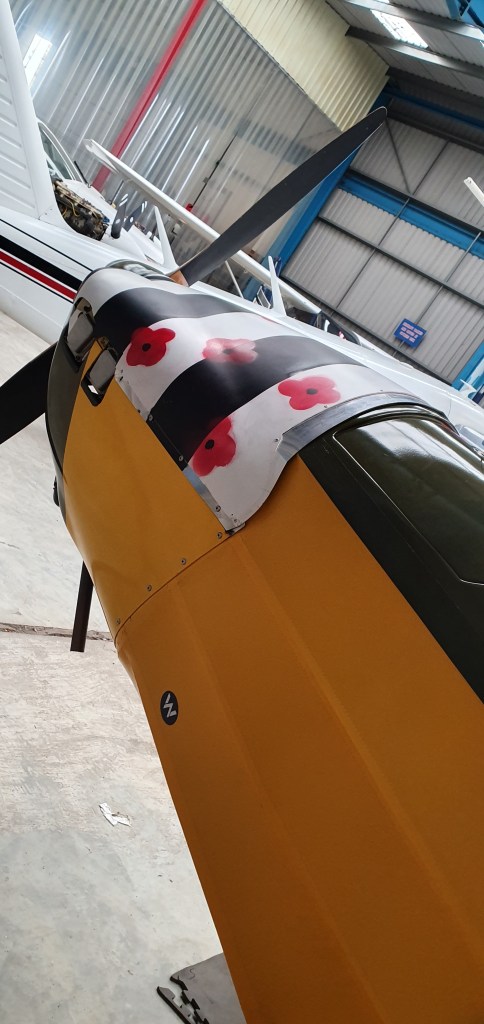
Bit of overspray on my very armature paper templates.. gives it a softer effect
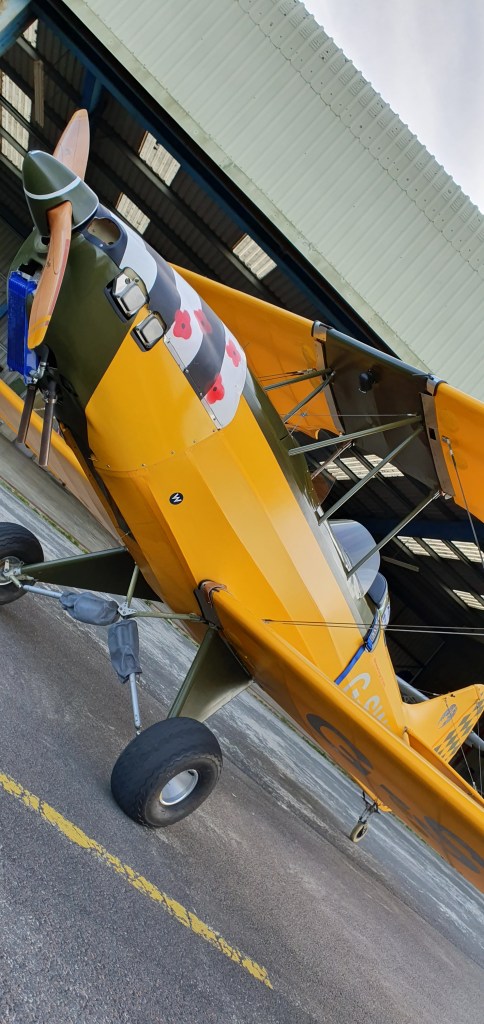
I’m writing this particular entry in the spirit of sharing (well as much as I can) and in the interests of ongoing learning and how ‘human factors’ can change the way we behave …
In August I was planning a series of circuits on a reasonably nice sunny day .. can’t particularly remember the wind but it was one of those nice days to get some circuits in and perhaps some higher work.
Checked out for an initial couple of circuits and duly took off on runway 26 banking out over Corbiere lighthouse and into the downwind and a hold at Noirmont as there was something bigger on approach. A couple of holds and then, with the newly devised ATC (neat solution to slow flying aircraft) was advanced to hold over St Aubins Fort .. which then leaves me only a short curving descent to finals.
As I broke out of the numerous tight turns over Noirmont I felt some slight vibration through the stick. Nothing massive .. but definitely a little something … checked all the gauges … RPM, CHT, Pressure, EGT all looking good so wasn’t really sure if I HAD felt it or it was something …
Slightly distracted by it .. but continuing the FIRST 2 bits of the aviation adage of Aviate, Navigate, Communicate …. I pulled out of the turn and routed towards the Fort over St Aubins bay … whilst still playing with different throttle settings to see if I could narrow down what was happening …
At this point … ATC were still thinking I was coming in for a Touch and Go and into the circuit .. as I hadn’t advised of anything …. Not Good news ..
A few more orbits and I was cleared to final .. so the vibration had been in evidence for around 2-3 minutes … rolled out eased back on the throttle and things seemed to settle so I lined up for final but declared that this would b to land … still hadn’t advised anyone outside the cockpit of why .. ‘this would be to land’
On landing .. usually really short and exit first taxiway .. I taxied into the club and pulled up outside the hanger and, brakes on, tried various throttle ranges and could feel the vibration at higher revs .. still all engine settings read absolutely fine .. so shut down to investigate.
As I climbed out and walked to the front … I saw the nosecone was pretty much in bits ! First thought was that I’d hit a bird over Norimont at around 800’ when I first felt the vibration.
I immediately called the tower to advise … not really knowing HOW or WHERE it happened but at least I now knew the WHAT. A sequence of events then happened which will be mentioned in a joint talk that ATC have asked me to co present with them in November.
Suffice to say from my perspective … there are a number of ‘Human factors’ that come to play.
This left a very small piece of debris on the runway … small, flat, about 2” round fibreglass…. any delay in retrieval of that is not good … advising early and letting people decide what actions to follow is the best course of action..
In the end .. this incident caused a number of knock on learnings and reviews of documentation and procedures … all of which will ultimately make all our (flying) lives safer …
Would I do things differently next time .. YES of course …

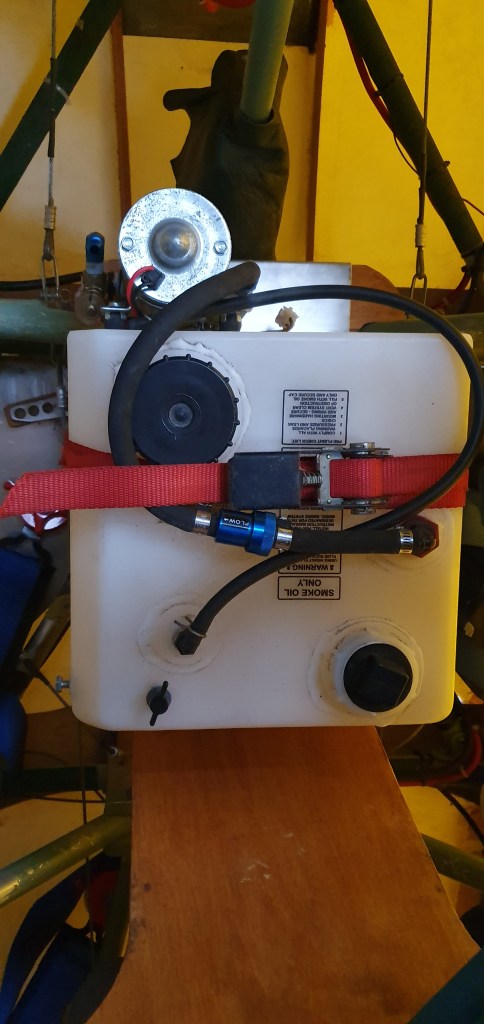
So .. after a few attempts at a range of smoke oil tank securing options … Paul Hendry Smith kindly had a chat with the top LAA man Francis Donaldson and thrashed out a workable solution… cheers Paul .. and Francis 🙂
A superbly neat solution that uses standard parts from the kit as well as a really neat alloy welded tray
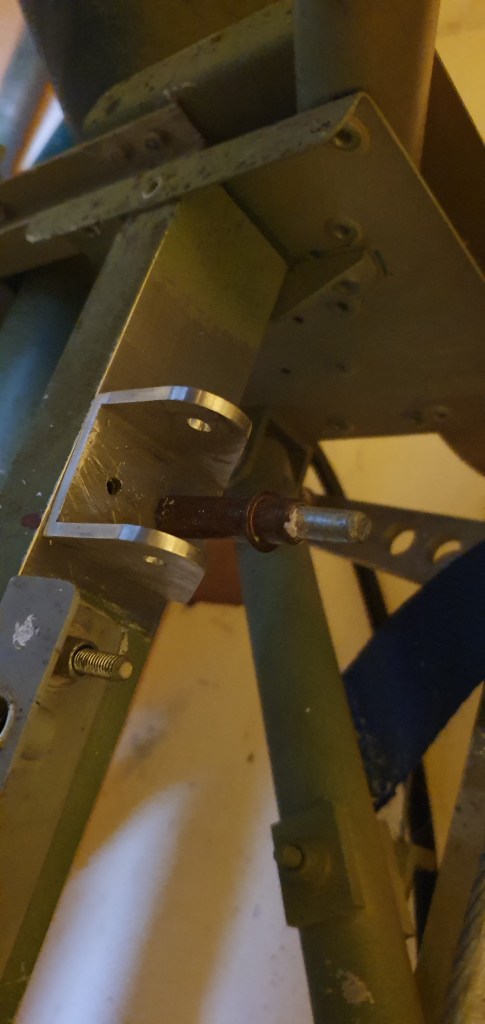
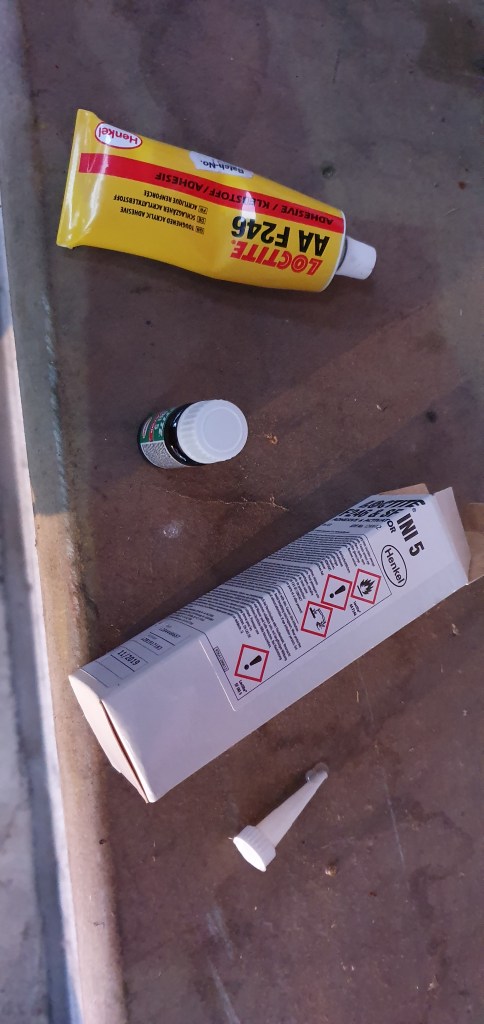
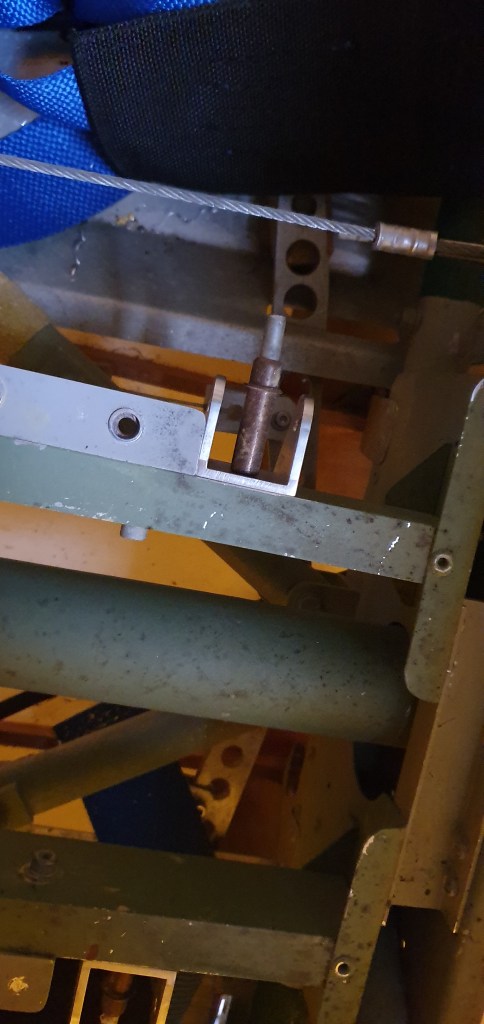
The brackets will be loctite 246 glued to the outer edge of the longitudinal seat rails .. about half way down the fore-aft of the smoke oil tank
They will also be riveted in place with 2 x nickel rivets .. and then a standard aircraft grade bolt will go through these to provide a saddle clamp to run a securing ratchet strap in position
The alloy base plate also has had two pins protruding below .. alloy welded in position to prevent lateral movement
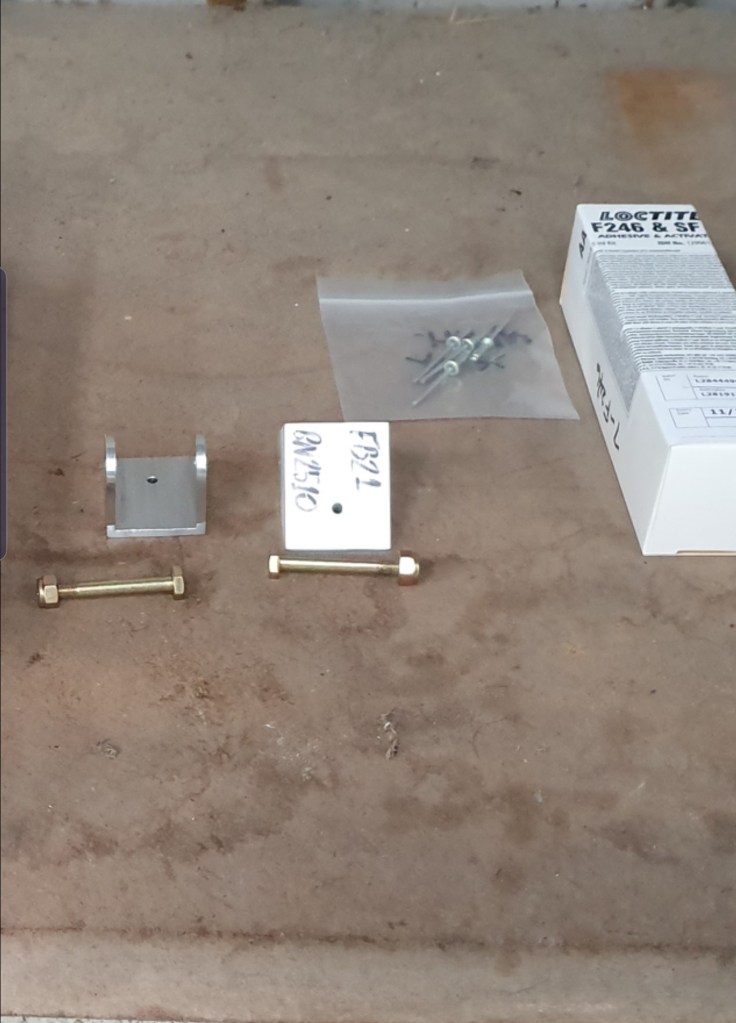
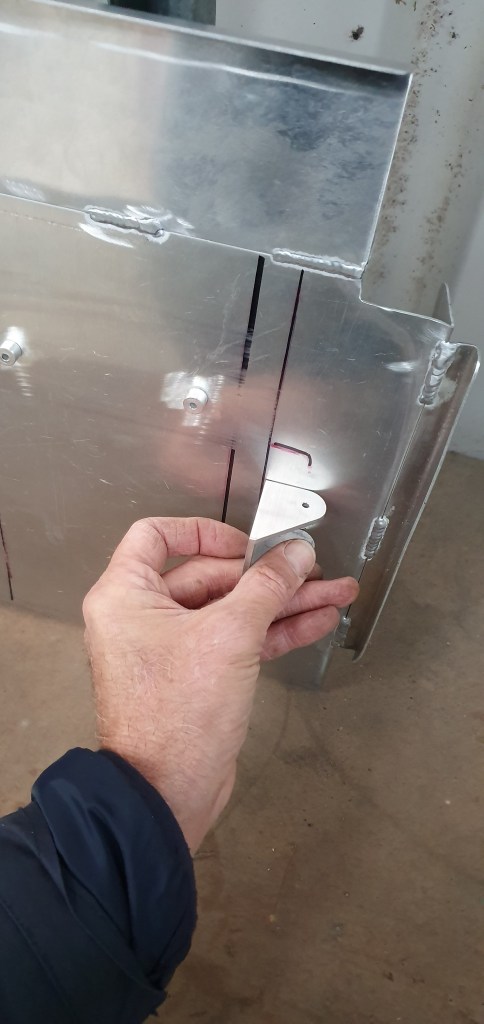
Once the faces of each part are thoroughly cleaned you put one part of the F246 glue on the outer part of the seat rails and the other on the bracket … then rivet it in position

Looked at the site access spread this evening …
Interesting geographics … possibly a result of being a member of a Facebook biplane site ..


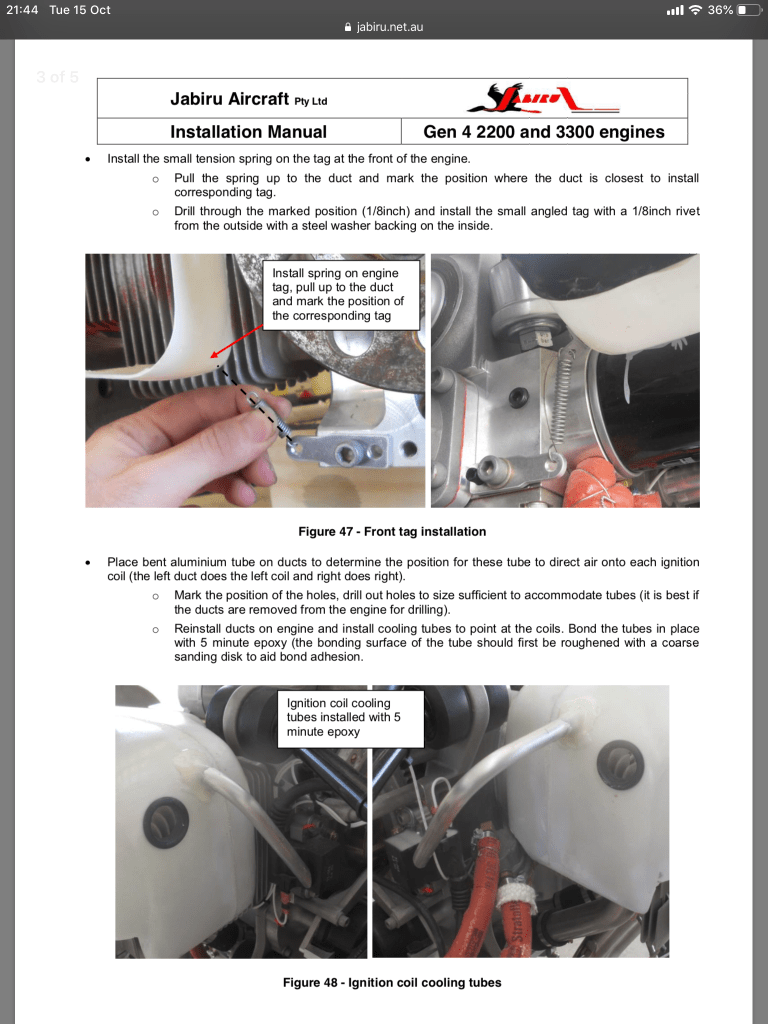
I got an update set of documentation today from SkyCraft who are the UK agents for all things Jabiru .. some is aimed at later mark engines and this is probably one of those .. but worth a look …
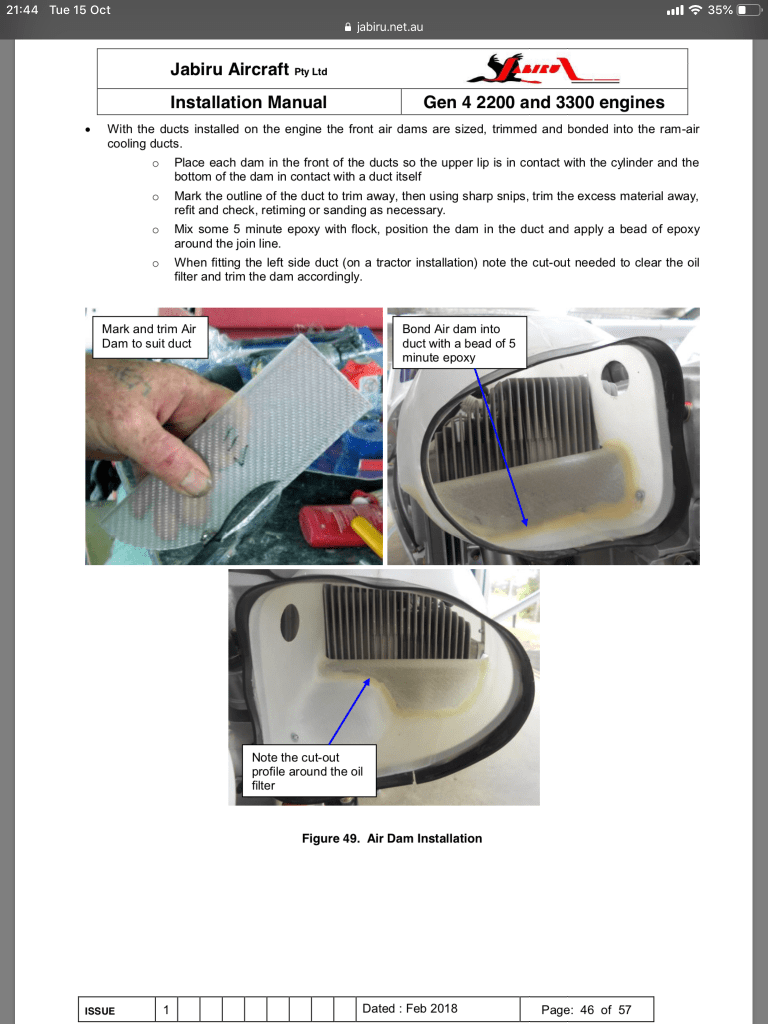
Browsing through some of them I noticed there was an update on cooling options using the cowls, similar to the ones that I have. They seem to fit in a slightly different way , with a front located retaining spring vs the loop one I have around the cylinder head .. And they have the same cooling pipes at the rear , pointing down onto the Mags which get hot in use. However, there was one primary difference .. which I don’t have …
The front intake holes on the cowls had 2 ram air lower ducts fitted. These look like they have the effect of
This could be a useful trial update for me .. although the engine generally runs at good temps I’ve noticed 2 up and fairly full of fuel and she does get quite warm …
 Jersey Sherwood Ranger