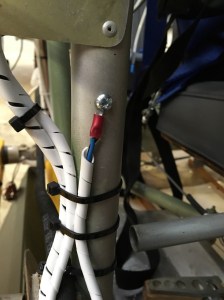
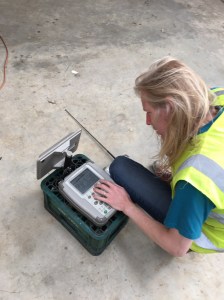
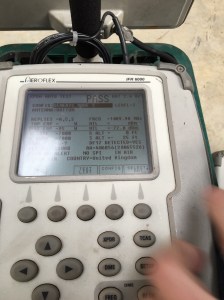
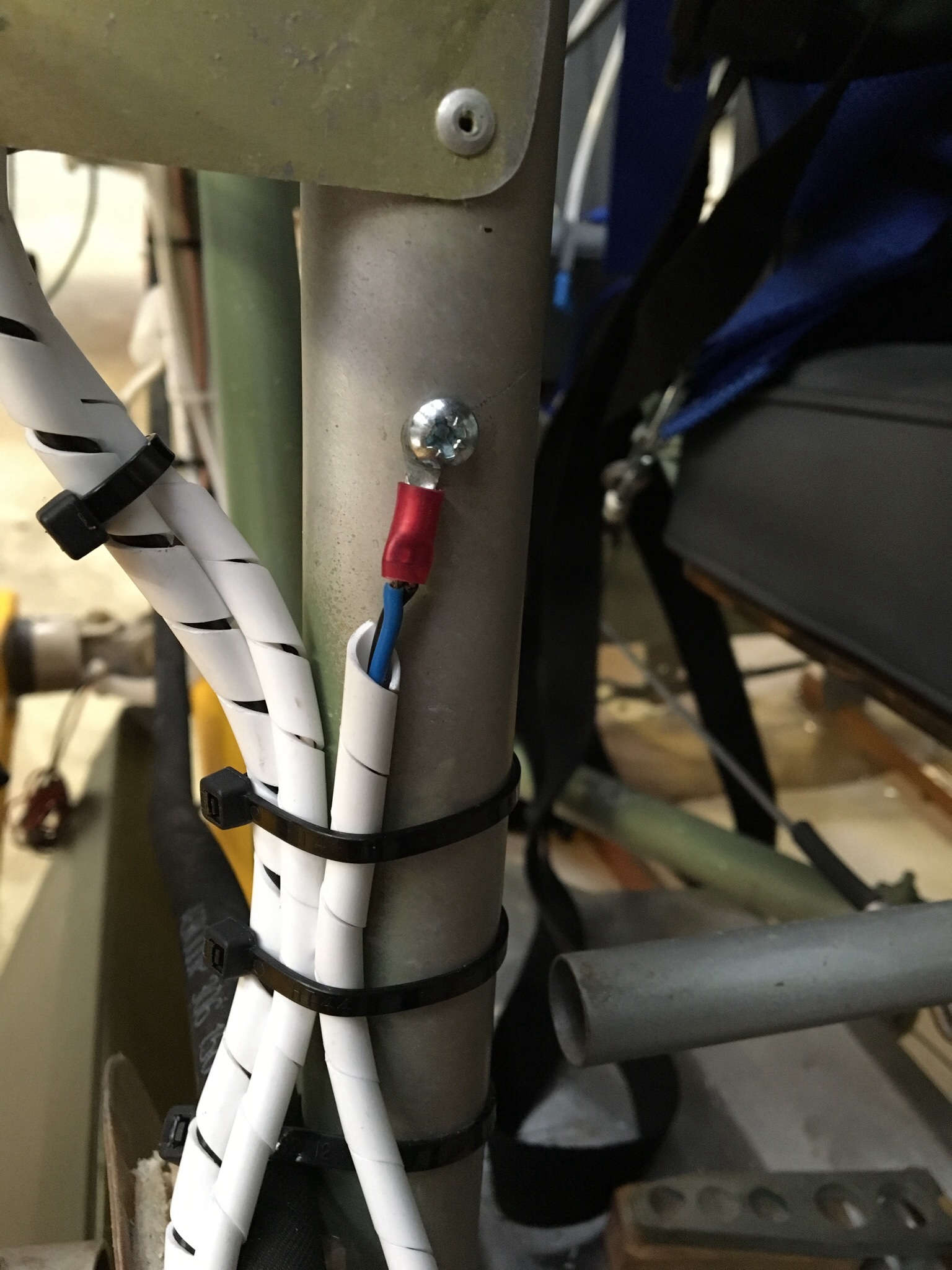
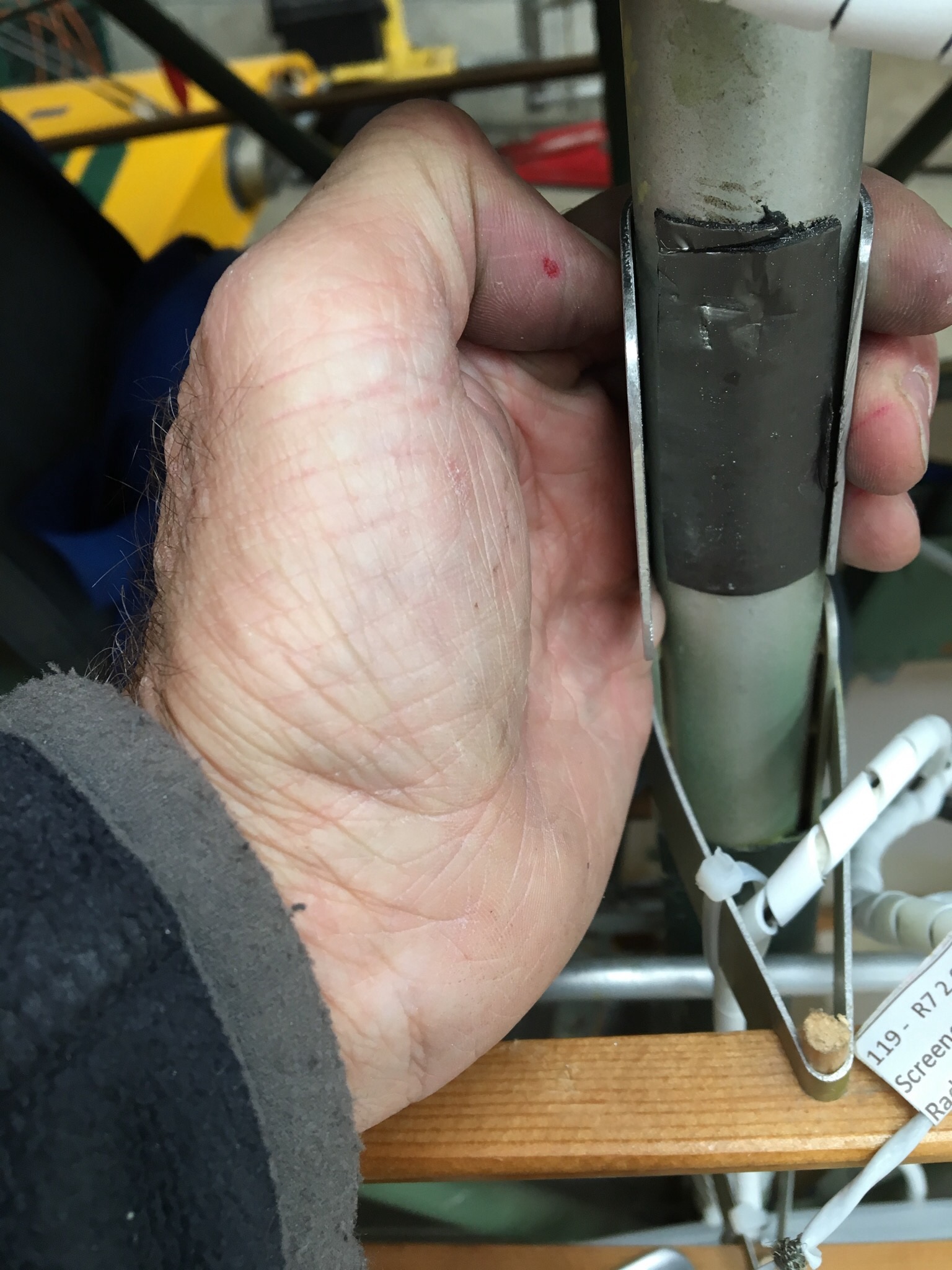
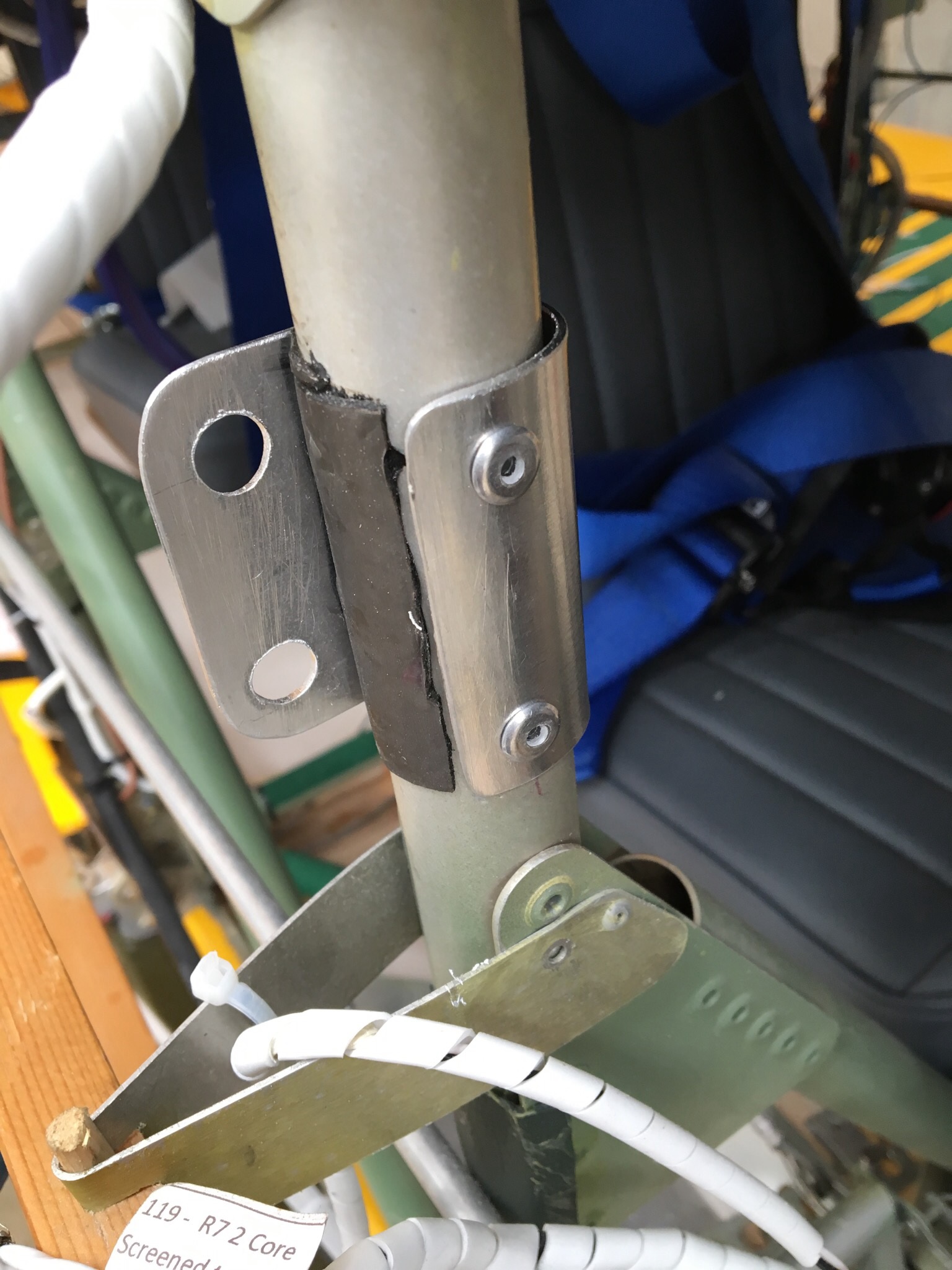
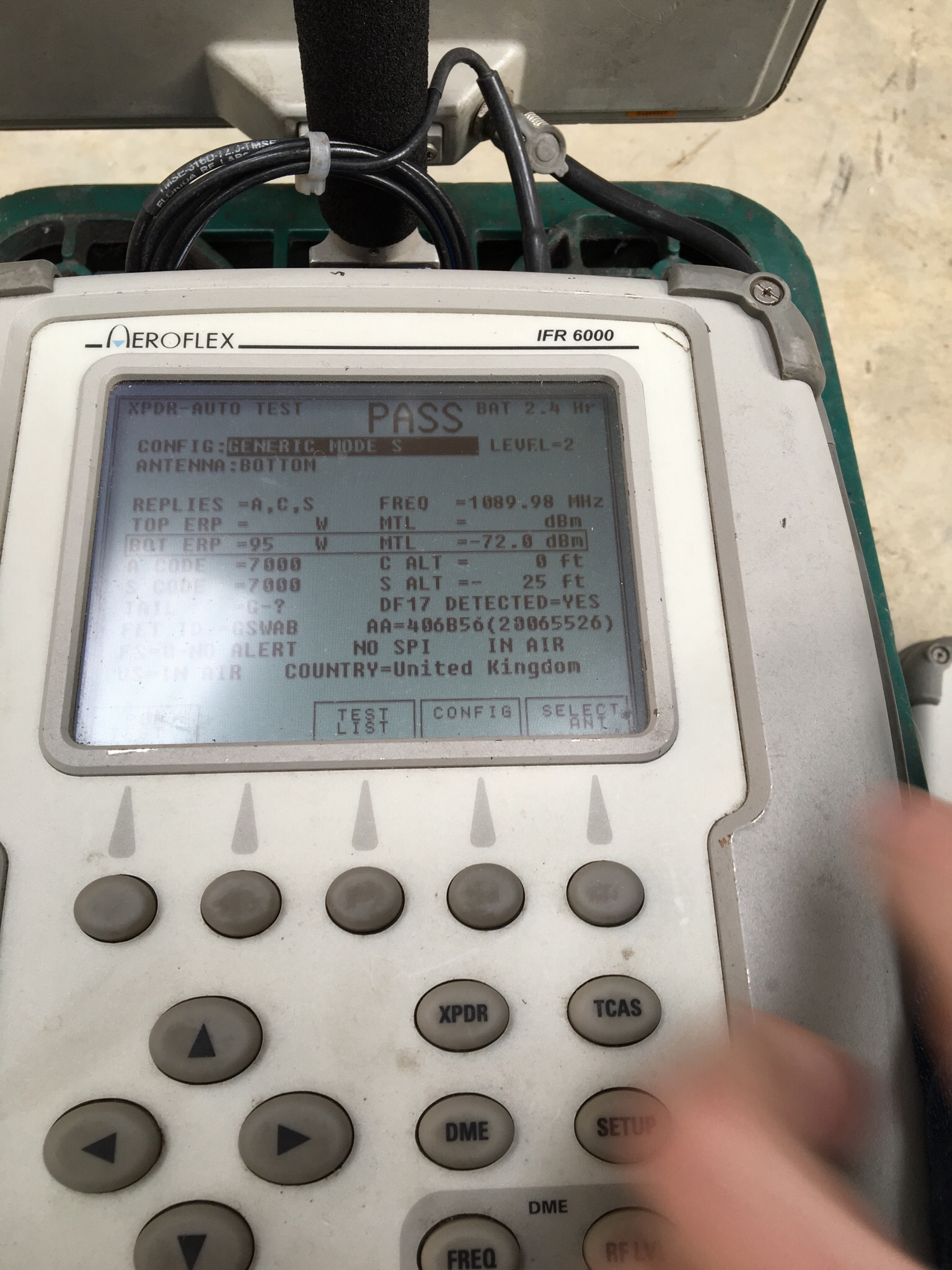
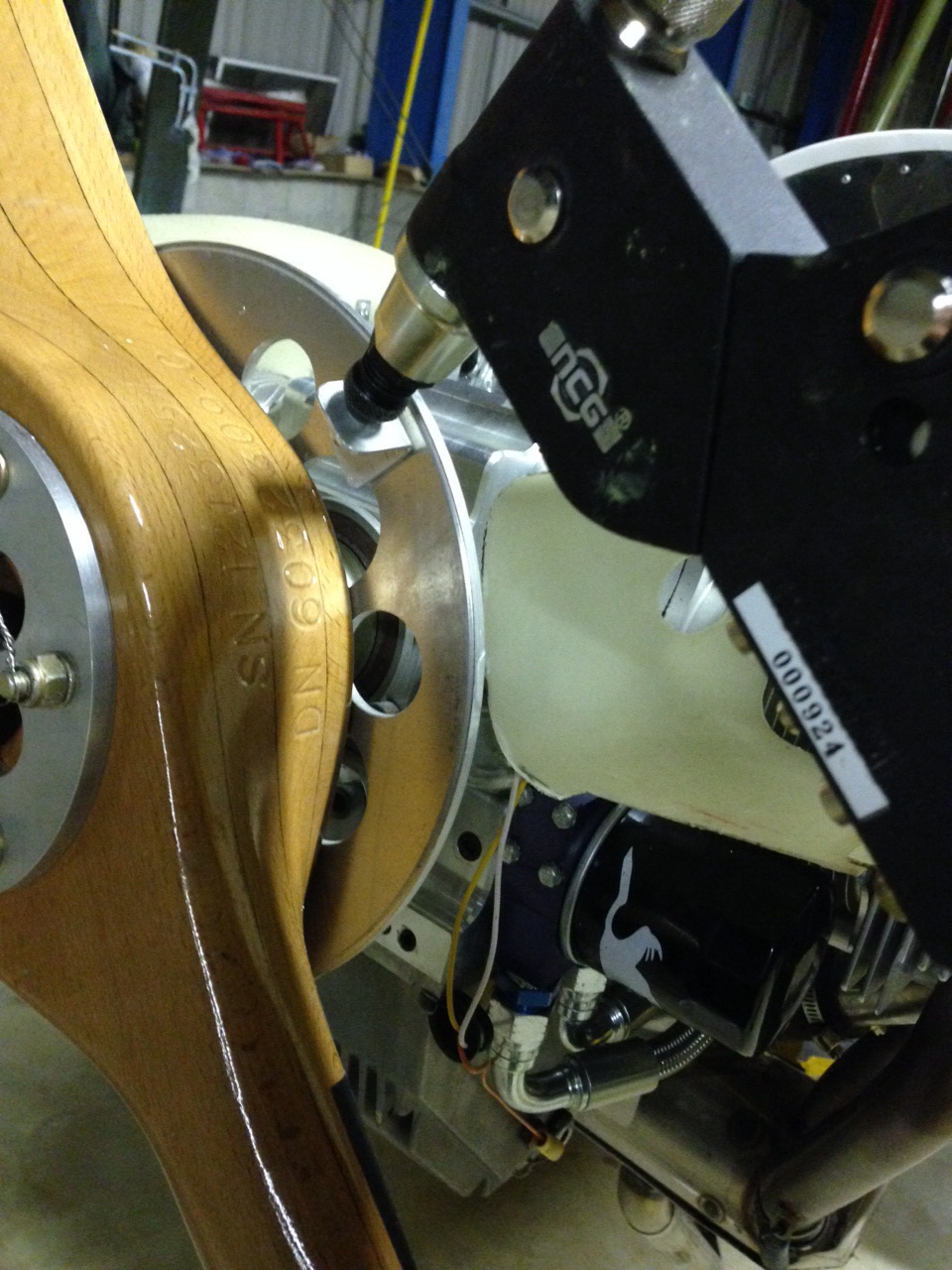
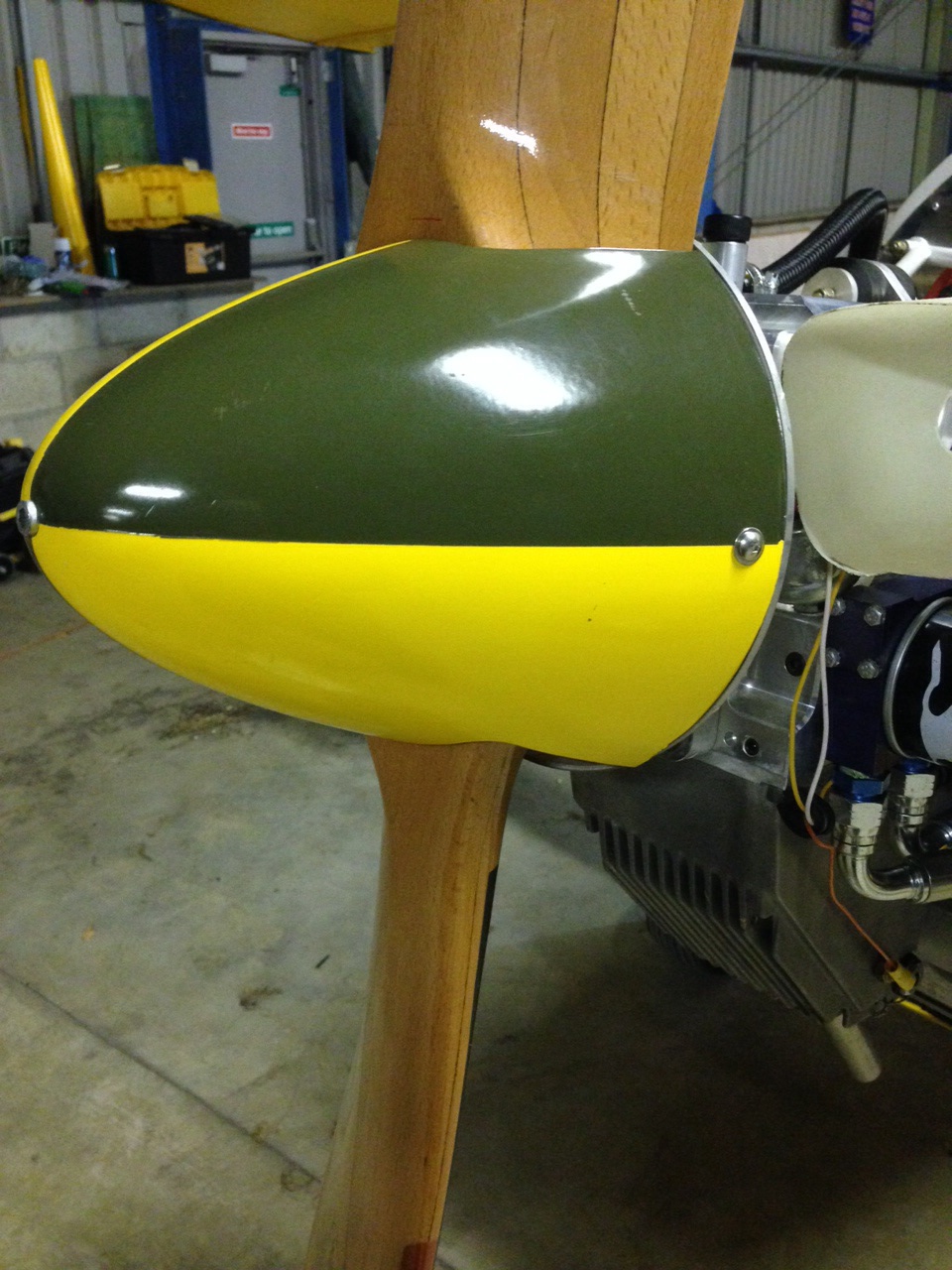
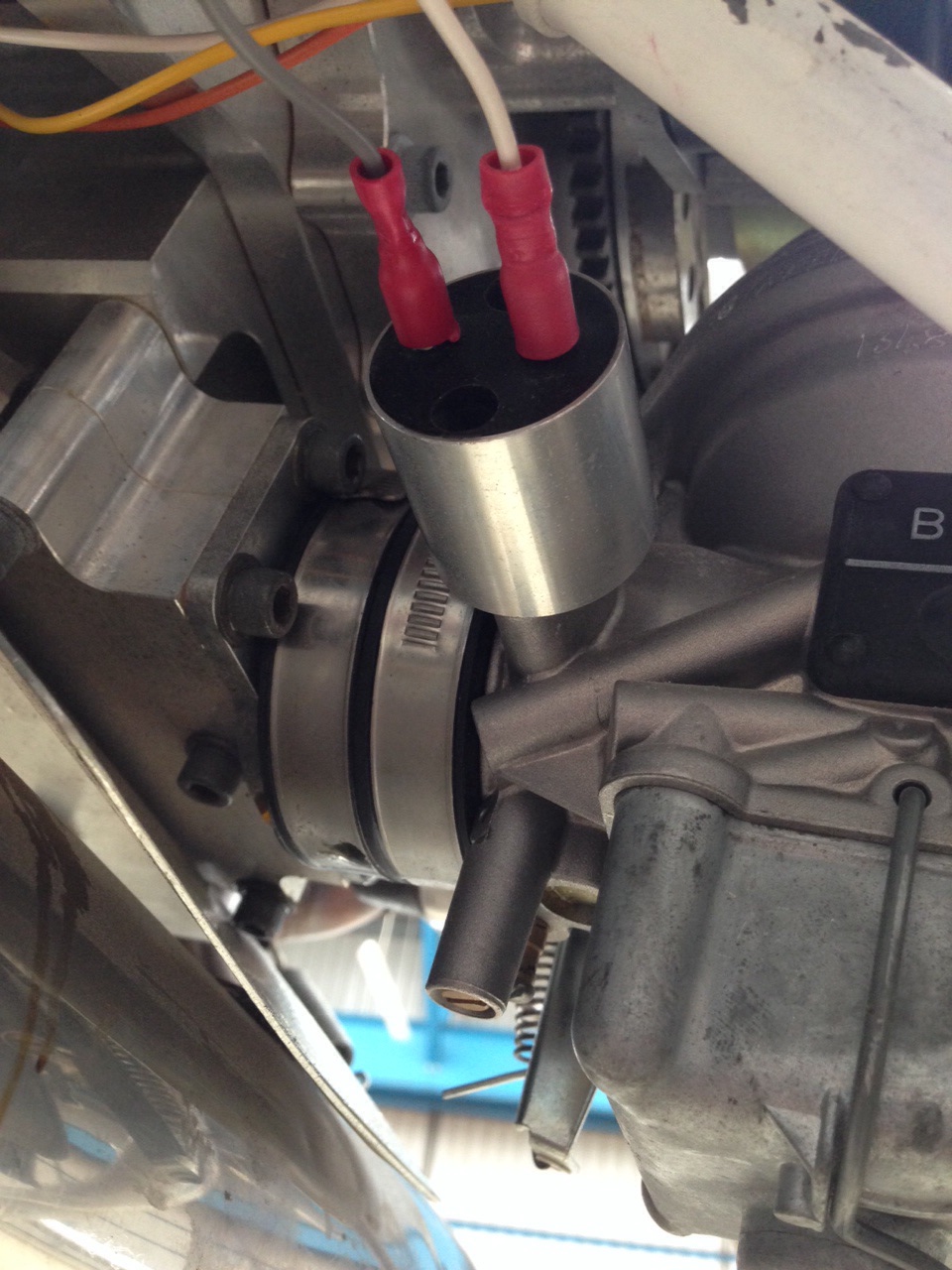
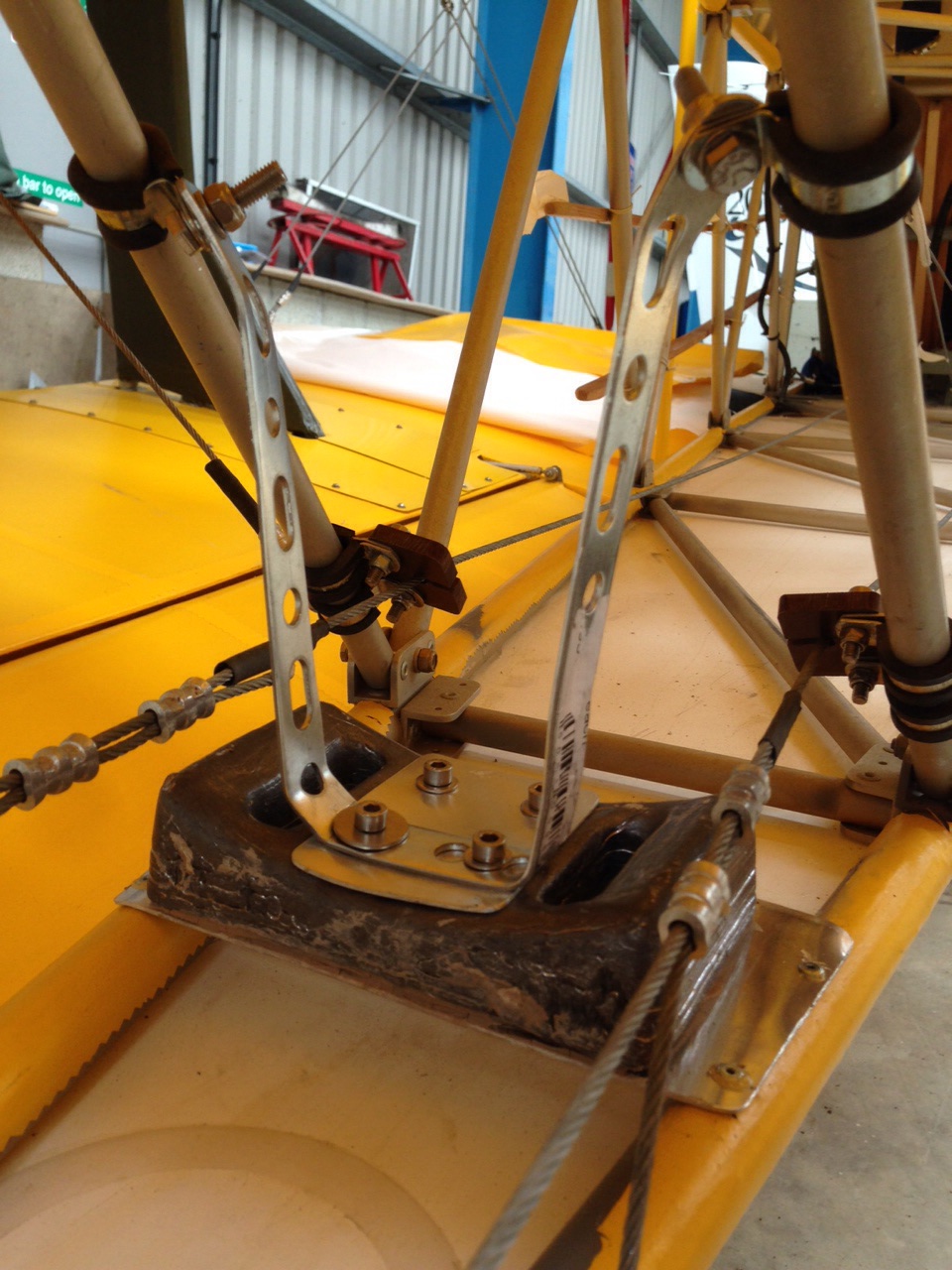
The LAA kindly followed up on my penultimate submission (Jon Viner .. He’s really good and responds by email almost by return) .. The ‘final’ bits they want are some photos of the carb heat fitting and also evidence of how I know it’s working … I plan to put warning lights on the panel for both heater elements …
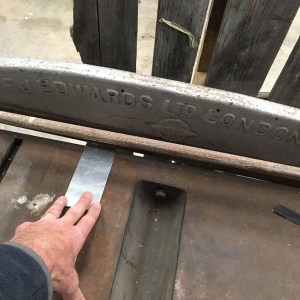
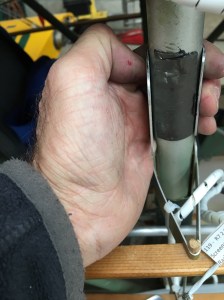
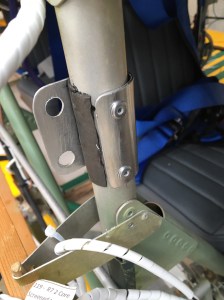
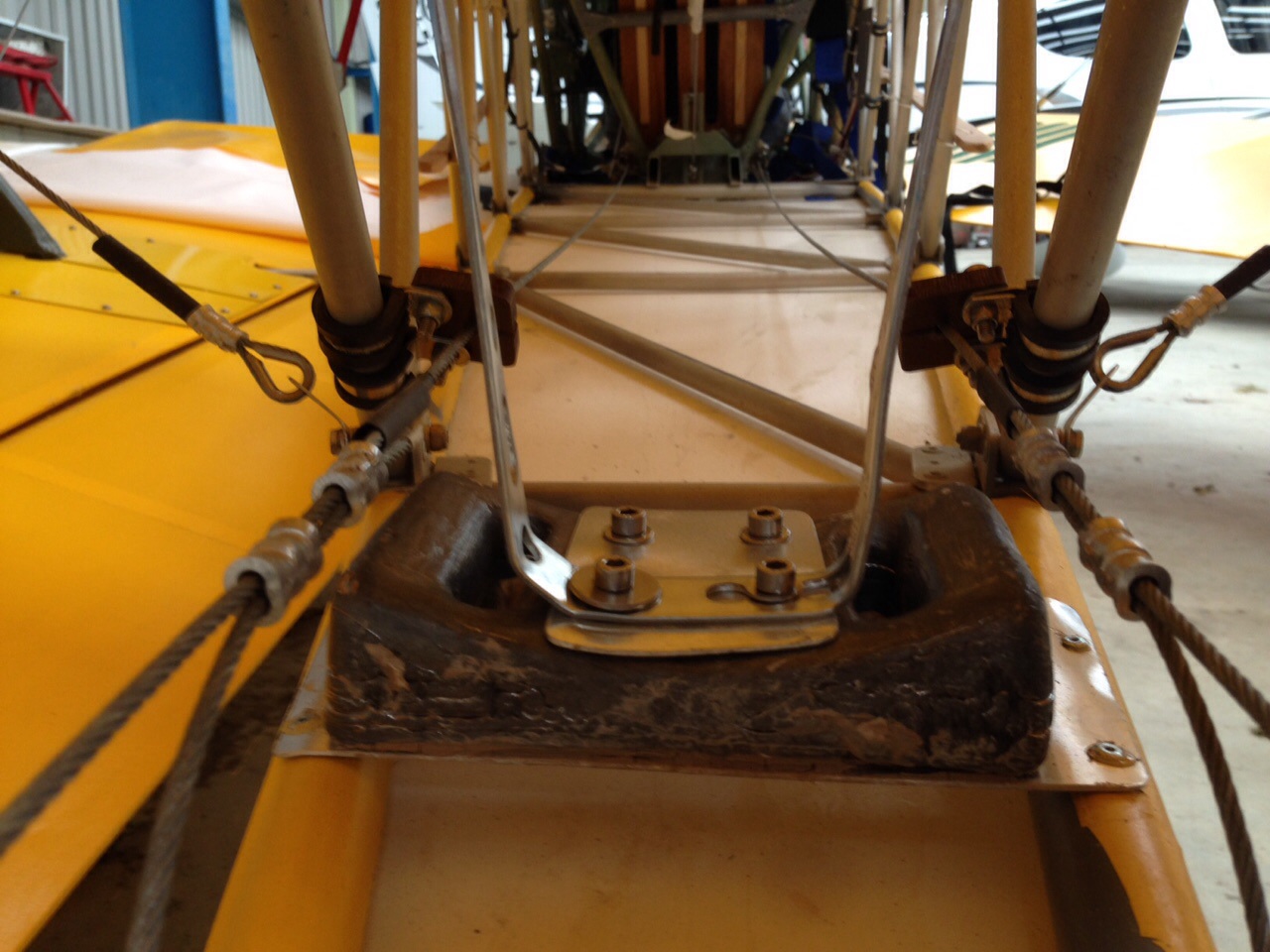
also photos and description on how I have secured the tail ballast
My original taxi checks had proved interesting as what had seems like good brakes turned out to be quite soggy !
Mike and I had a look and tightened up a few parts so they became much more firm and solid affair.
So these were re tested today. Took the checks away and started her up .. She start so sweetly … First turn every time !
Then waited for the relatively busy area outside the Jersey Aero Club to settle …this area is a strip of Tarmac in front other hangers quite short and quite narrow … Should be a good test and if it all goes to pot .. Just shut down .. Jump out and turn her by hand.
i should not have worried … I temporarily disconnected the steerable Tailwheel to leave her castoring and, with differential brakes, she nipped up and down .. With careful but beautifully tight right hand turns. The Stampe used to react quite positively to blips of throttle but I don’t want to use too much in such a confined space with about 8 aircraft all around.
Spent a very happy 20 minutes going up and down and around to the left then around to the right .. All turning in her own length ! great .. And I feel so much more confident now about popping into the active taxiway at Jersey … Don’t fancy holding up and Easyjet of BA airbus whilst I ground loop ?!
At the end of 20 mins I stopped as I could hear a graunching sound .. Turned out to be hot brakes ! but hey it had been on them the whole time against power … Very pleased with the result !
Yesterday saw a very productive session whilst I await radio and transponder arrival.
Months of barn and hanger residency has meant a build up of grime and dust and dead fly bits all over the Oratex … Being bright yellow it looks great anyway .. Until you wash one panel and dry it .. Then it bounces back to that lovely smooth clear soft supple finish !
Washed the whole aircraft and she is now gleaming again …..
This did give me a chance to go over all the ironing bits again and I noticed a few places where ironing the doubler pinked strip down had not taken as well as it could. I remember at the time that I didn’t want to ‘drag’ across the pinked edge as the heat could distort the points …. So it was more of an action at 90 degrees so that the points of the pinking all held their shape. Now I could see that some bits were just standing proud. Small shoe iron back on (thanks to Danny B for helping me source this .. It’s been fantastic and pretty much completed the entire aircraft just with that !) .. And at about 145 degrees and it all seals down nicely.
Then I re checked the connections for the EGT and CHT as these had played up on the Infinity. First of 3 engine runs got one of them working … Realised that I needed to re check the set points and thresholds for them. By the 3rd run I had 2 x EGT working on a scan basis and 1 x CHT .. The other CHT just has a flashing arrow pointing down … Either it’s a bad connection or a duff sensor. Will follow it all through to check.
having now removed the standard Jabiru RPM and spliced int the charging circuit in my ‘hunt’ to get an RPM reading on the gauge I find I still can’t get a reading. Checking with Danny to see what I’ve missed … Last part in this wiring puzzle … It’s not my strongest point but hey .. Nearly there 😄
I have had a few problems getting successful readings out of this and, on subsequent re reading of the instructions I noticed that on a page very near the end of the document it mentions that if you intend to monitor both EGT and CHT then one MUST wire before the other .. And I had it the other way around .. In terms of channel numbers
As all connections have been put together with hand shake connectors it’s easy to review and change sequence
I have also struggled to get ANY reading from the RPM sender unit which was factory fitted photo cell …
Contacted fellow builder Danny (Baker) who advised that he used the charging circuit and set the pulses to 5 and it works a dream. I will look to change mine over as, after about 1 hour 40 mins running on sense and sound alone, I need a proper gauge to check RPM
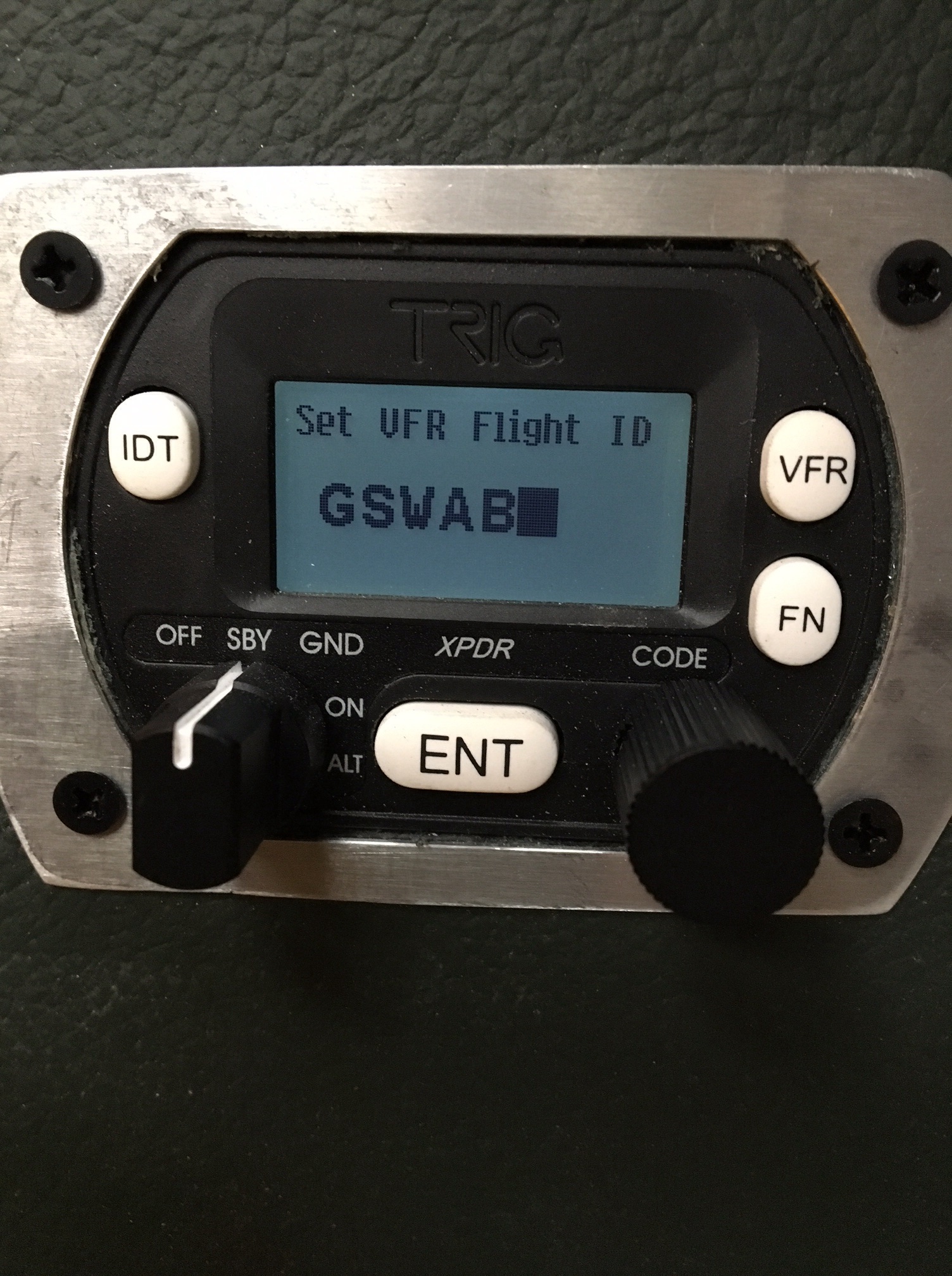
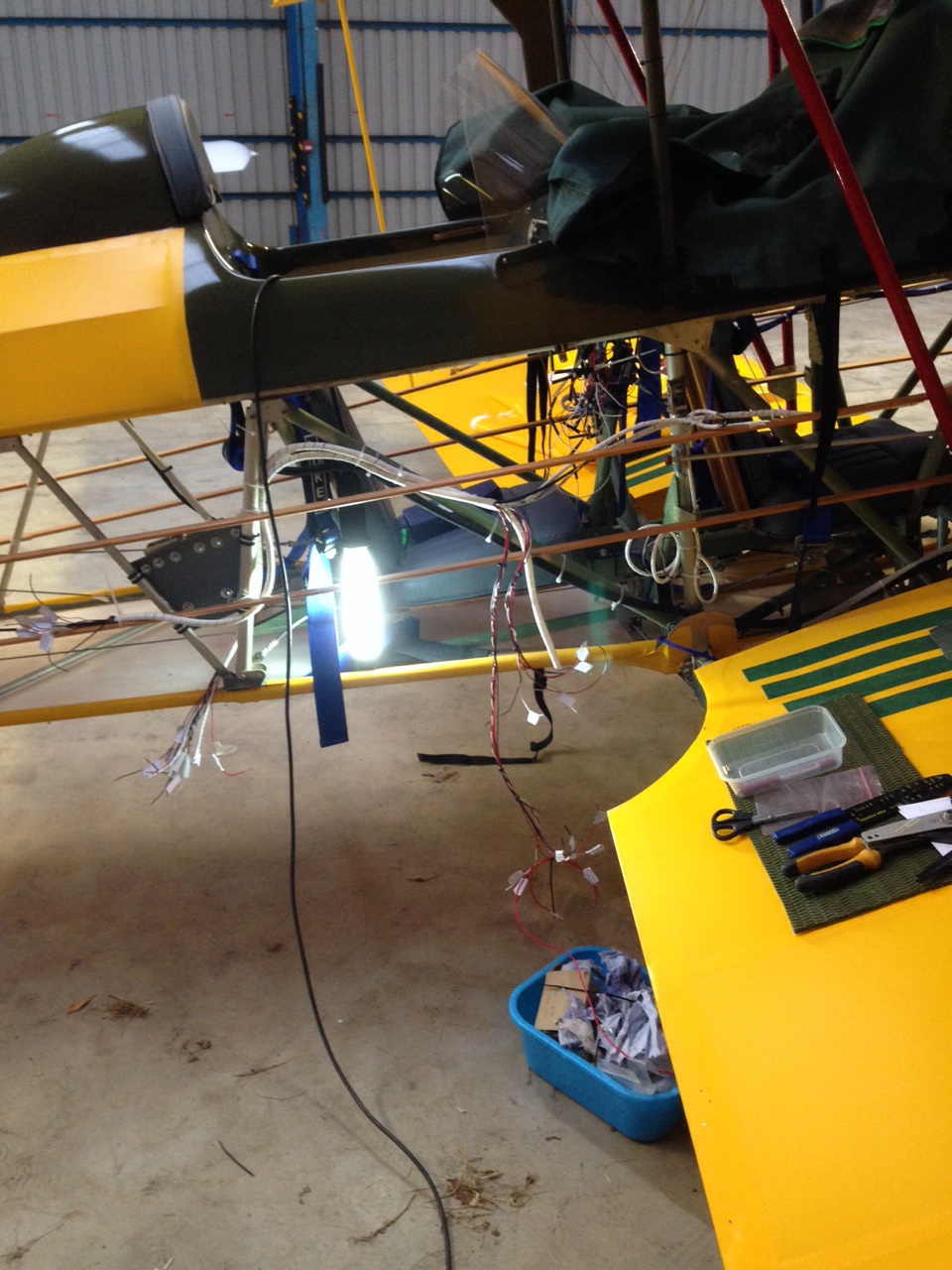
Ordered the last bits ! Trig Radio and Transponder from Paul and the wiring harness that TLAC have a fantastic layout board for
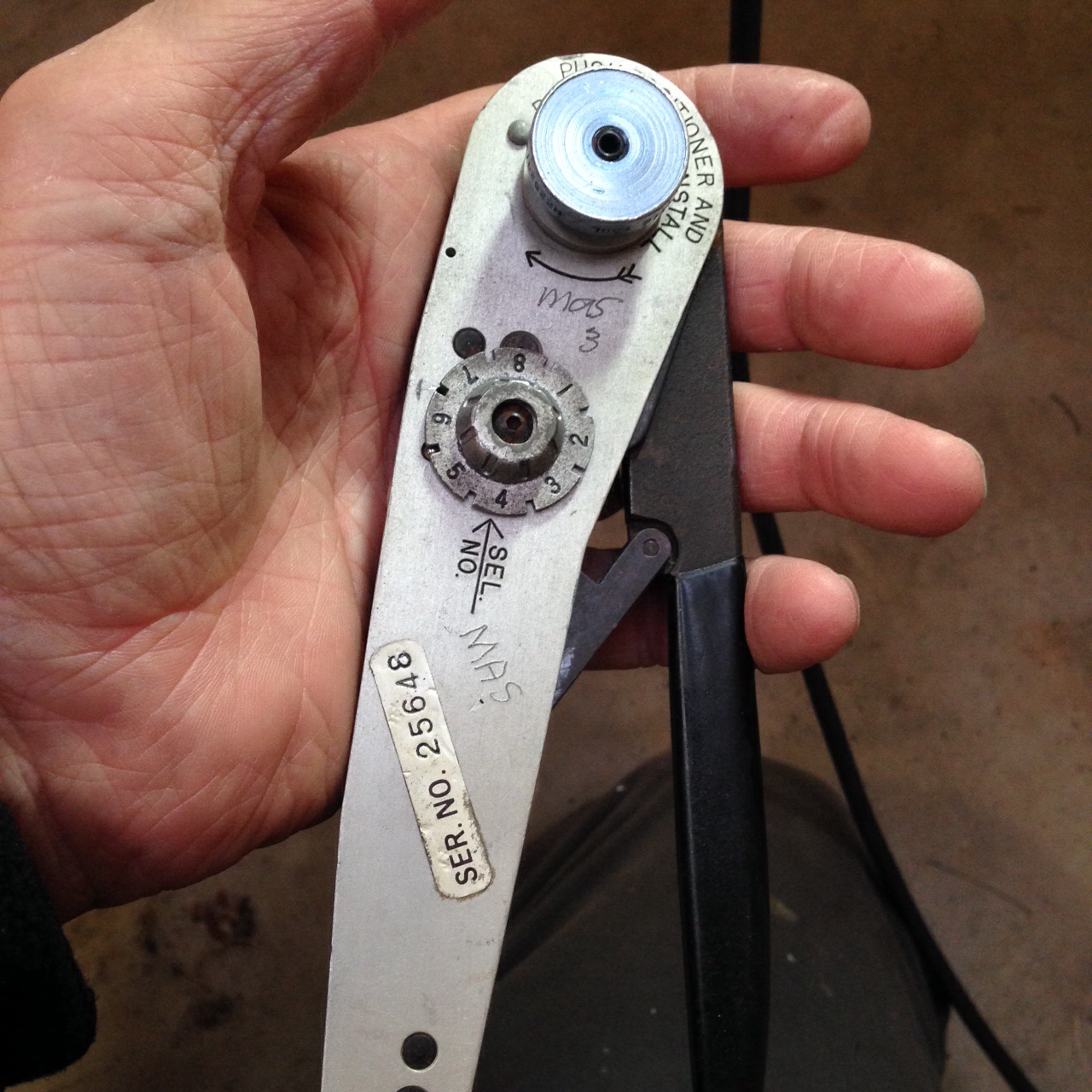
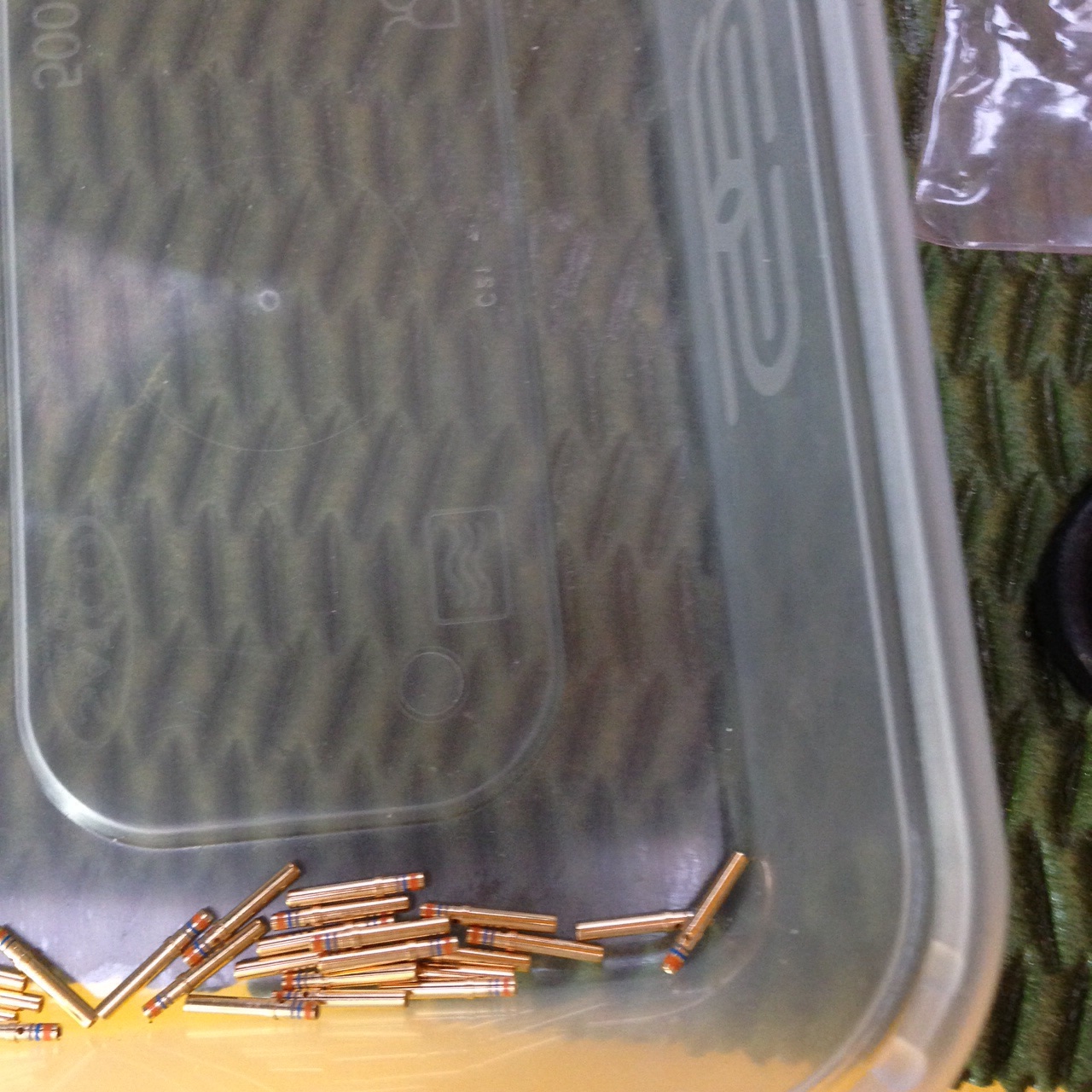
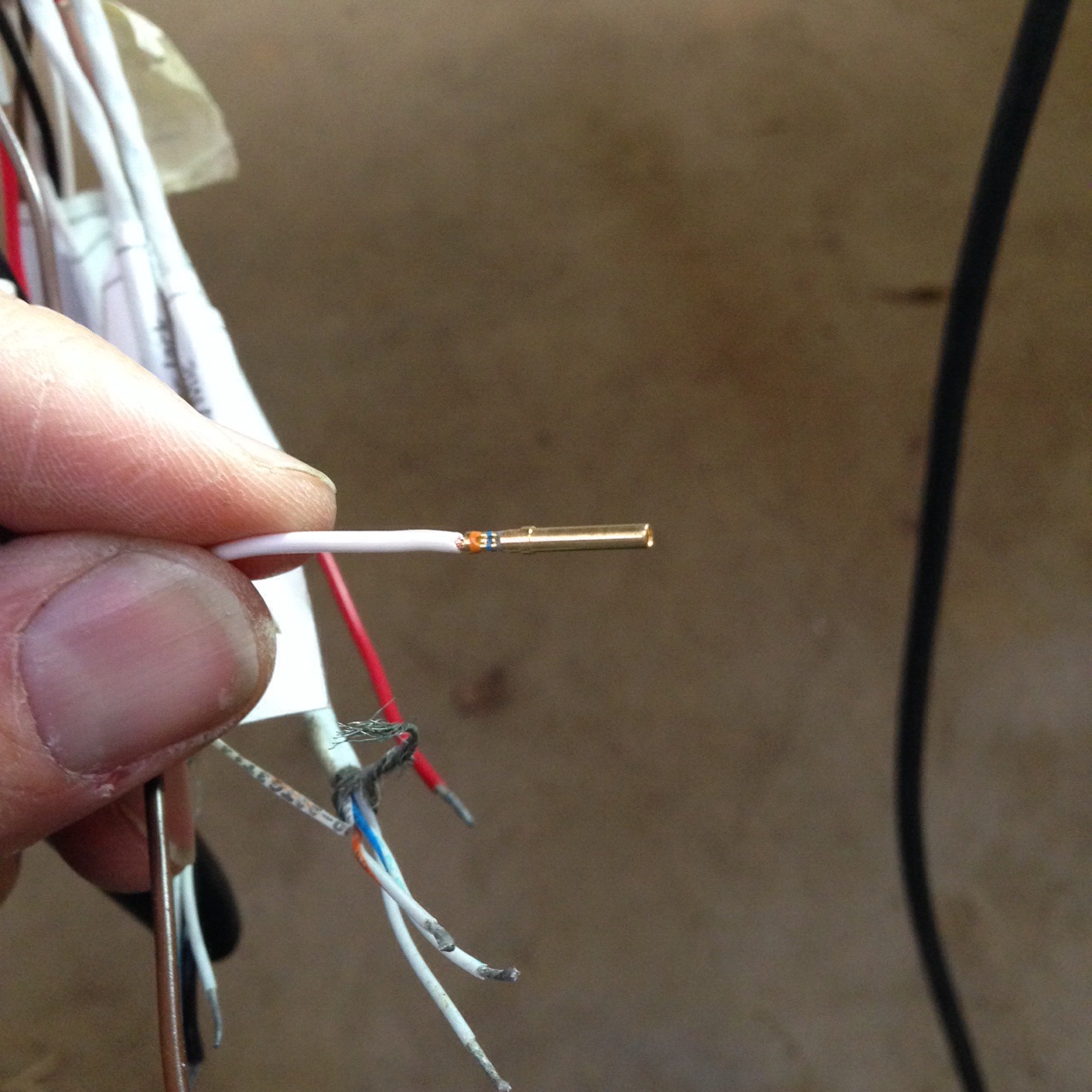
This is now loosely in the aircraft and I have tinned all the cable ends in readiness for what I gather is the crimped method as you build up 15 pin and 25 pin D plugs for the kit ..
I wrote to the LAA sometime ago requesting that I be allowed, offering my 80 plus hours in the Stampe SV4 and around 12 on the Chipmunk (ex Air Atlantique – Mike Collette – local Jersey resident)
The LAA quite rightly asked how ‘recent’ my time was and on checking it’s over 7 years ago … I know it all comes back very quickly .. BUT I do t want it coming back during my FIRST take off roll !
I called Paul at TLAC and he kindly arranged for Howard (Barbour) instructor, to sit with me through some circuit bashing. Three dates came and went as the weather earlier this year confounded every attempt. Then, in April we finally cracked it .. The grass strip was waterlogged on the Thursday but dried ok for the Friday BUT we then had around 20m viz and a base of about the same !
On driving up to Little Snoring you just felt it would lift … And sure enough by 10 am it did to reveal lovely fluffy white clouds
Howard kindly let me do it all from the P1 seat and we took off a lovely grass strip in G-TLAC for some initial upper air work. Such a benign stall … Then back into the circuit for some classic lovely tight right base approaches … What an unbelievable wonderful fantastic aircraft this is to fly … You strap the ‘plane onto you ! not you into it ! you just think of the turn and she goes …. My second approach below
The first approach takes your breath away .. Then you get into the groove and happily wing over and roll her out into a very short final .. Flaring out for my second attempt and so so close to 3 pointer … Then I got slightly excited and pushed a little too far forward on lifting the tail on take off .. Howard gently reminded me of the angle I should be looking for …
We had around an hour then landed for a breather then up again … Normal circuits in Jersey involve longish straight in approaches so we tried a couple of those which makes you realise that seeing over the nose is tricky so you side slip … We tried a couple of long ones of these with a nice little kick straight at the bottom of the roundout …decide I hate long straight in and prefer the much sportier tighter approaches !!
After some amazing approaches Howard ‘kindly’ chopped the engine and said “power failure” .. Cheers mate !! I hauled her around and kept the nose down to keep the speed up but it was going to be tight …. Landed part on the taxiway and part on the grass strip … Nice and gentle .. Howard advised I could have pulled harder and she would have carried in turning to make the taxiway !
Howard then left but Paul was happy for me to do a few more with my son Sam who quite rightly had a go … Loved the responsiveness !
LAA have indicated that this will be fine for allowing me to test fly her out of Jersey… Happy days
Having set the starter button (decided against a key start – something to lose when you are travelling !) on the right of the dashboard and the two mag switches .. I noted that the two Trig panels that TLAC now produce would look much better if I put radio one side (right is logical – keeping the left hand free for throttle) and transponder on the left side.
This meant I had to re locate the starter and two mags … Sam, my son, cut a piece of dural and shaped it to fit nicely as a side panel to hold all three, drilled holes and then helped disconnect and extend the leads to allow the slightly longer run.
This gives a nice easy access side mounted section for all things starter related
Been such a long time mainly due to work going crazy and also lots of flying trips to various places for various people and animals and pickups ! Ups and downs of living on an island !
My (probably too) early submission to the LAA noted that they required me to have more recent tail dragger experience before they would approve me test flying my own creation !
I definitely wouldn’t want anyone else test flying her so called Paul (H S) to see what could be worked out.
He kindly contacted Howard Barbour, a local instructor at Little Smoring, and we made several attempts to coordinate with me being in the UK, Howard and G-TLAC being available AND the weather behaving … It was the latter that made us abandon every attempt since the tail end of 2015.
Then we were over for a family get together this week and Thursday saw a very soggy runway being effectively closed. Friday brought about 500m viz but we were all sure it was going to lift and lift it did !
Stunning clear day with just a little crosswind to start with to add to the fun.
Howard kindly said that I should sit in the back from the off and let me have the controls the entire time …
Climb out to around 1,500 for some general handling and turns then back into the circuit for some classic Sherwood approaches .. Real Spitfire stuff .. Absolutely awe inspiring .. This aircraft is simply unbeleiveable .. What a machine … You think .. And she goes exactly where you want her to …
After hundreds of recent hours on Pipers the first approach feels somewhat scary but as long as you keep an eye on the numbers .. Speed, revs and height …. In for a first wheeled landing .. Followed by a near three pointer… Followed by me touching the heel brakes in landing and getting the nose a little low ! Howard quickly picked me up on these things … And also on my take off attitude … Nothing personal ! Just don’t don’t get the nose too low …
Howard was so accommodating and we discussed what might form a typical Jersey runway approach ie straight in which can often happen … So we setup a 2 mile plus straight in and of course had to sideslip pretty much the whole way in so that you could see over the nose … The Sherwood is a breeze to do this and behaves amazingly well.
Prep work as I hope to cover the Port side this week … Wasn’t hey with the original beech ties so new fresh whipping chord and doubled up to be nice and secure …
Also, as the 50+ wind whipped up outside the hangers I brought up all the aileron bolts and hinge joints to the correct setting with my ‘Rigging – De rigging’ checklist !