Rudder cables first fit

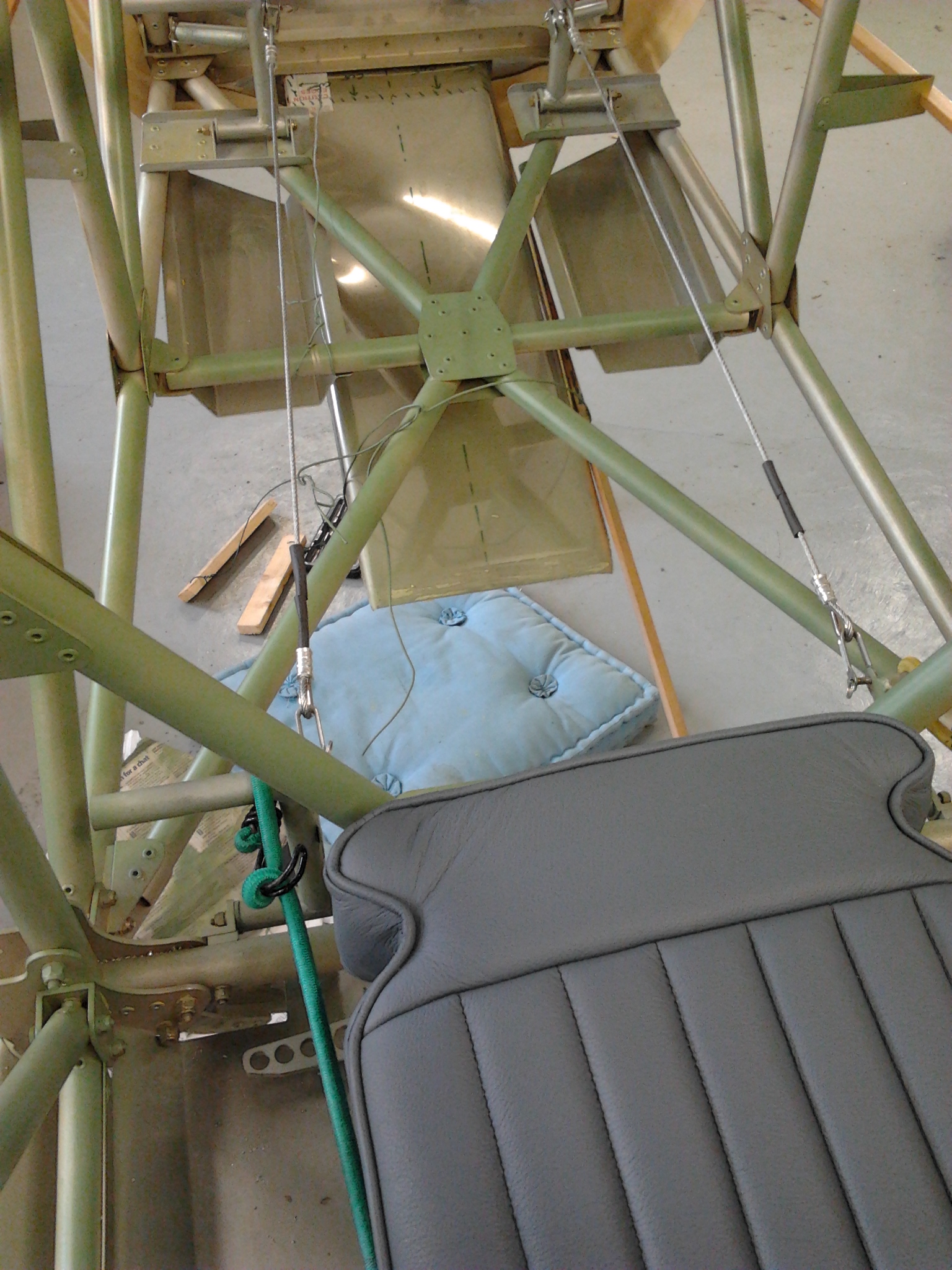
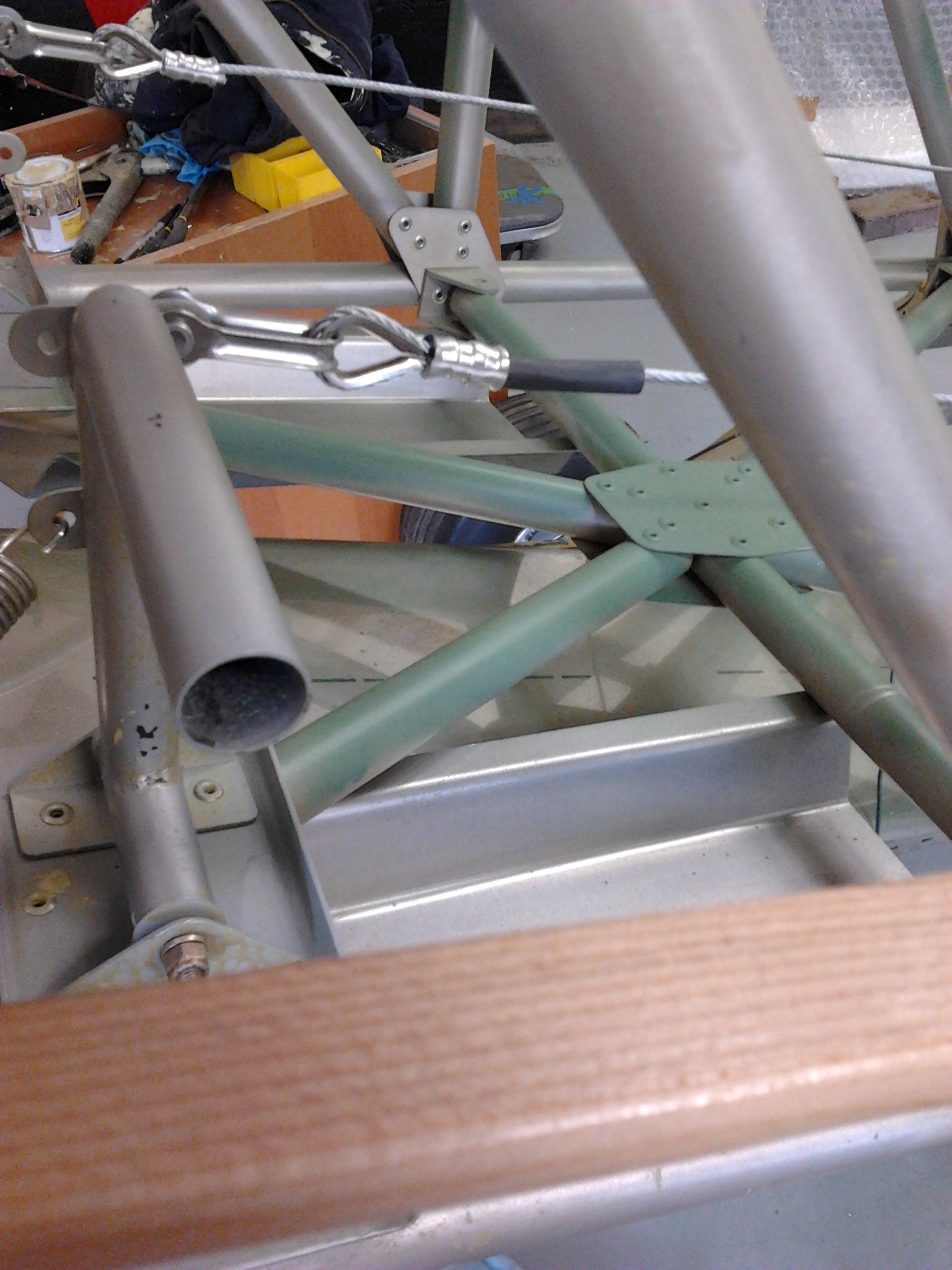
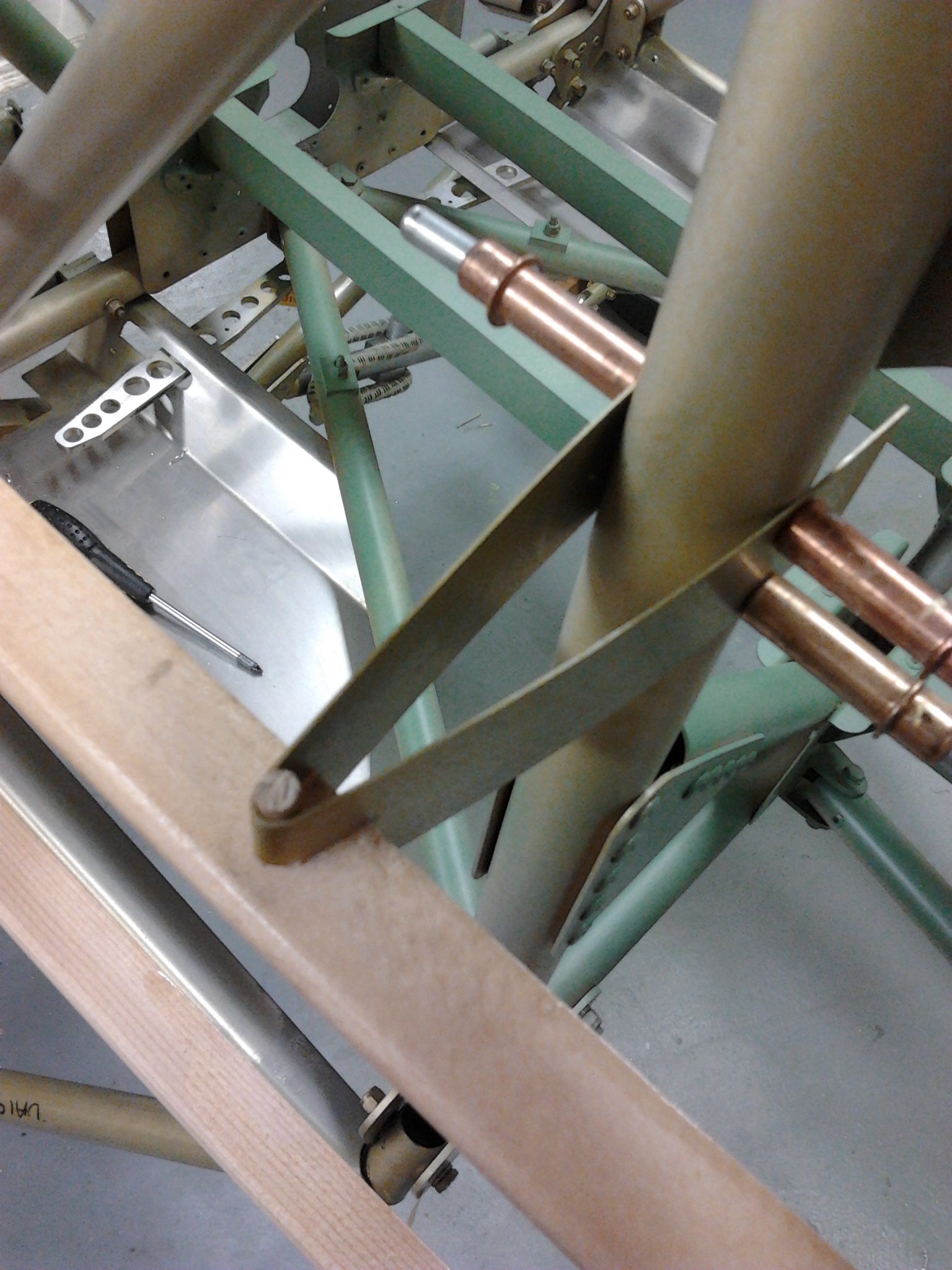
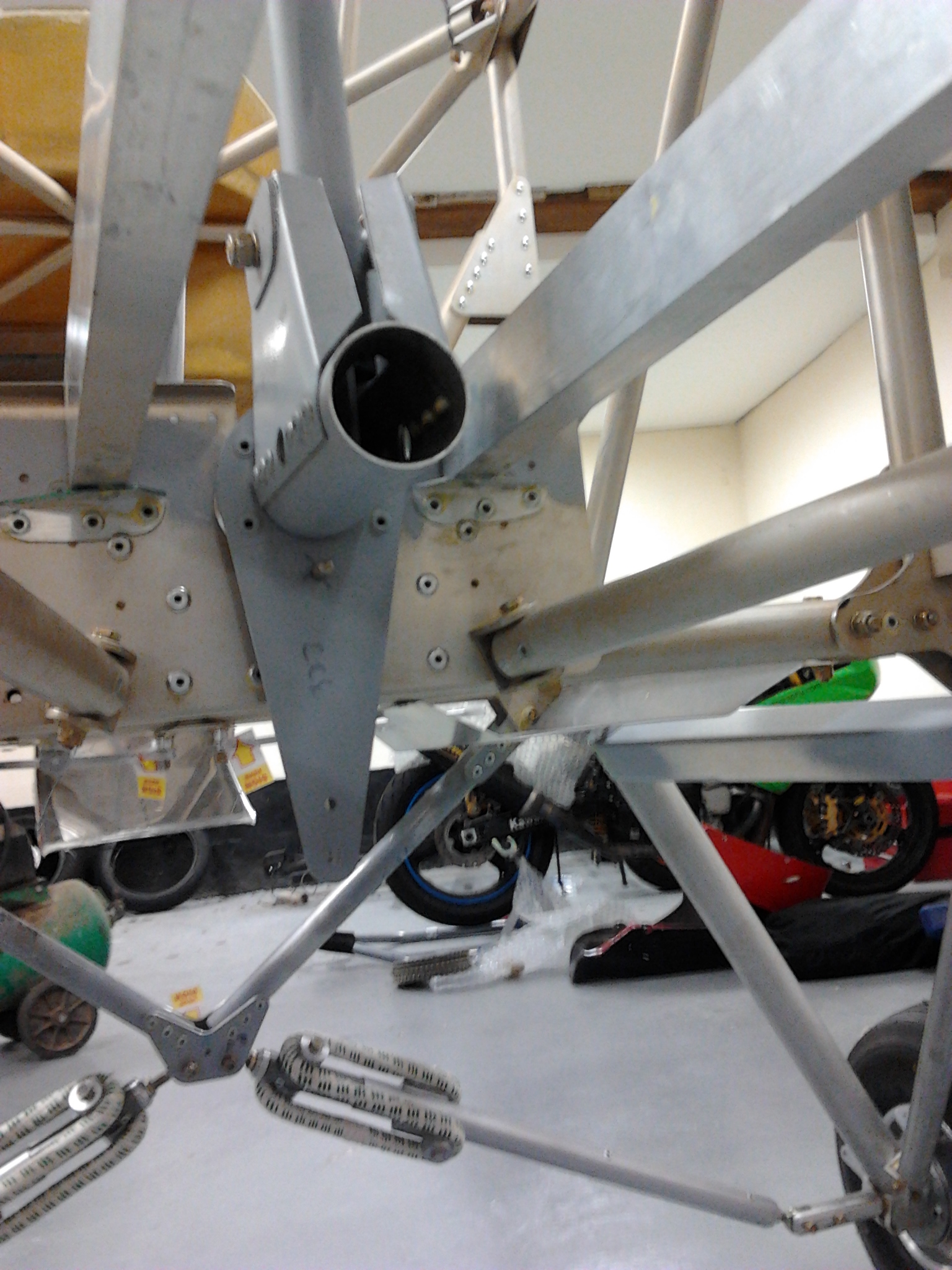
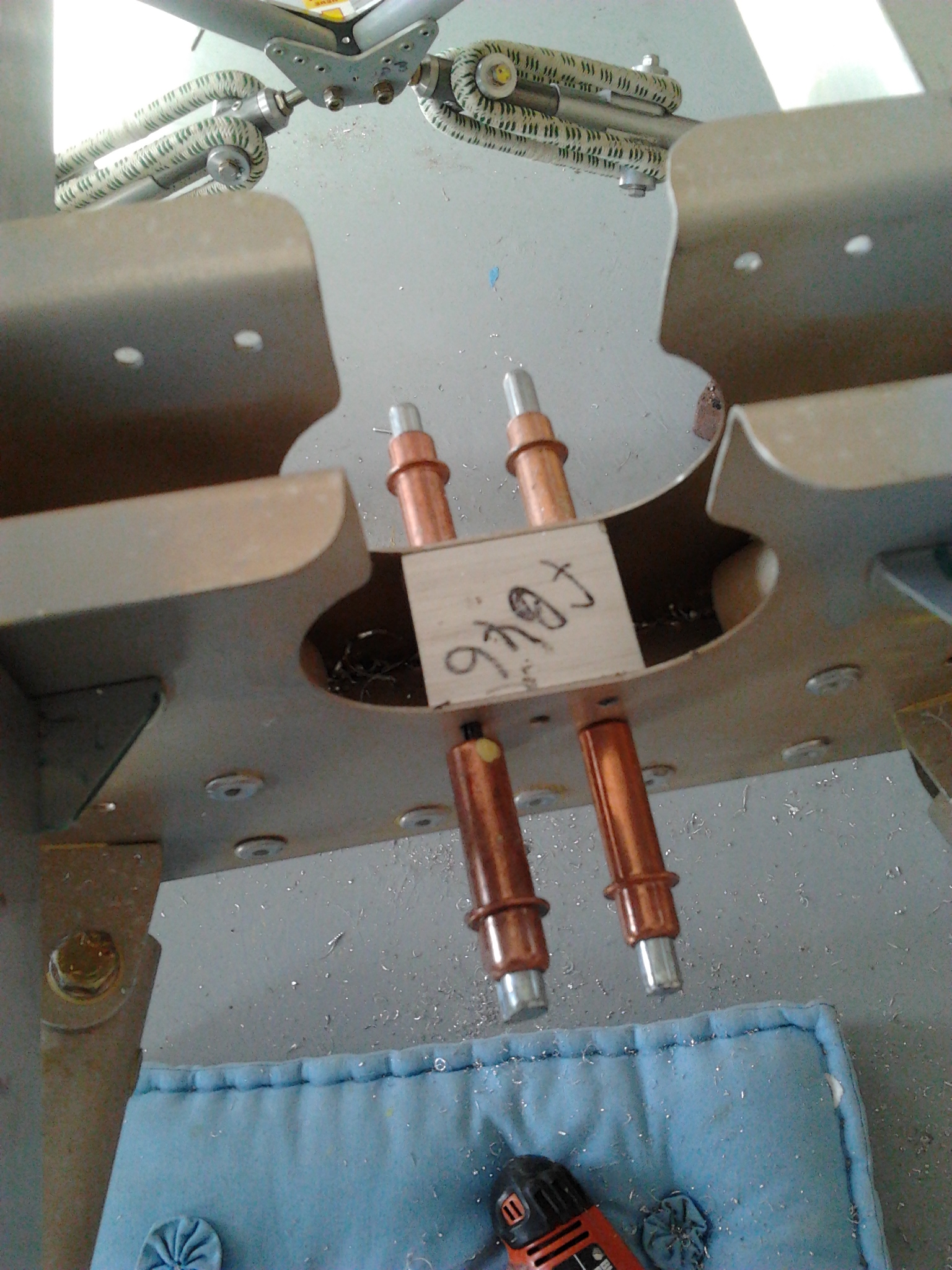
Having successfully cocked up my first two attempts at using the Nicopress crimper (kindly loaned by Channel Island Aero Services – you are a star Bob !) I finally got the hang of how much to leave as a ‘tail’ .. 64cm exactly between front (passenger)  and rear (pilot)  pedals .. so made a small jig ..

rudder cables 1

Heat shrinks yet to be heat shrunk !

Rudd cables 2

Cabling – A new Challenge and Learning !

When I was up at the TLAC factory in Norfolk last month Paul kindly stepped me through what putting a cable together entailed.

Ferrule 1Ferrule 2 

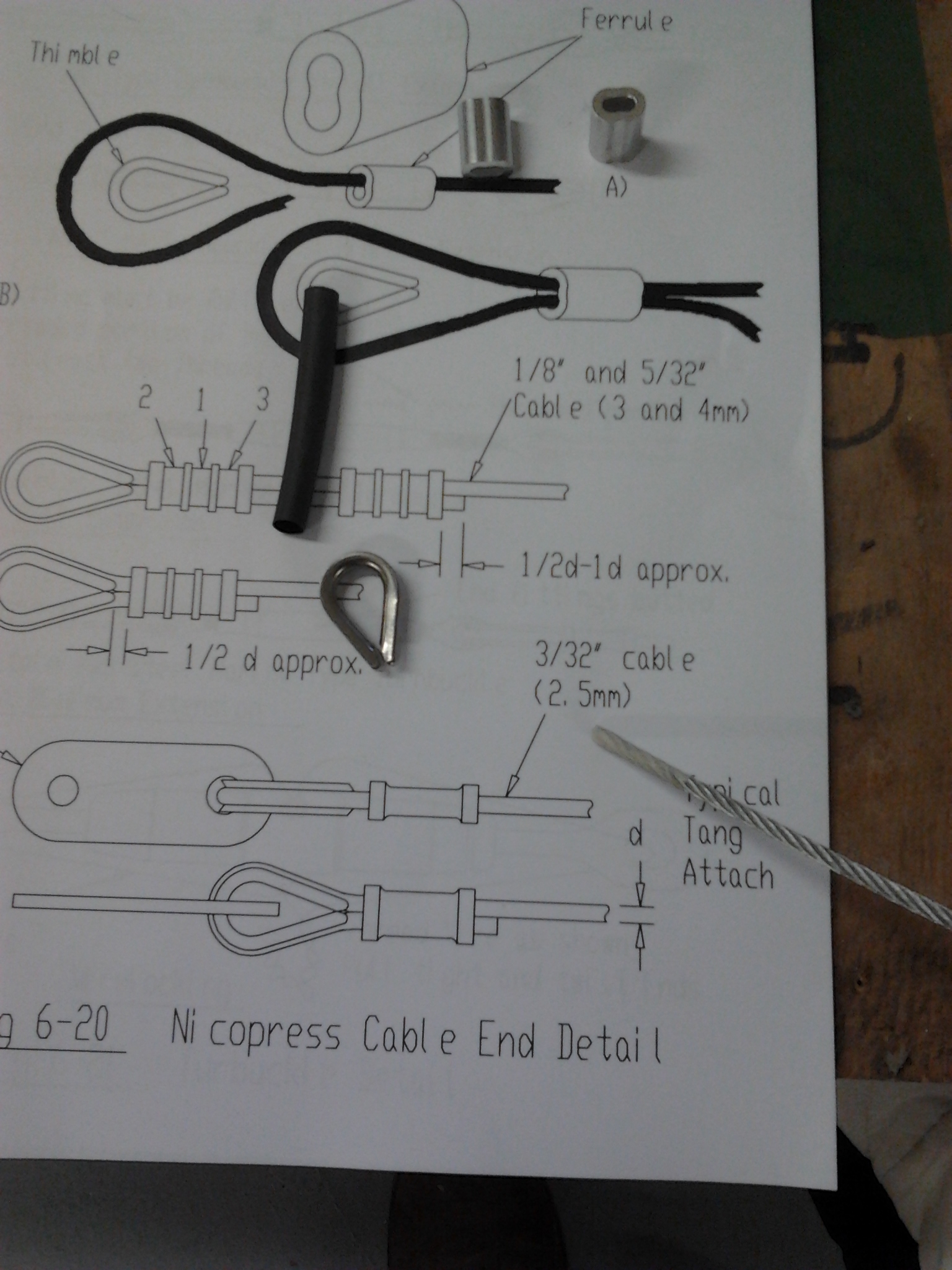
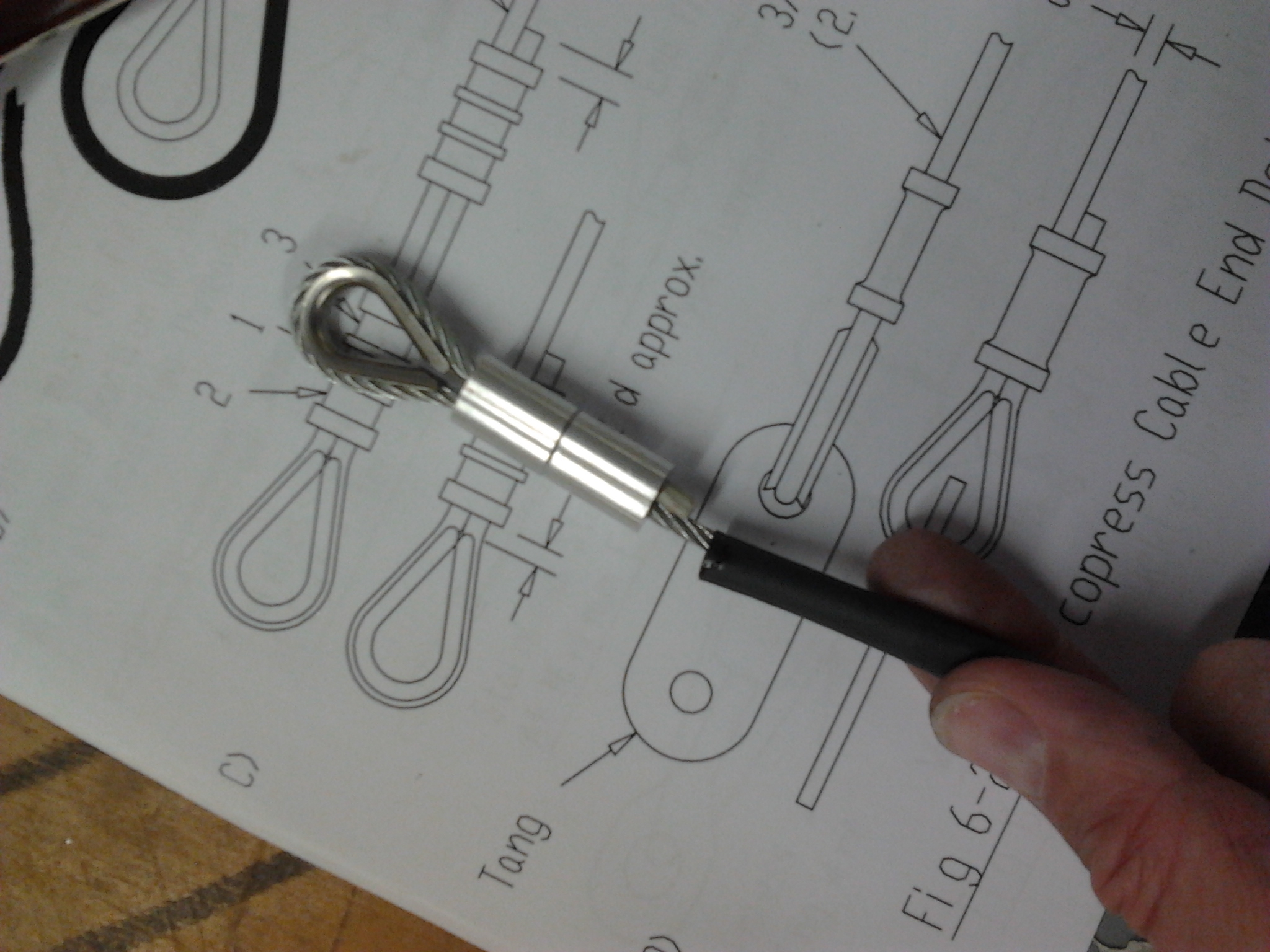
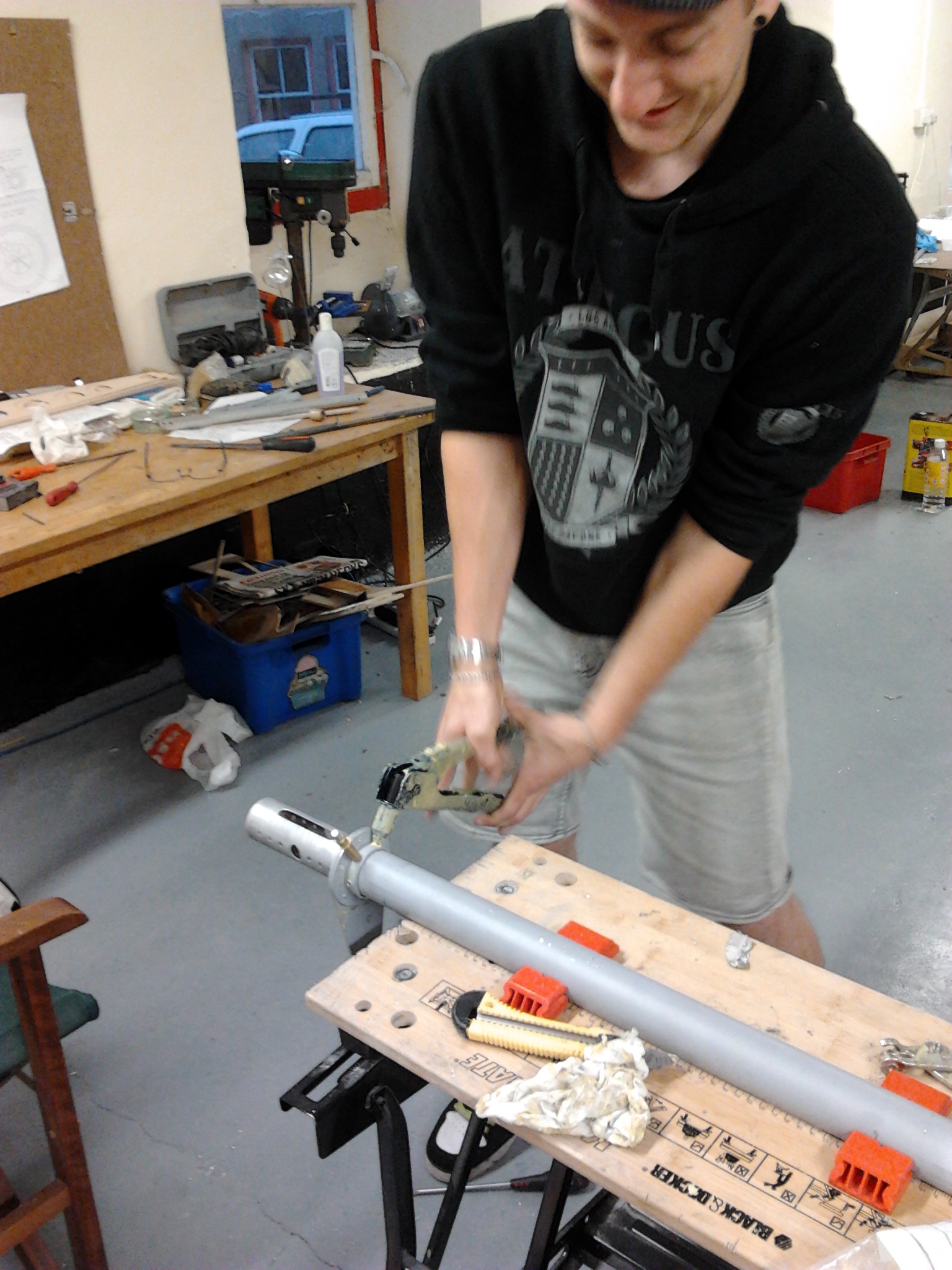
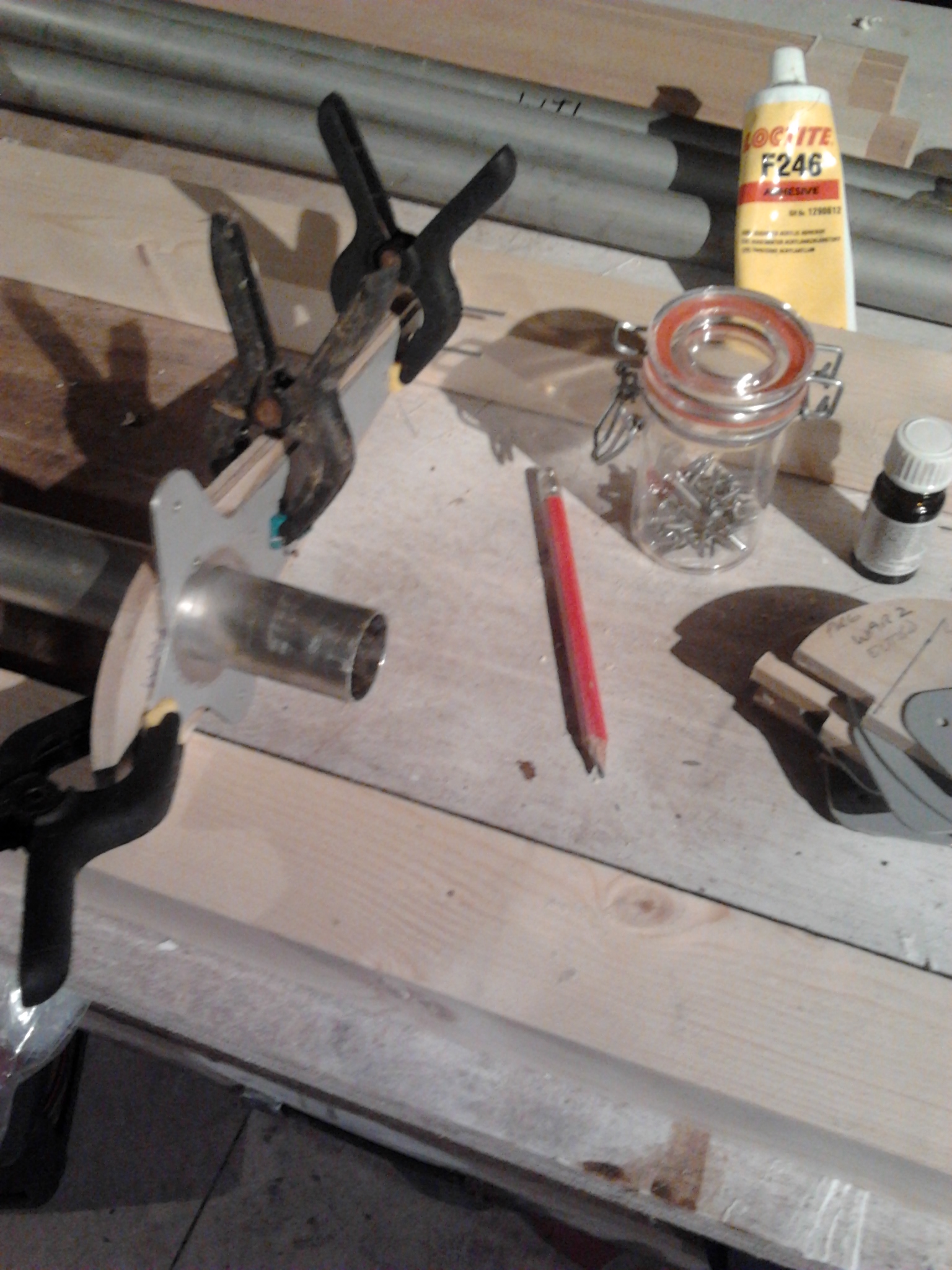
First you wrap a short piece of masking tape very tightly around the cut point of the cable. When you then cut it doesnt fray all over the place. You then get your FERRULE and place it in the SWAGER (the device that compresses the ferrule onto the cable) passing the cable around the THIMBLE and back through the ferrule. Pulling the cable through to adjust to length BEFORE clamping so you dont have to post trim.

Take care to thread two ferrules onto the cable if it calls for it PLUS the heat shink cable – difficult to slot on afterwards !

After the first press (in the middle)  you remove, turn through 180 degrees and compress again. Then you do the same one end and then the other. This ensures you have an even grip over the length of the ferrule.

Not posessing a swager – South Pier Ship Yard have kndly offered to let me use theirs (very many thanks Ed !) who has shown me some of the very neat job he does on their boat cables.

First step will be to accurately measure the point to point between the front rudder pedal and the pilot rudder pedal – as these are the first I will try.  As Ed suggested, mark where the cable ‘peaks’ over the Thimble.

Why is it taking so long !

The main question people ask when they see it is ..  “How long before its finished ?”

This is always a difficult question .. you are constantly having to learn new things and so estimating something that you have never done before is not a particularly exact science !

  • Riveting
  • Engine
  • Etching
  • Drilling Stainless Steel
  • Cabling
  • Covering
  • Wiring
  • Balancing

Also, if you are sensible, and pay attention to the small details .. you end up walking away from the barn with a satisfied feeling … although there have been times when that rivet that didnt sit flush … nags away at you and there is no alternative but to carefully remove it the next day and GET IT RIGHT !

The ‘Small stuff’ like rounding the corners of every sharp edged or square edged item by cutting, filing, then smoothing with emery which then removes the initial etch prime – so you have to touch up all takes time. But they jump out at you when they havent been done !

The project now has a number of concurrent strands running which means you can spread the interest/load and complexity. So if I hit a snag I am not stopped dead but can move on with other things. Current ‘strands’ are:

  • Engine – its in – but now needs air ducts, cabling, cooler shrouds, fuel lines, solenoid, regulator, RPM guages, Oil temp, Oil pressure etc
  • Stringers – the 2 long ones on each side are in and brackets being shaped – need to fit to front end, taper at rear. Belly stringers will be riveted in place once exhaust duct is filed smooth.
  • Controls – Torque rod done, sticks done, drilling clevis bolt for split pins, rear torque rod to complete
  • Bolts – all to tighten and paint mark – ready for Inspection
  • Ailerons – First (Lower Left) underway with rib location marked on spar, ready to tag glue then fibreglass

So lots of things running concurrently to keep me busy !

First Stringer on

Stringer fix

The stringers are long bits of beech or spruce that run alongside the body and change the shape from a boxed off section to take the curve of the material/covering.

The short ‘V’ shaped brackets that TLAC provide are tailored to length the further towards the tail that you go (for the side stringers)

Preparing the stringers takes around 2 hours each to round of the edges, then treat with 50% thinned polyurethane nefore another sanding, then final coat of full 100%.

They then slot part way through the ‘V’ and simply peg with a dowel – neat and simple !

Spraying the Body

Managed to get a heater to warm up the body before spraying (thank you Colin !). Jet style oil fired heater soon had sauna like conditions in the barn … Masked off the key parts

Masked

Etch paint duly mixed with its activator and left to stand for 20 minutes. Then applied to all bare metal surfaces that have been added, ie Tail feathers, undercarriage bits etc

etched

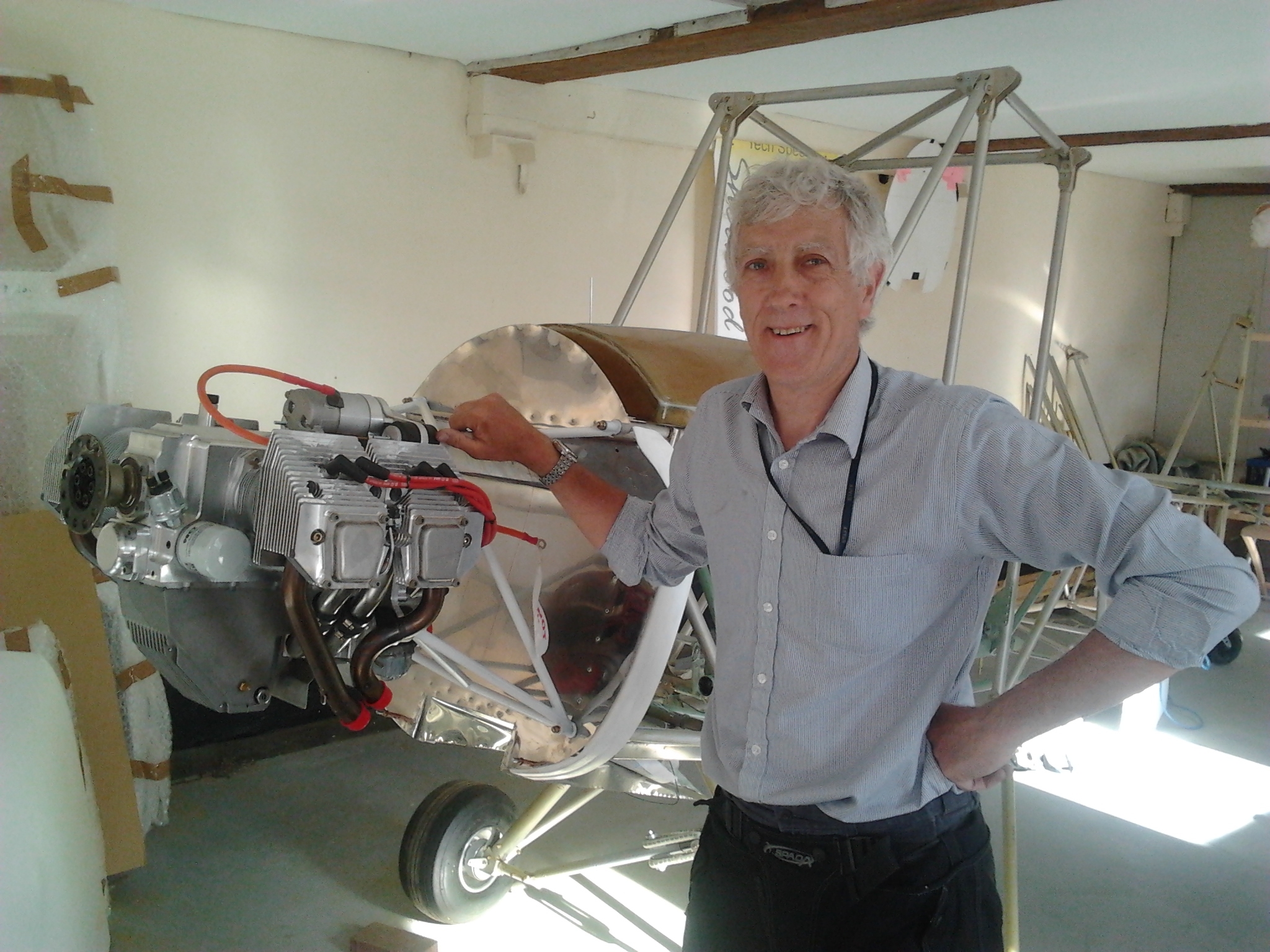
Engine installed 4 June

Managed to borrow a nice chunky engine hoist (thank you Mike Fleming .. a star  !!) .. spent careful time placing heavy duty strops under the engine in the crate so that no key part would be crushed or bent as the lift took the strain. Three of us (Will, Keith and I) managed to get the engine swung into position – eventually remembering the lower rubbers have a metal spacer washer on first !

Engine in

Fits onto the TLAC supplied cradle very neatly.

I can’t quite locate the stainless exhaust onto the stubs and dont want to push and pull the exhaust outlets without skill associated with that sort of day job !  Hopefully I have a friend at Channel Island Aero Services that will cast his expert eye over this.

Have temporary full length thread bolts for now but Paul at TLAC is sourcing proper engine bolts with thread only as the bolt leaves the male/female bungs and facing mounting washer.


Engine mounts – Initial check

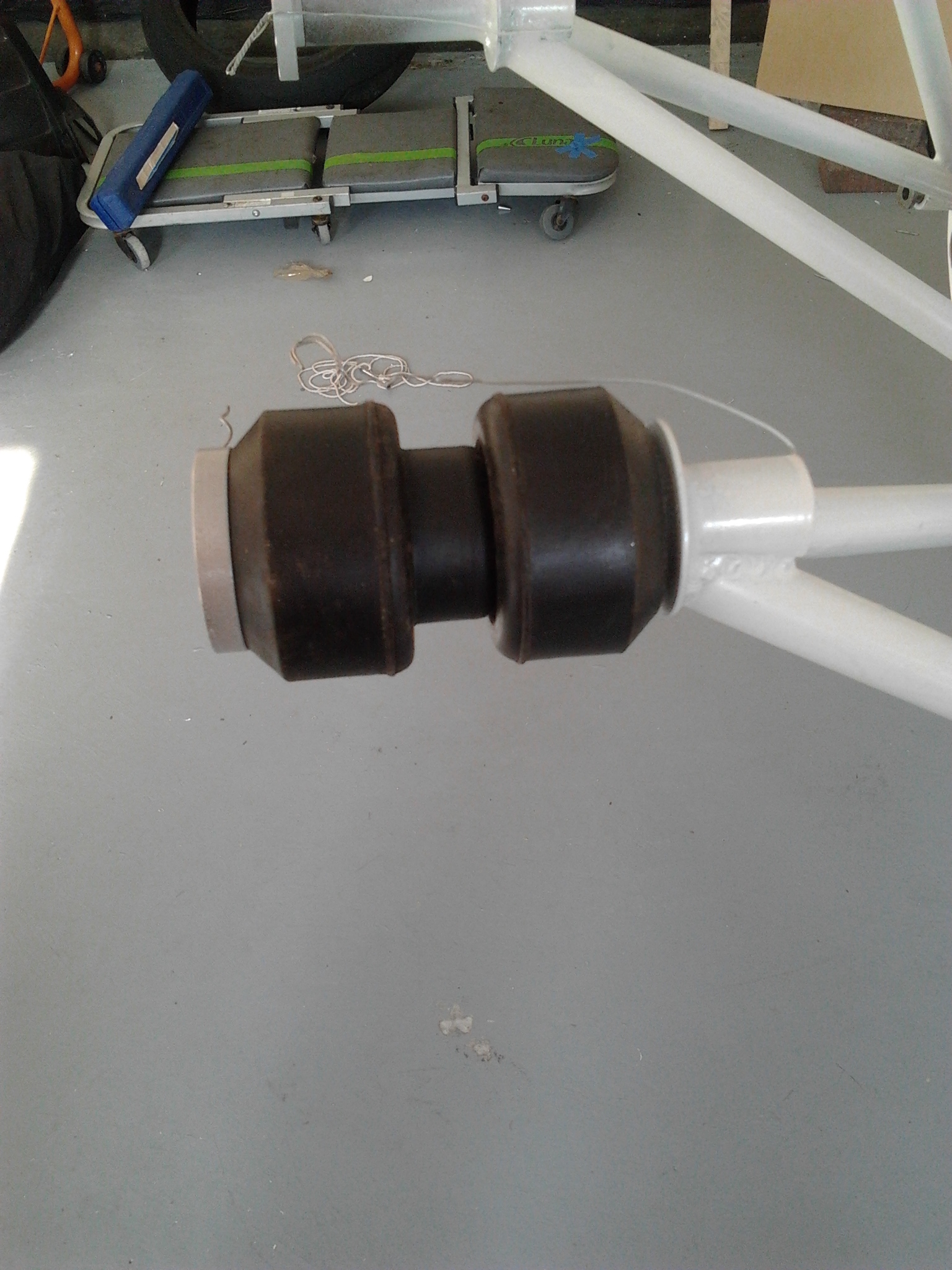
Initial check of engine mounts for Jabiru 2200 engine … found male and female rubbers in the engine box … these provide  secure fit to the engine cradle

Engine rubbers

Need to source the longer bolts that go through the two rubbers, back plate and support flanges.

Also, looking at the installation manual, I need to plan wiring, starter solenoid, fuel line runs, ram air cooling, throttle runs etc

Plan will be to get engine temporarily ‘in situ’ to allow top decking and top and bottom cowls to be positioned and then begin profiling fittngs.

Control Sticks

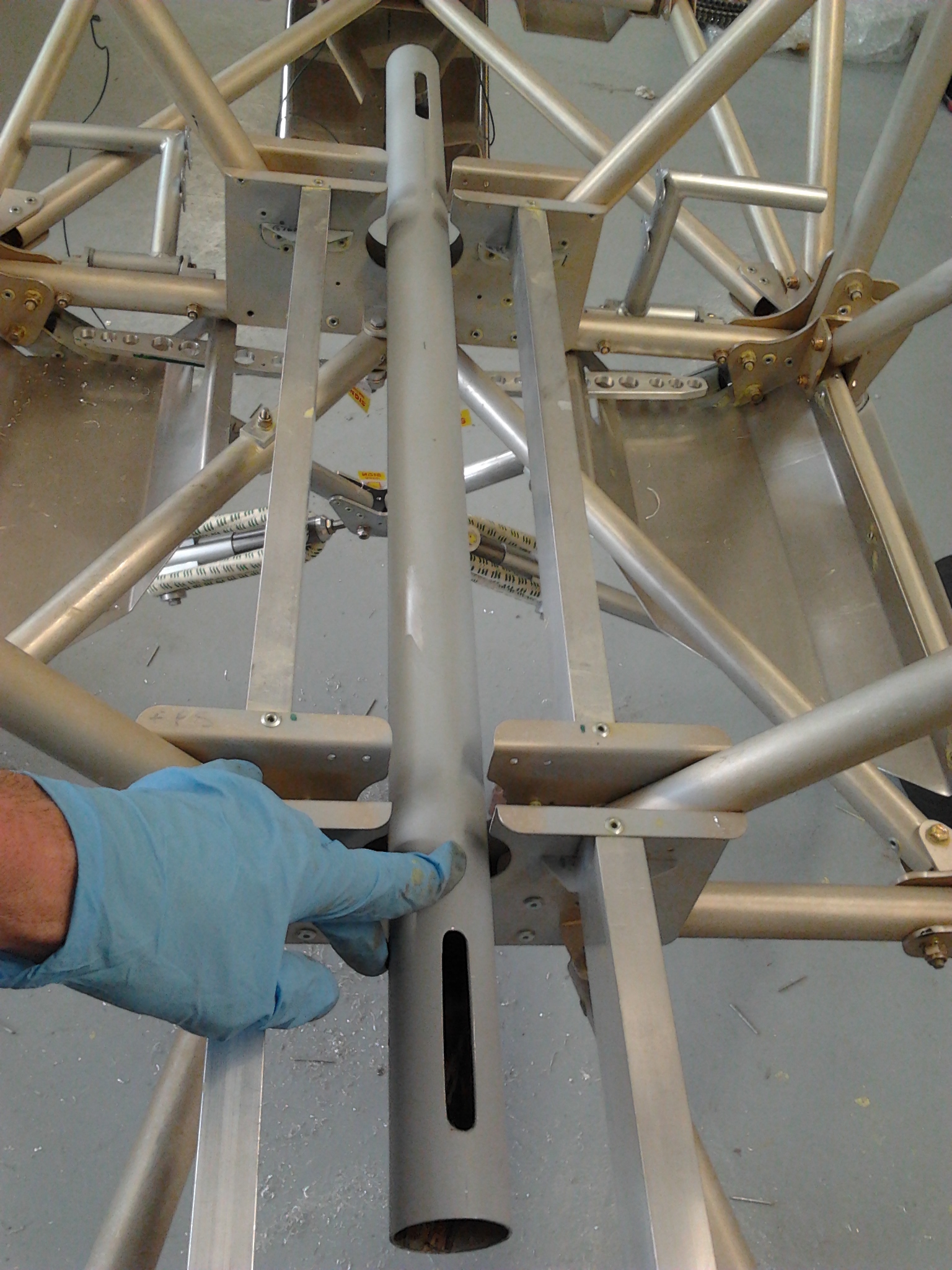
Once the Torque rod is in place you can complete the shaping of the Control sticks. These mount inside metal sided shrouds and run in bushes. The spades of the control rods run in the central slots you have shaped in the torque rod tube.

2 joysticks in place

You need to have a widened hole in the side of the torque tube aligned with a similar one in the shroud so that you can retrospectively fit the internal elevator control rod clevis pin.

I found the front elevator space welding slightly proud and catches slightly on full forward and full aft movements. Small filing – re etch prime and its fine.

Careful sequencing to align the aileron collar and control horn and then fit pilot joystick.. good experience for Sam to have a go at nickel rivets …

sam riveting horn aileron horn lower

aileon horn top view

Aileron Rib Peparation

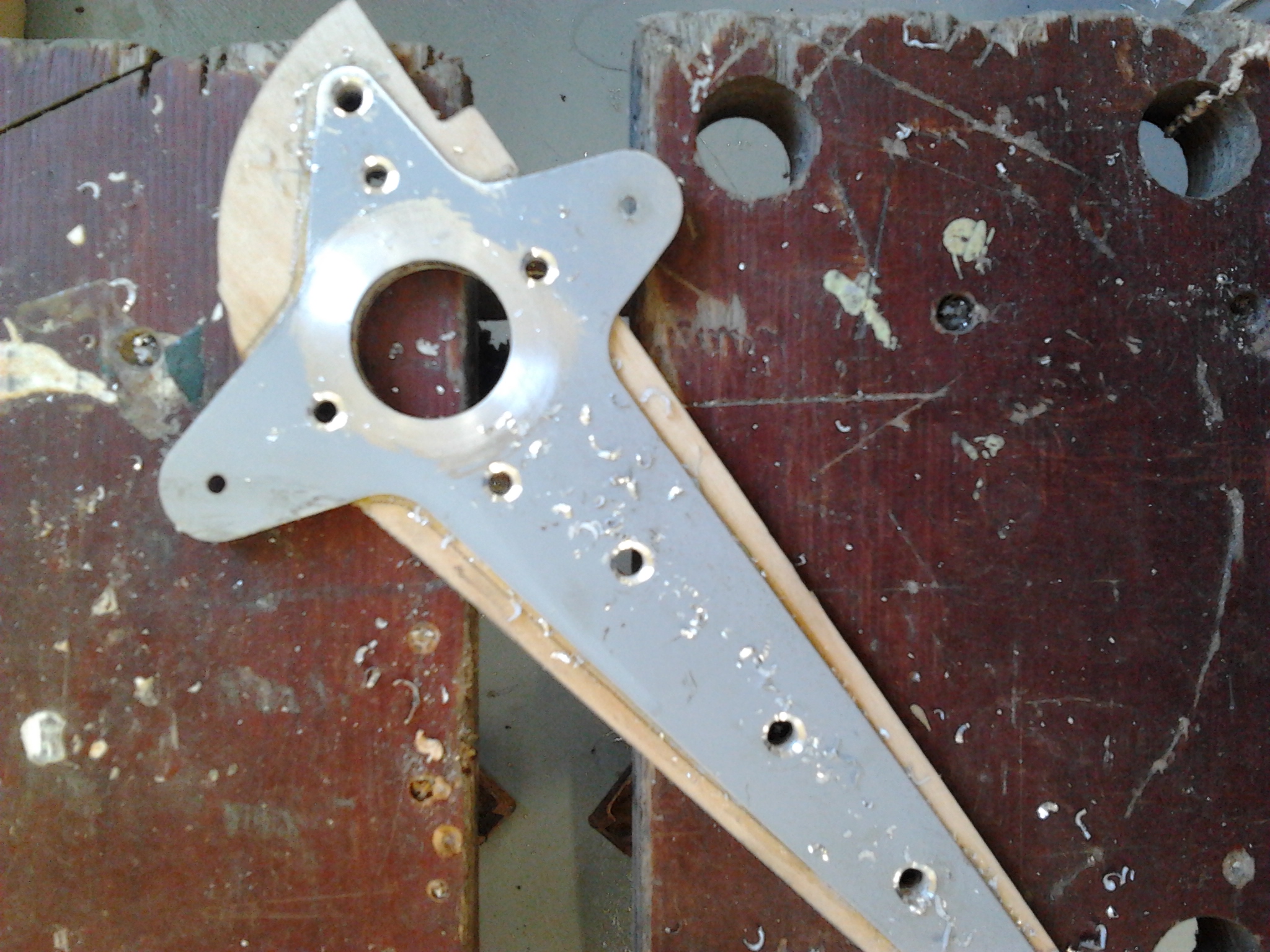
Aileron ribs have metal doublers bonded

Aileron rib doublers

You have to be carfeul to make the correct Left and Right hand units. .. so doublers are on one side or the other depending if it is a LEFT or a RIGHT aileron … also need to check if its an UPPER or a LOWER aileron so that the pick up points are in the right direction !

TLAC provide a picture page to ‘pre test’ you on which aileron rib is which.

I found each rib needed to be sanded so that it could get onto the aileron spar.. again .. not too much off to keep it as a stiff fit.

Aileron rib rivets

This work is not being carried out at the barn but in my garage roof at home so I can nip out and do the odd hour here and there and its warmer than the barn so better for curing glue and ultimately fibreglass.

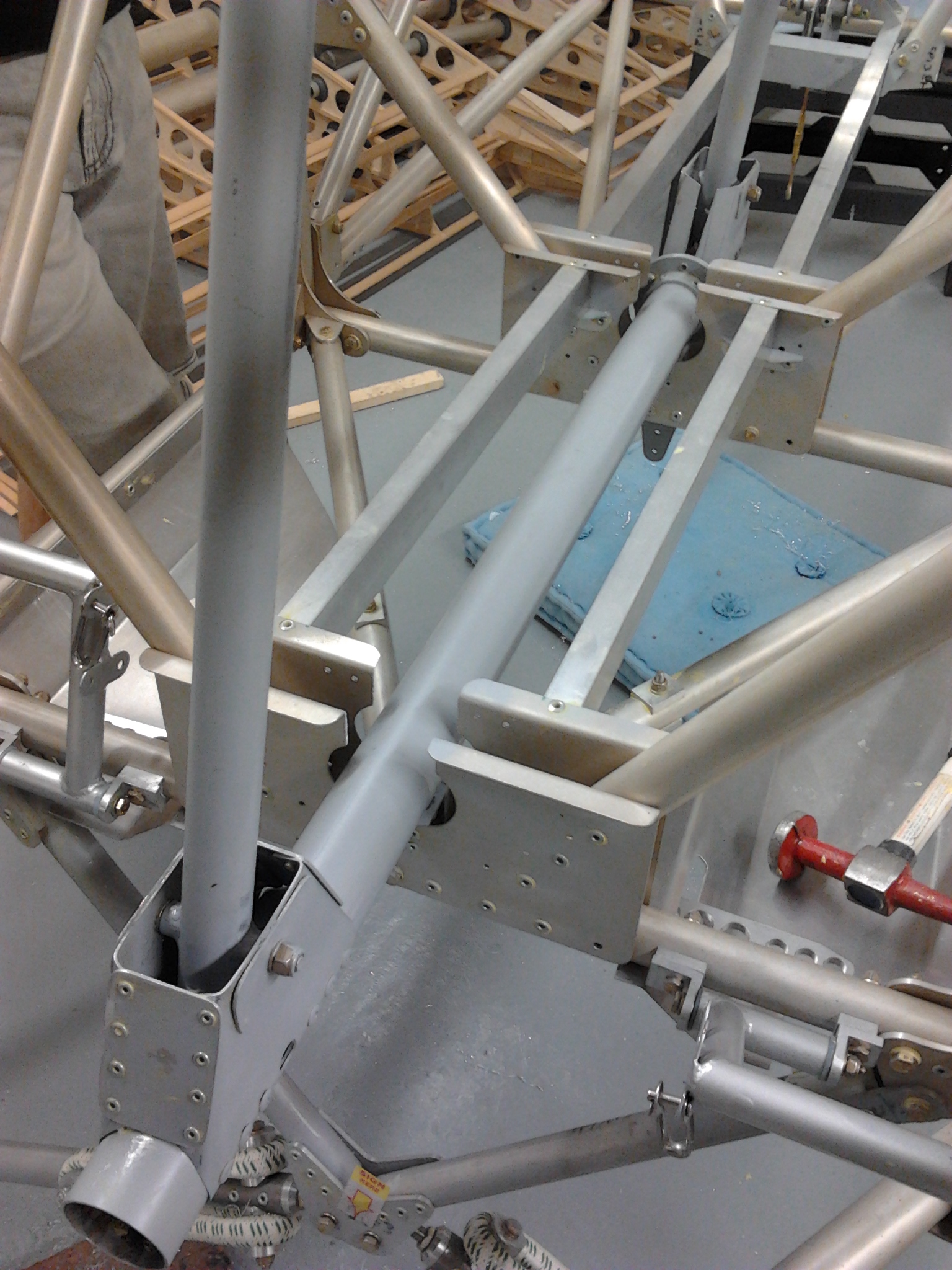
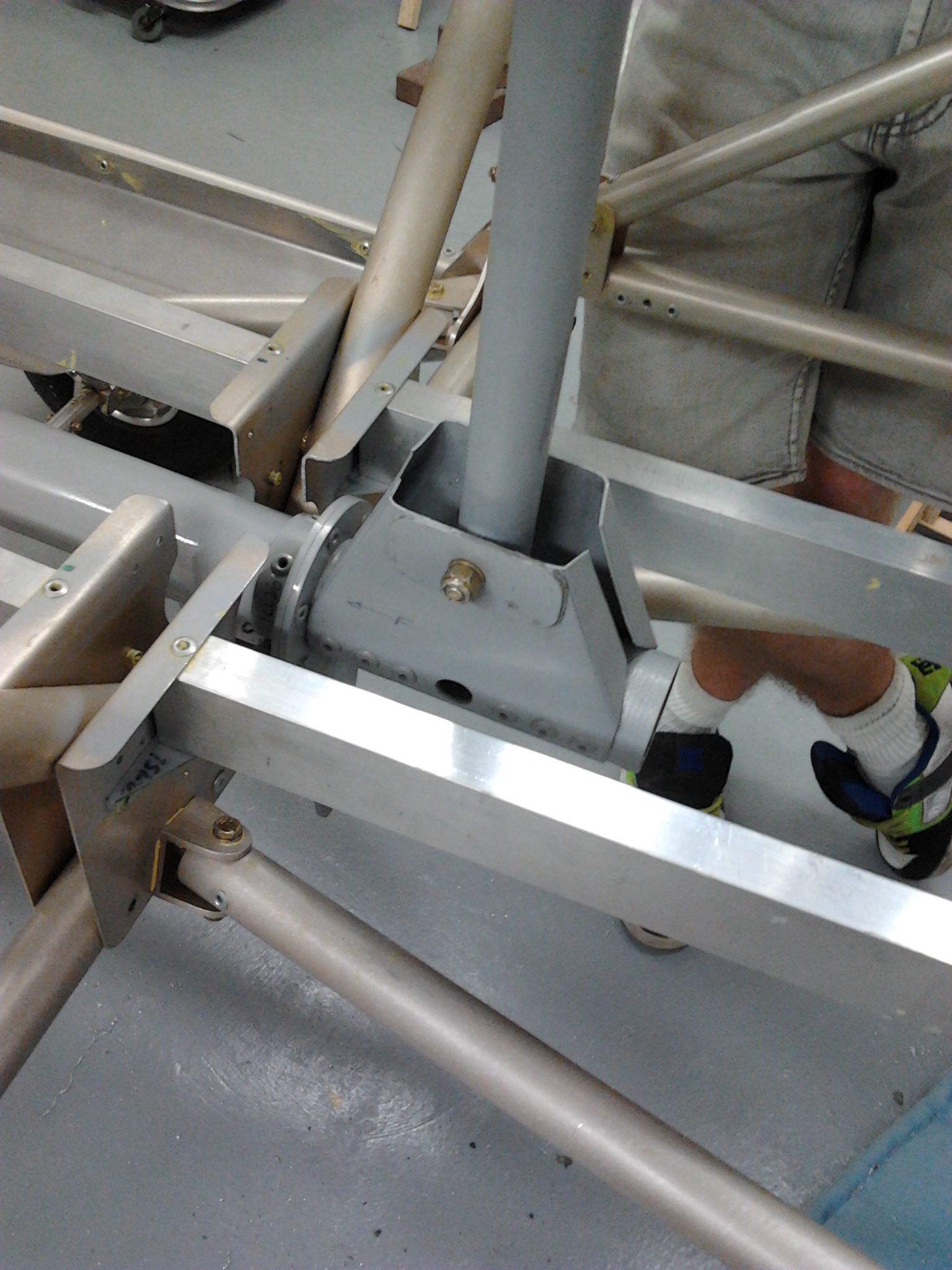
Torque rod control

Fit the support centre bracket between main plates. This has doubler plates that have been pre glued to the inside faces.

Torq control mount position  Torq control mount bracket

Check alignment using fixed rigid between holes .. this is key so that the aileron movement of the torque rod is smooth axially.

Torq align check

Fit Torque tube and ensure ease of aileron movement and no end float

Torq tube in position

Confirm hinge washers

Torq hinge lower

I had a slight problem with one of the brackets moving fractionally when I came to remove the temporary rivets and pre glue them onto the torque rod. The plan guidance says you may need to slightly widen a hole to get smooth movement and a minute amount of filing of the centre bracket leaves the movement finger light !

Blog at WordPress.com.

Up ↑