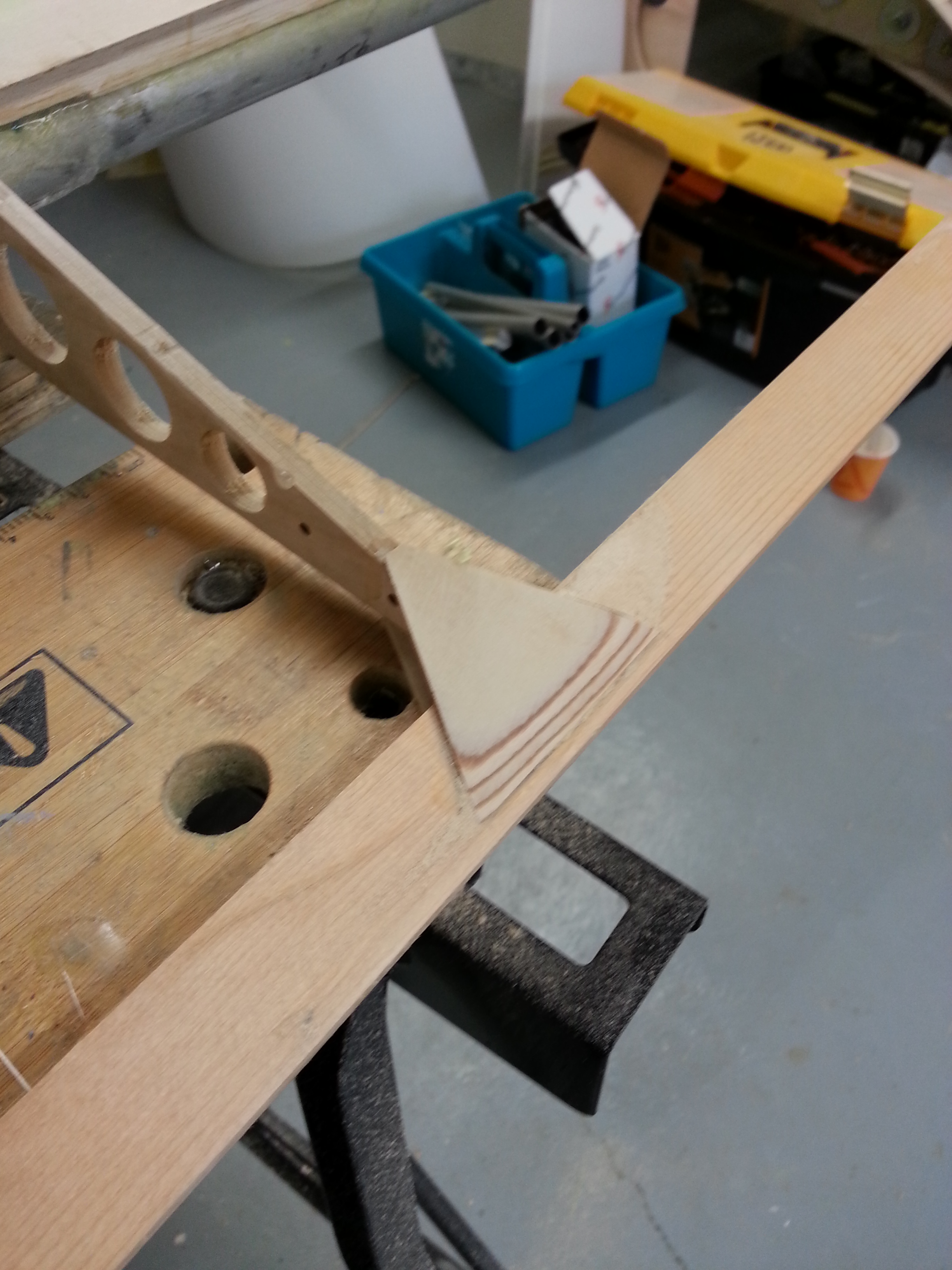
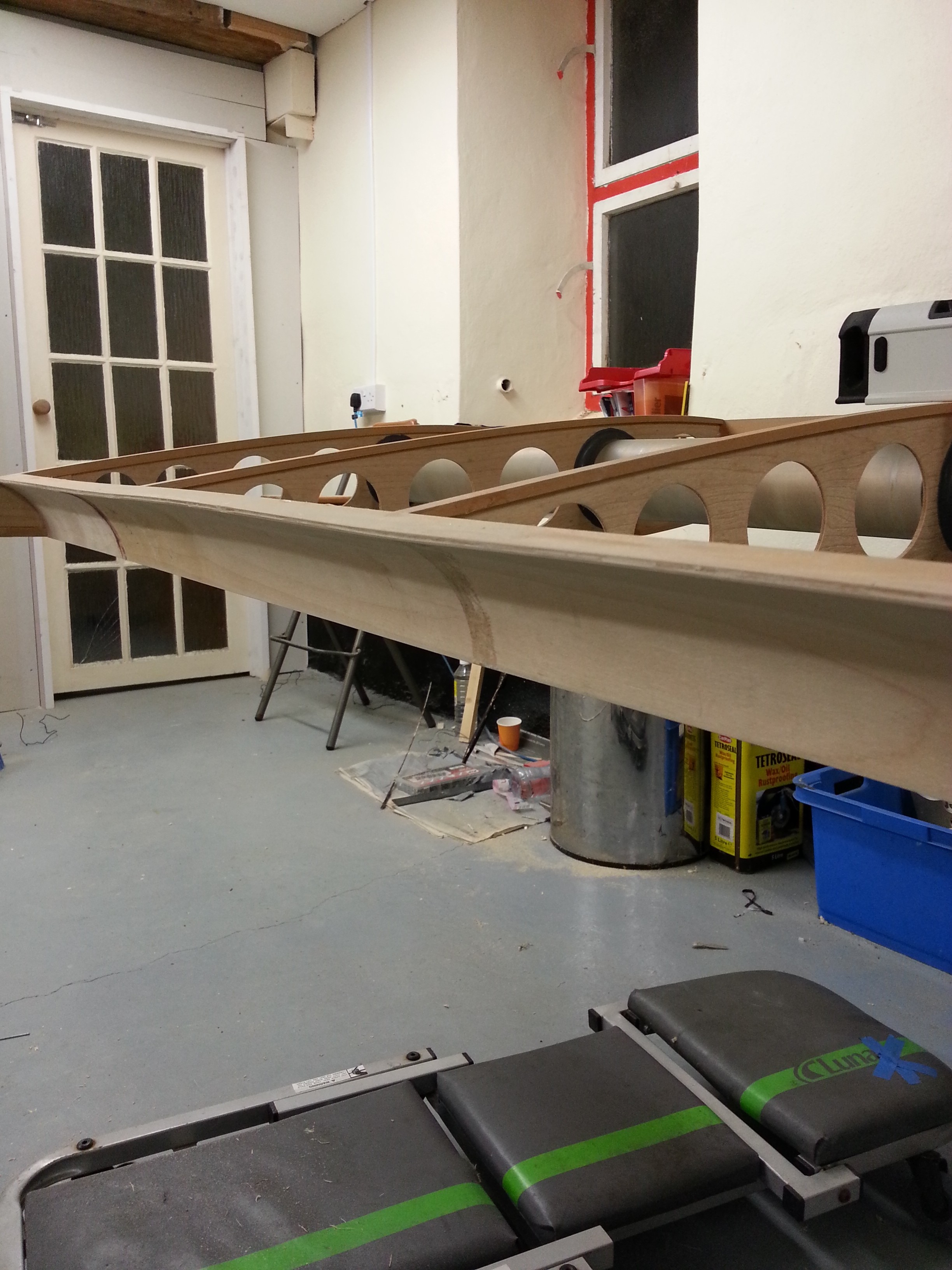
The two lower aileron hinges are all in place and now the finer finishing can take place. The ply gussets that went bon some rime ago (top and bottom) are sanded to make a smooth finish to the trailing edge
A mile of runway can take you anywhere

The two lower aileron hinges are all in place and now the finer finishing can take place. The ply gussets that went bon some rime ago (top and bottom) are sanded to make a smooth finish to the trailing edge

At last …. finally got first aileron fitted today … plucked up the courage to align and mark up hinge fittings then drill through, countersink and duralac through wood. Washers were shaped to fit in parts to provide beefed up face for wood face.
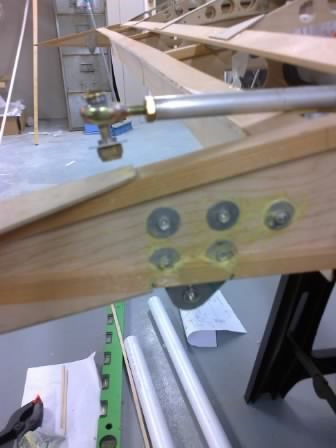
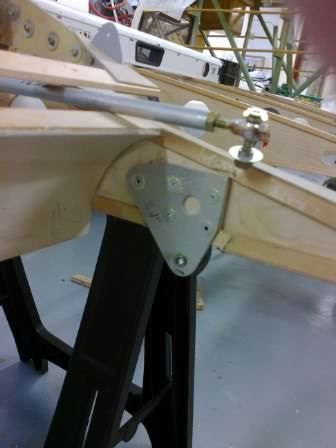
Then put in place and temp fit end bolts … should give even top gap of 4mm min ….to allow for tilt
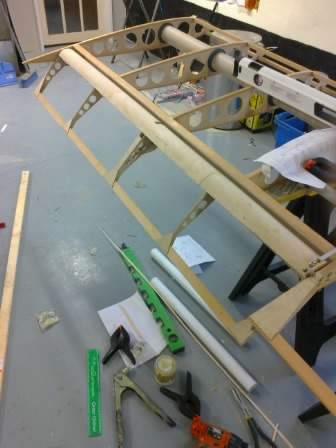
The concave wing ply web comes up nicely when the 1.5″ plastic drain pipe and clamps have been removed then the excess trimmed off … feels like a real aeroplane now !

The plan offers details of a single foot rest but mentions you can put one on each side.
To save the awkwardness of ALWAYS having to tell people they must only get out of one side, I have decided to add a step each side. The plan states 3mm but checking with Paul its 6mm ply which my Dad kindly sourced for me at a model shop in the UK.
The only ply available in Jersey is a veneer top and bottom and rubbish in between !
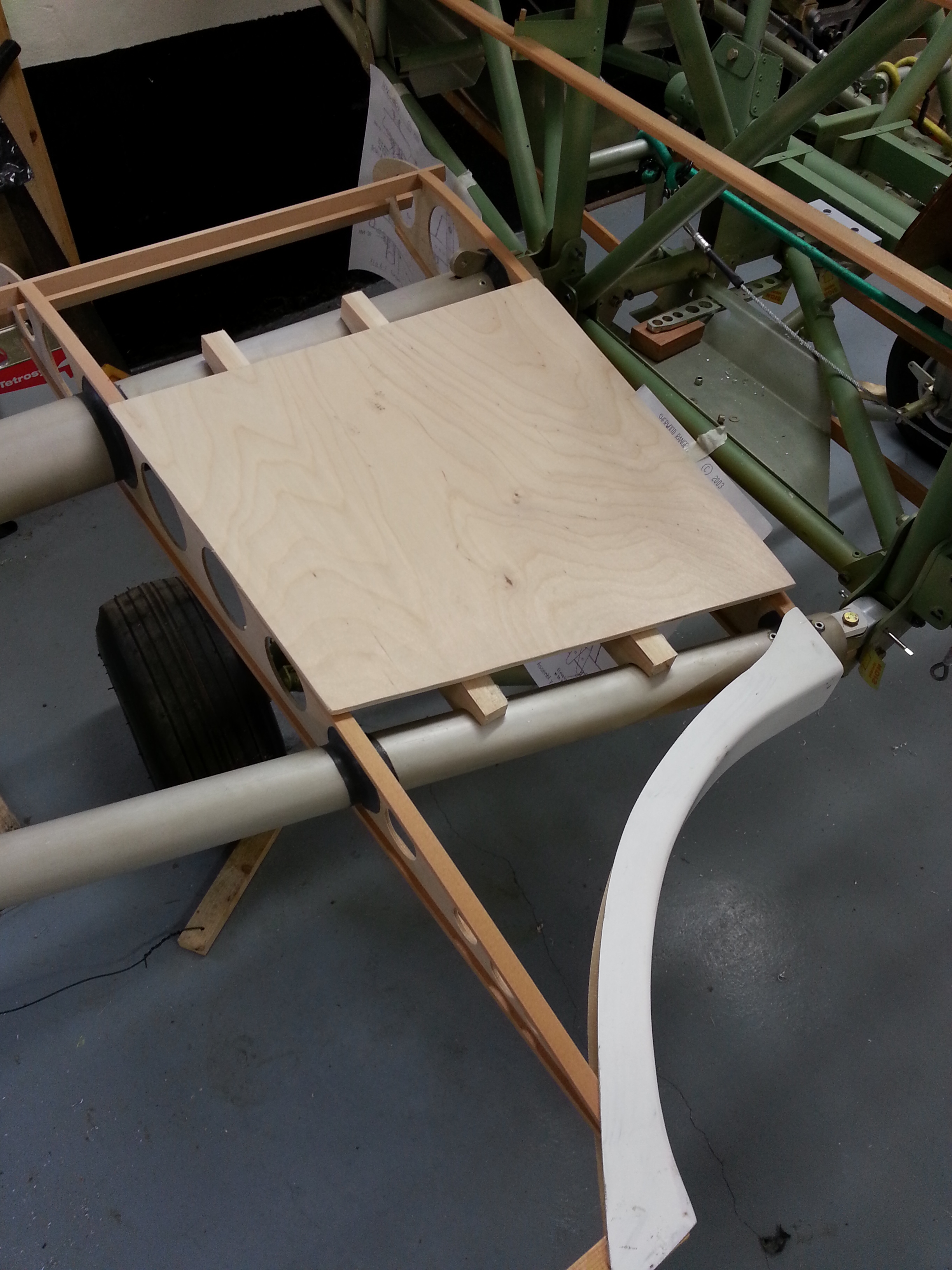
The steps have 2 x 1 hardwood batton doublers spanning main and drag spars and these are then planed down to follow the contour of the ribs. The ply foot plate is then shaped and the whole lot epoxied to spars and battons.
Once in position the leading (and trailing ?) edge of the footrest is blended in by slighlty building up the ribs and then sanding down. I guess you then dont get a step change when the material (Oratex) is applied.

Now the fun starts of fitting the ailerons….
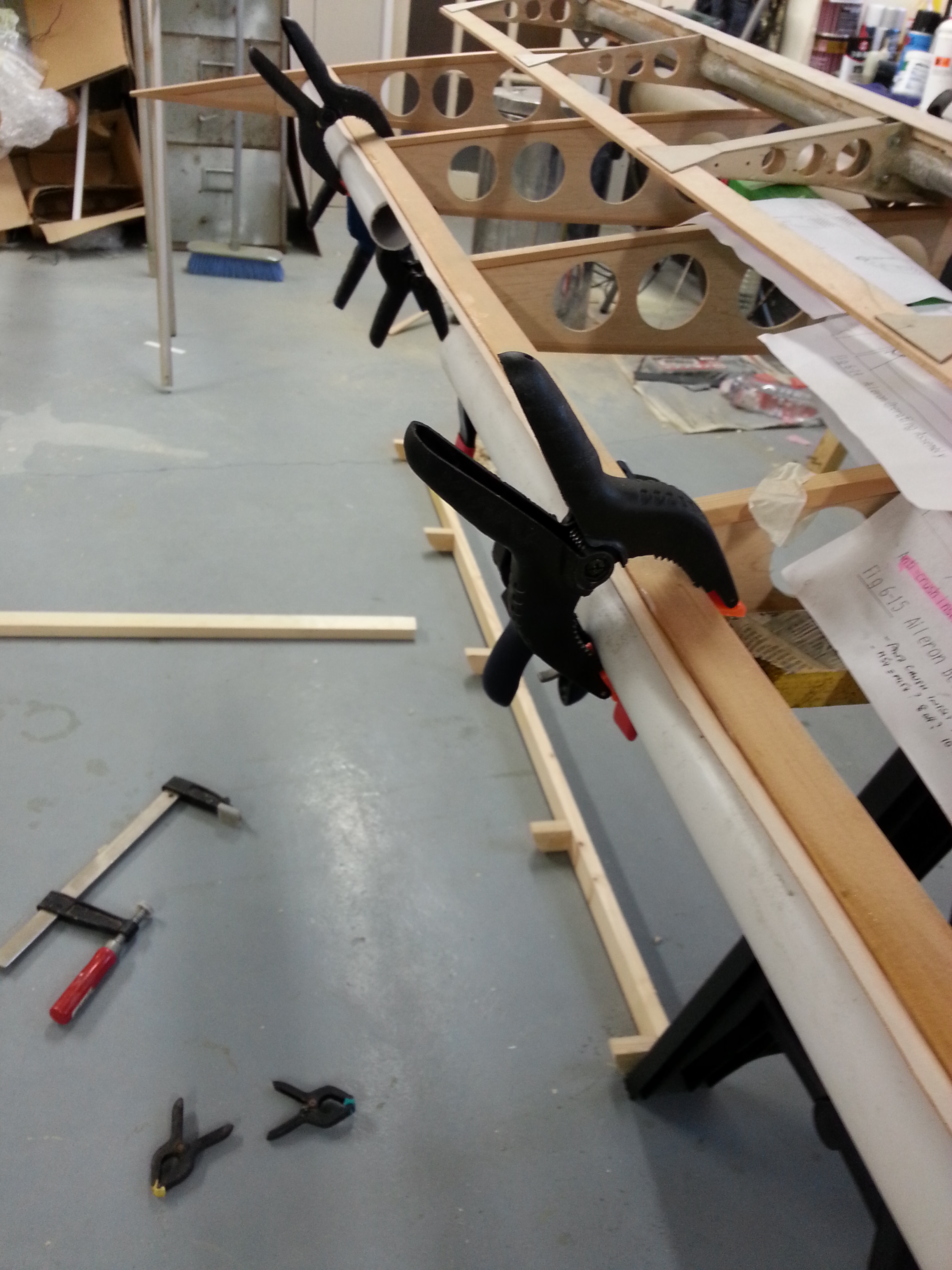
The receiving part of the trailing edge has a curved web of ply to be applied. Firstly this needs to be scarfed over about 10 mm to provide a single full width piece of ply. The ply then needs to be wet and jigged to provide a slight curve. This will make fitting it to the ‘plane easier as the ply has significant spring in it.
The cool and slightly damp barn is worrying as I want the glue to go off properly. My friend Colin lent me a petrol powered jet style heater that I used to warm the whole body up in the summer prior to painting. Havent used it since but plugging it in and flicking the switch get a jet flame out instantly and the barn begins to warm up in seconds.
Even so – it proves difficult to ‘train’ it to the curved trailing edge. After many dry tests I’m still not happy its seating properly with the clamps. I then try some small plastic drainpipe pieces that provide constant span pressure against the curved concave surface. This seems to do the job and a number of judiciously placed clamps finish the squeezing exercise. I will now leave the aerolite to go off properly.

Some time ago I decided I would like to add a smoke system – on the basis that if you dont add it now (whilst you have a fully open structure) you never will !
I would not intend to use it every flight but it would be nice to have the option to ‘Smoke on’ if the sky was blue and the sun was out (if it ever will be such again !!)
The original supplier I found in the US decided to cease production so my initial MOD2 request LAA stopped after Francis Donaldson at LAA kindly replied and indicated they would be happy to see the MOD3 as long as I added a manual cut off over and above the electrical cut off.

I then located Smokin Airplanes who offer a very neat unit and will ship all the mechanics (minus tank) and their very helpful site shows worked examples of both fitting and FAA submission details.
I am now working closely with Paul at TLAC who is kindly advising on location/weight/balance

Propeller arrived and was shipped to Jersey in a large heavy duty tube to protect it …
What a finish – most people in the office (whether interested in ‘planes or not !) seem to have come in and stroked it ! Fantastic layered beech and great finish.
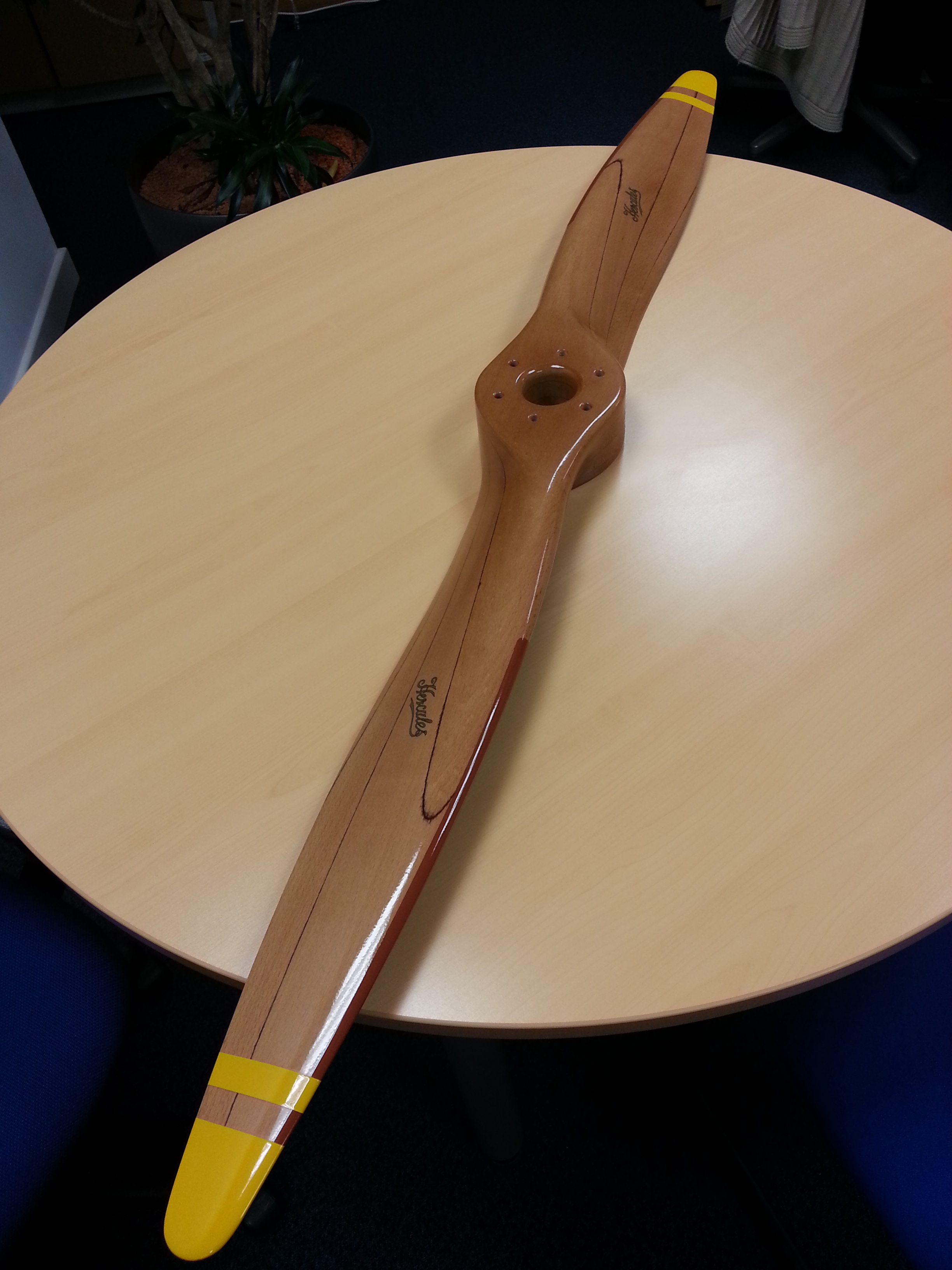
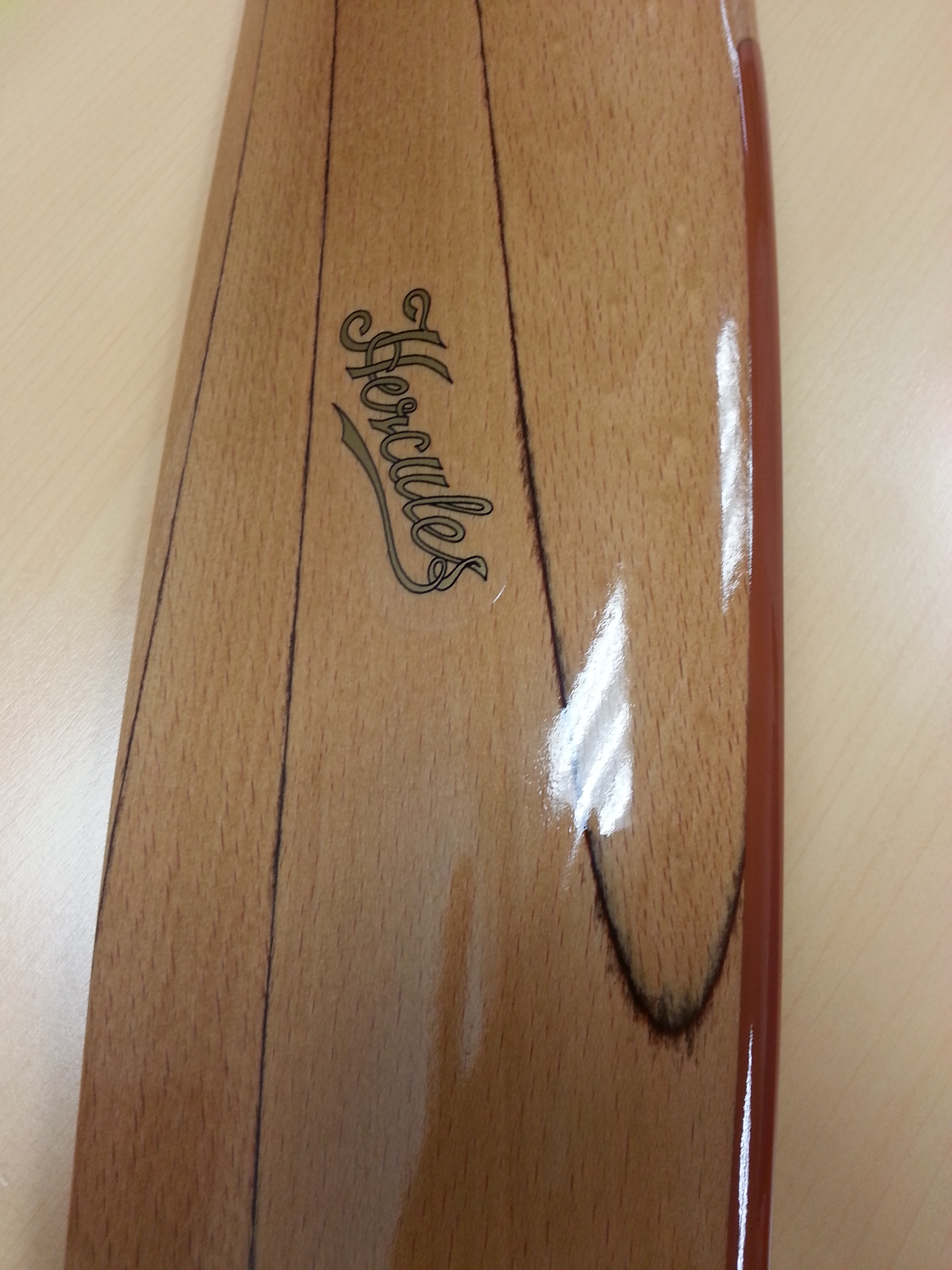
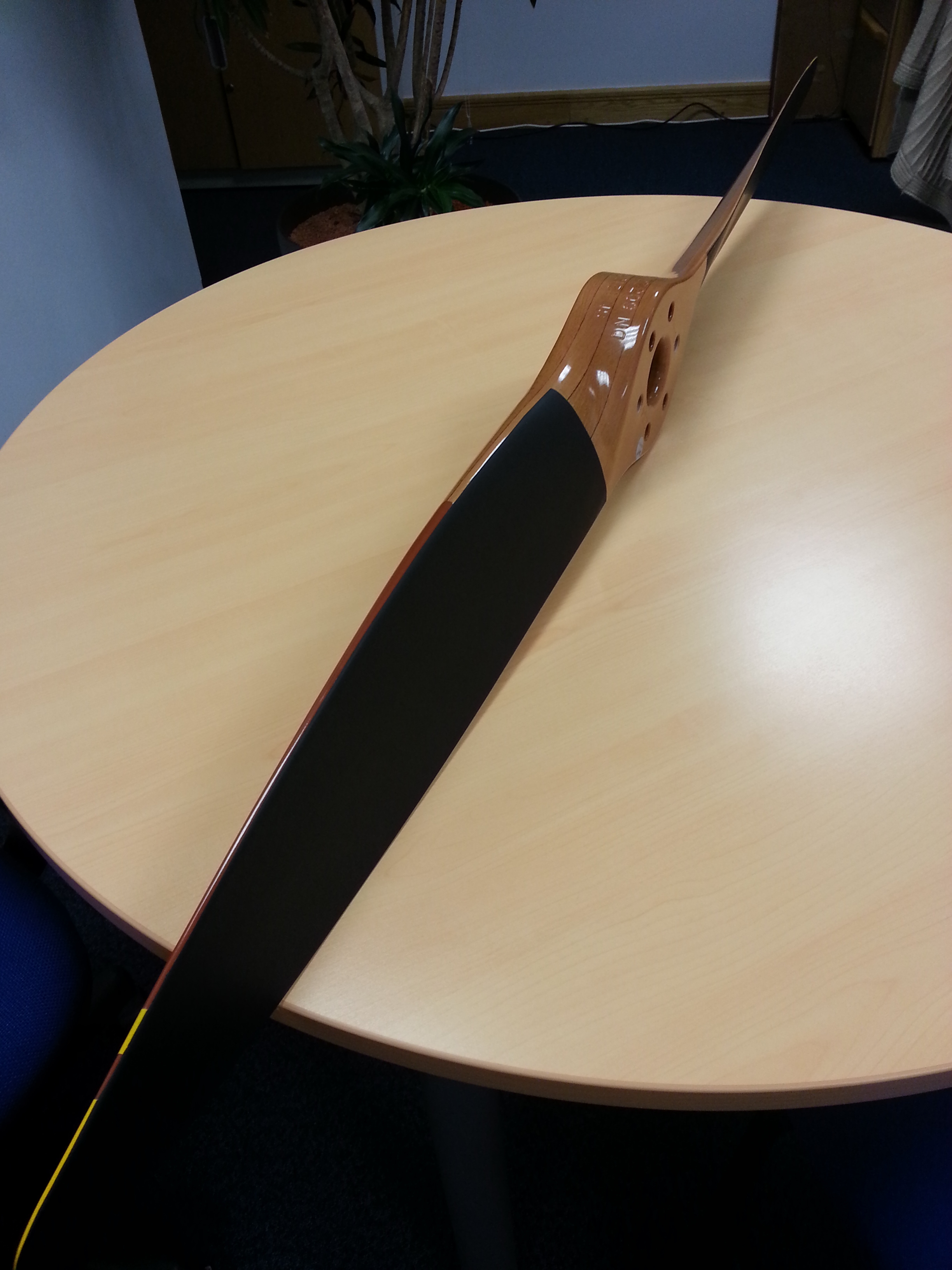
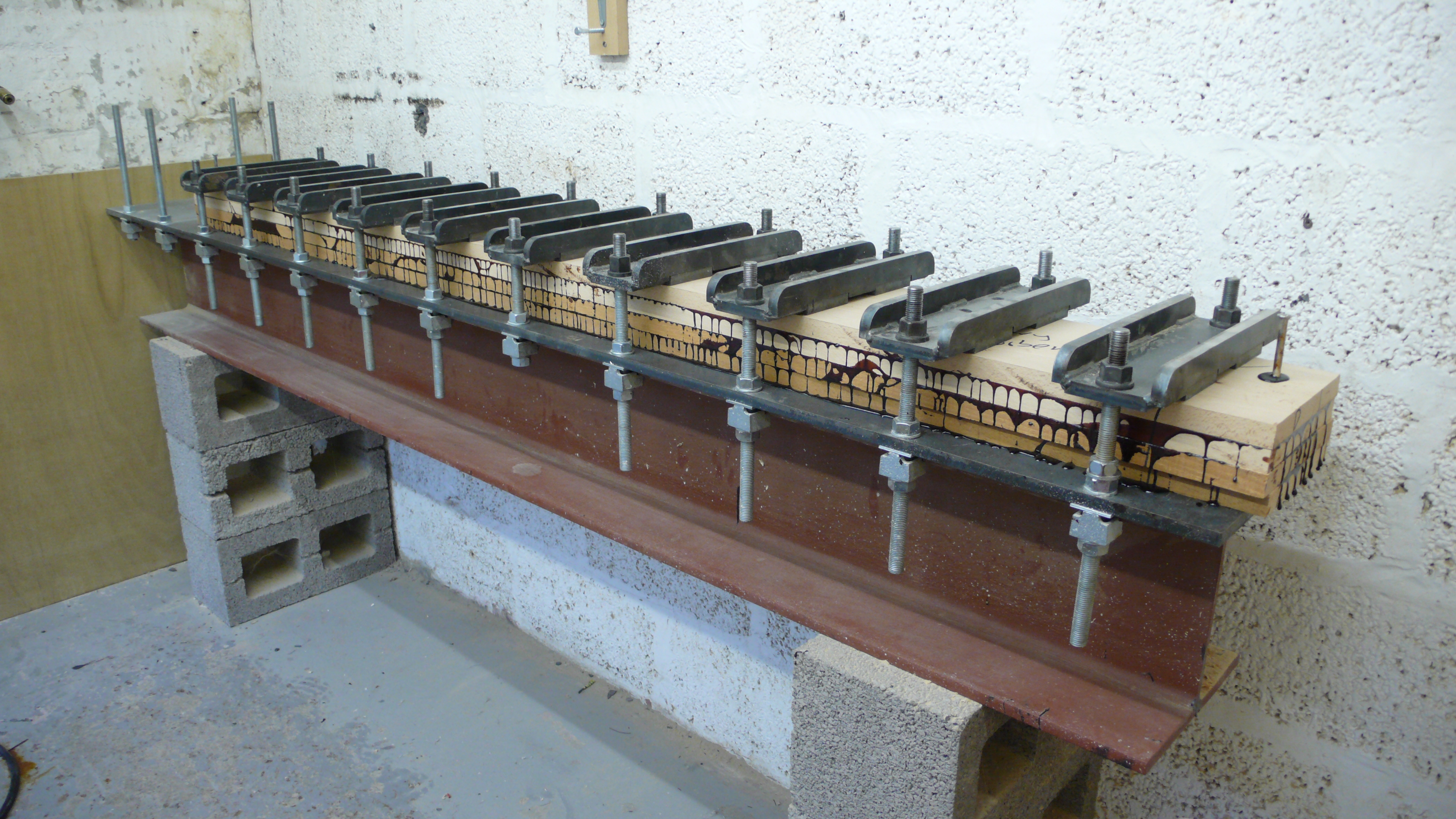
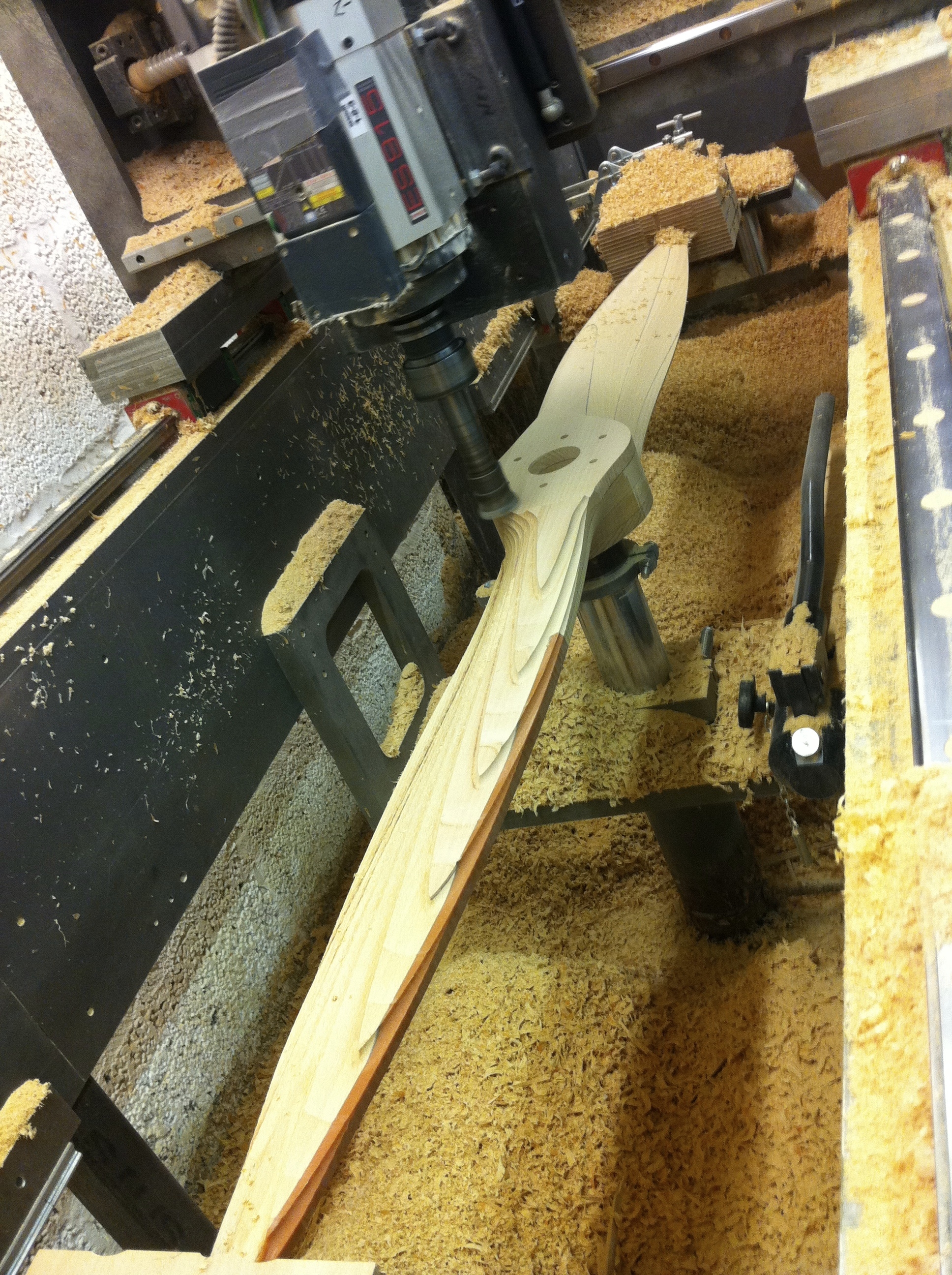
Rupert from hercules has kindly taken some picture of it during manufacture for the blog so that will be good to see the history.
Realise I now need the prop bolts so Paul at TLAC is kindly helping with those

Leading edge is formed from slightly stiffer 1.2mm plywood. Years ago, when I used to build the odd model ‘plane here and there we used to pre soak ply to ease the bending so asked Kevin Crumplin on this when I saw him in Henstridge just before Christmas. Absolutely was the reply ! – a pond or bath would do !

Soaked the first of 13 pieces in the bath last night – this section will form the cabane leading edge. Once cabane is done I can get it fitted back onto the body and plan to test fit the top wings.
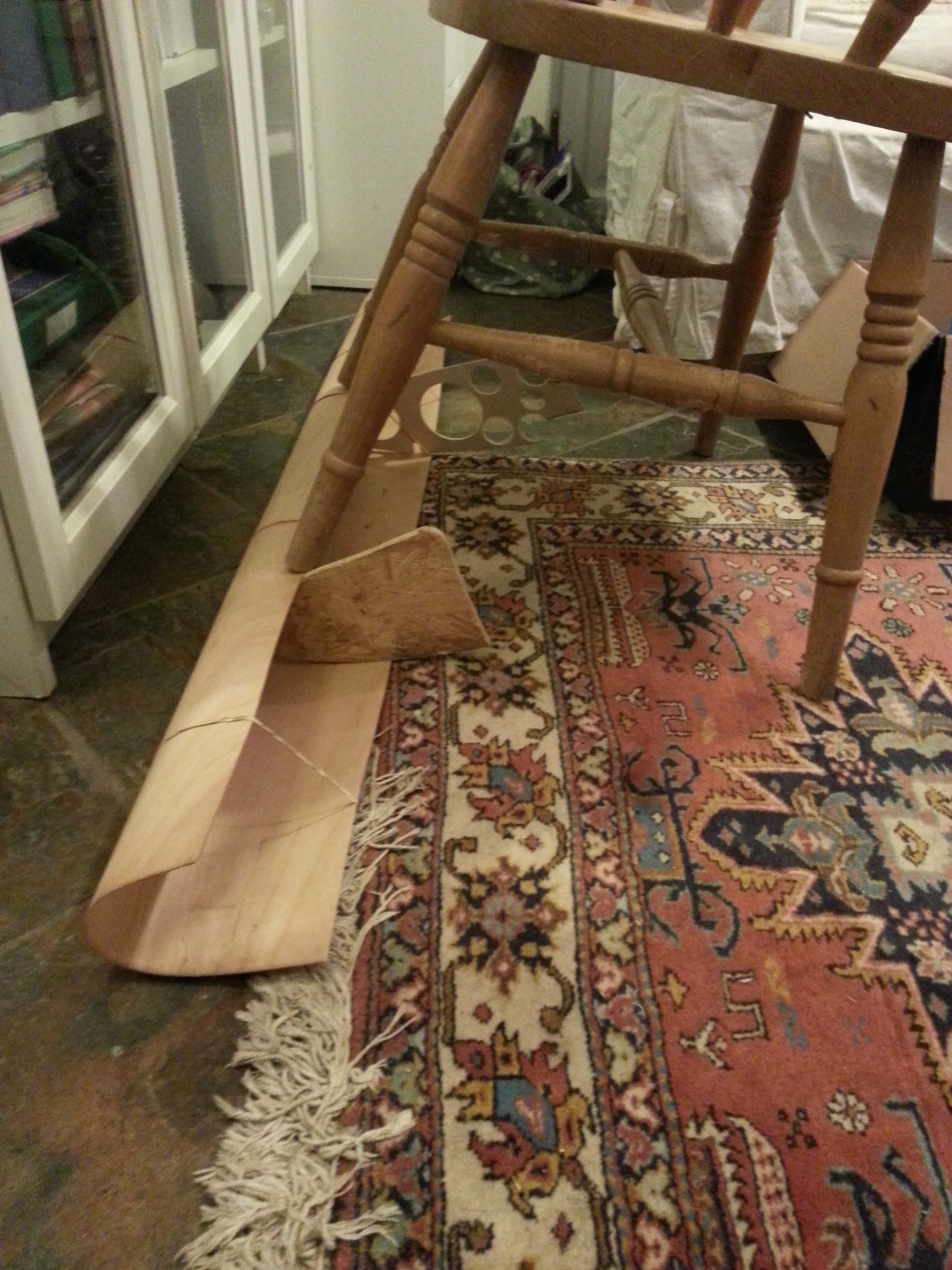
I made up a small jig to hold the now very wet and partly formed leading edge in position for 48 hours to let it throughly dry … the small strip inside the foot of the jig is to push what effectively will be the leading edge in to form a tighter curve … this took a few goes to get the jig right to effectively ‘over bend’ the curve … this means when it’s dried you get a springy BUT grippy leading edge .. which makes subsequent clamping whilst glueing a very easy affair
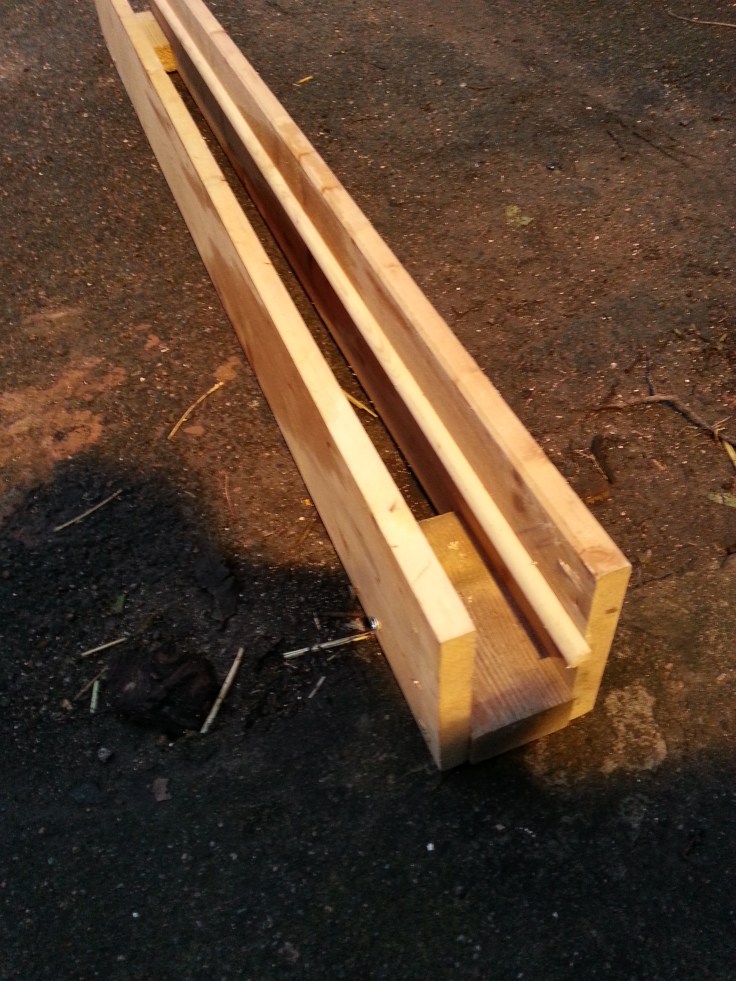
As you can see – with a bit of ingenuity – rubber bands and a chair of just the right weith to hold but not squash … This morning its dry and pretty much fully formed so should be much simpler to hold around the profiled leading edge whilst the Aerolite glue takes.

Flew to Henstridge on Sunday to pick up a puppy for a friend (using a local PA28). Forecast was grot, then Jersey changed their mind and said it wasnt going to be too bad after all ! Bournmouth were giving broken at 1000 so took off. 1 Hour later Henstridge was BKN at 300′ ! but managed to get in safely.
Popped across the other side of the runway to see a genuinly nice gentleman of aviation (Kevin Crumplin). Could spend days with Kevin and still only pick up a fraction of his expertise. He was busy doping some part of a ‘plane and was happy to talk about his incredible feat of rebuilding 3 Tigers simultaneously !
The wing repair of the Jungmann was just incredible to see a true work of art. The centre rib carved out and the internal wire cross bracing – just amazing.
Got a few snaps of Kevin’s Sherwood which were really handy to see … see he has gone for the additional storage I had considered (in the headrest) and, as Kevin says, everyone who flies the Sherwood says it is such a beautifully balanced aircraft !
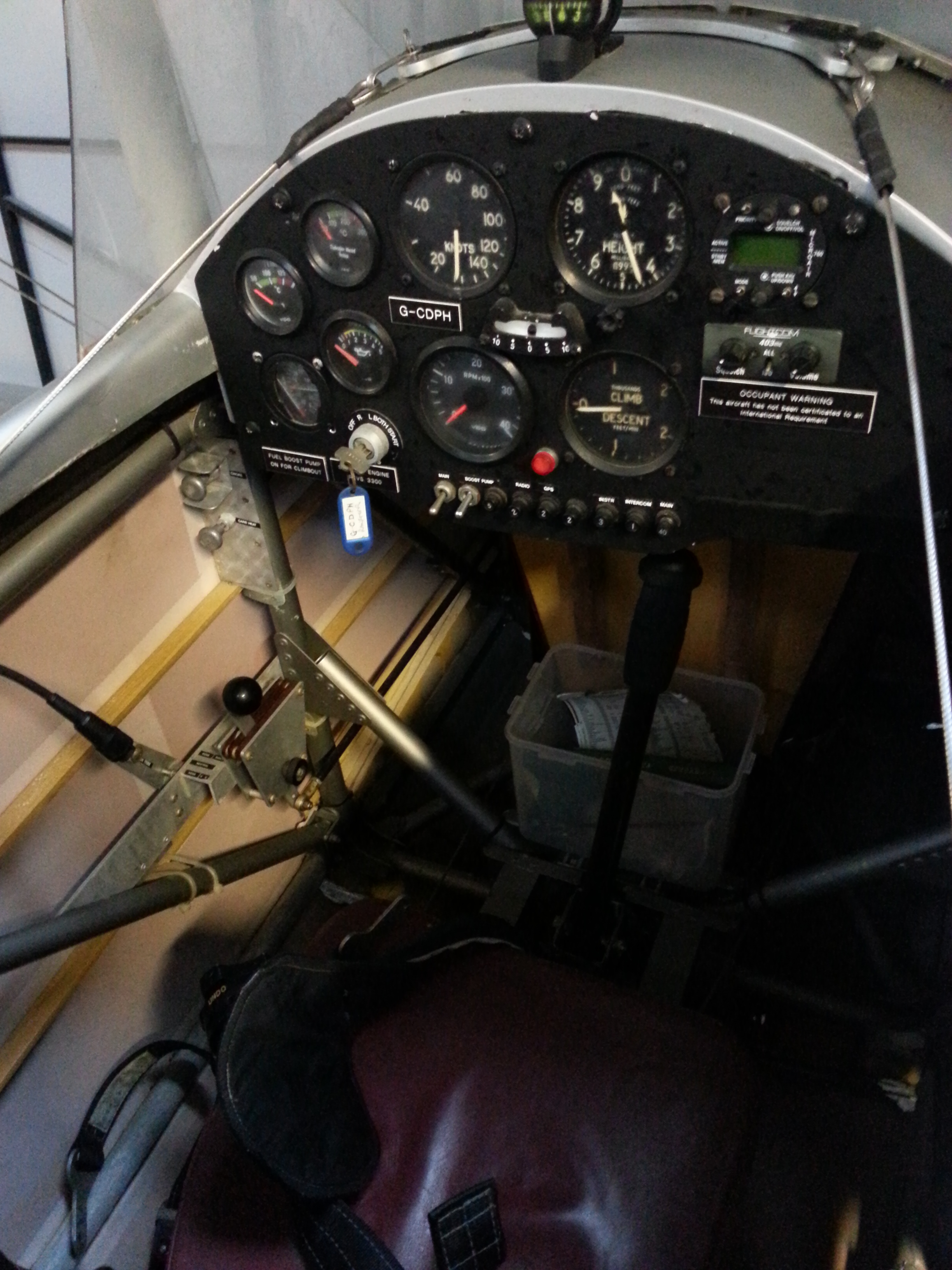
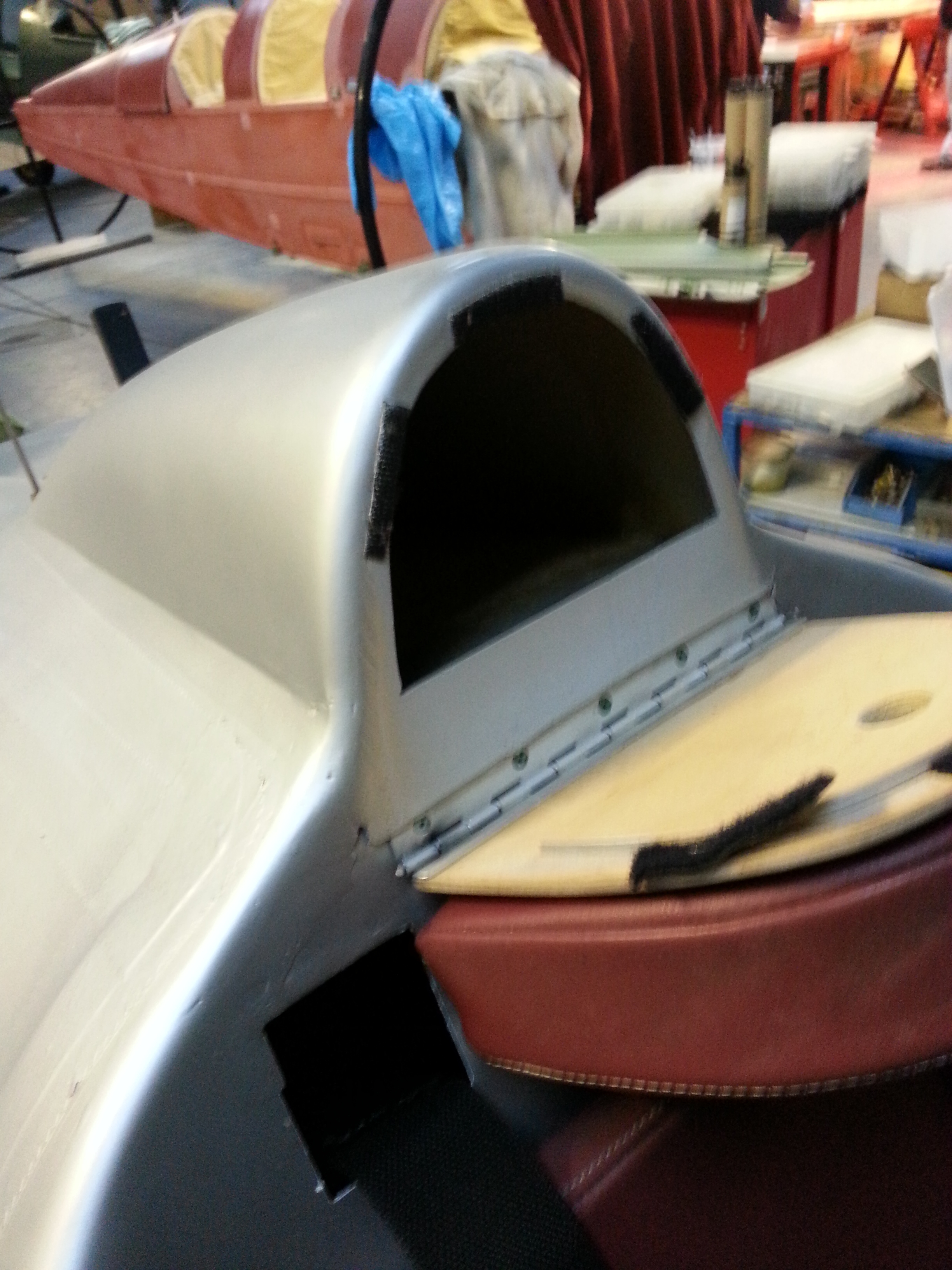

Last night I used the Rivnut adaptor for the first time. This was to make blind nut fittings for the seat bases so that they can be easily removed and refitted if required post covering.
Took a couple of goes to work out just how the nose adaptor on the rivet gun worked but easy once the first one was done.
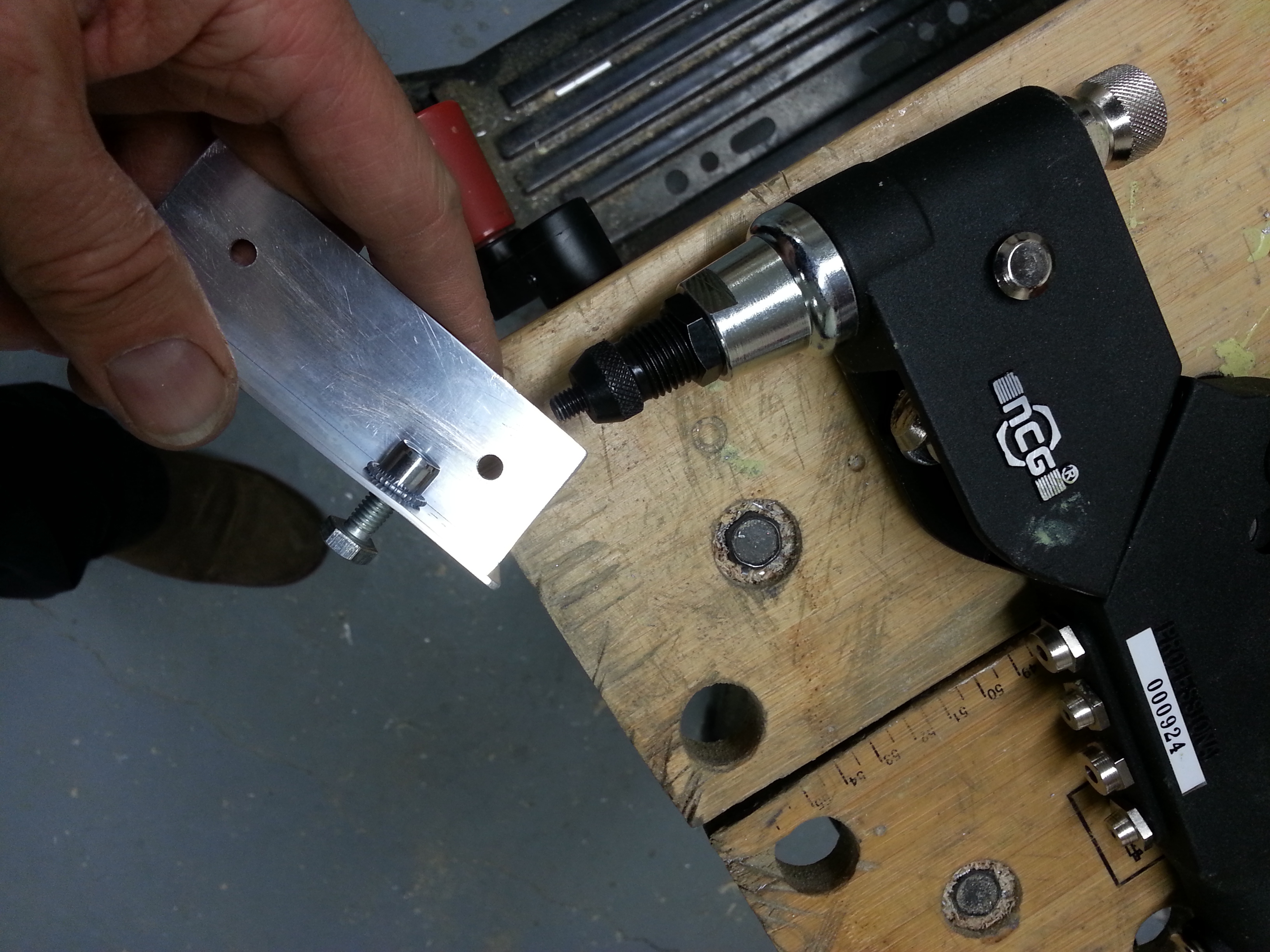
I made a small mistake on one of the holes and made it fractionally too large so when the rivnut was tightened it didnt sit flush and part of the rim was depressed into the bracket – so the whole bracket was trashed and a new one made up.
(Later note – the rotating head of the gun means that you can also use it in confined spaces .. like the cockpit – as the squeeze action of the levers is transferred to a ‘pull’ action on the rivnut but through 90 degrees .. neat device and not too expensive)

Having flown for over 20 years in and around Jersey and its neighbouring French coast you get used to checking for (and finding) Carb icing.
Paul at TLAC has access to a neat little unit that bolts onto the side body of the carb and has two switches, one for a single element and a second to boost.
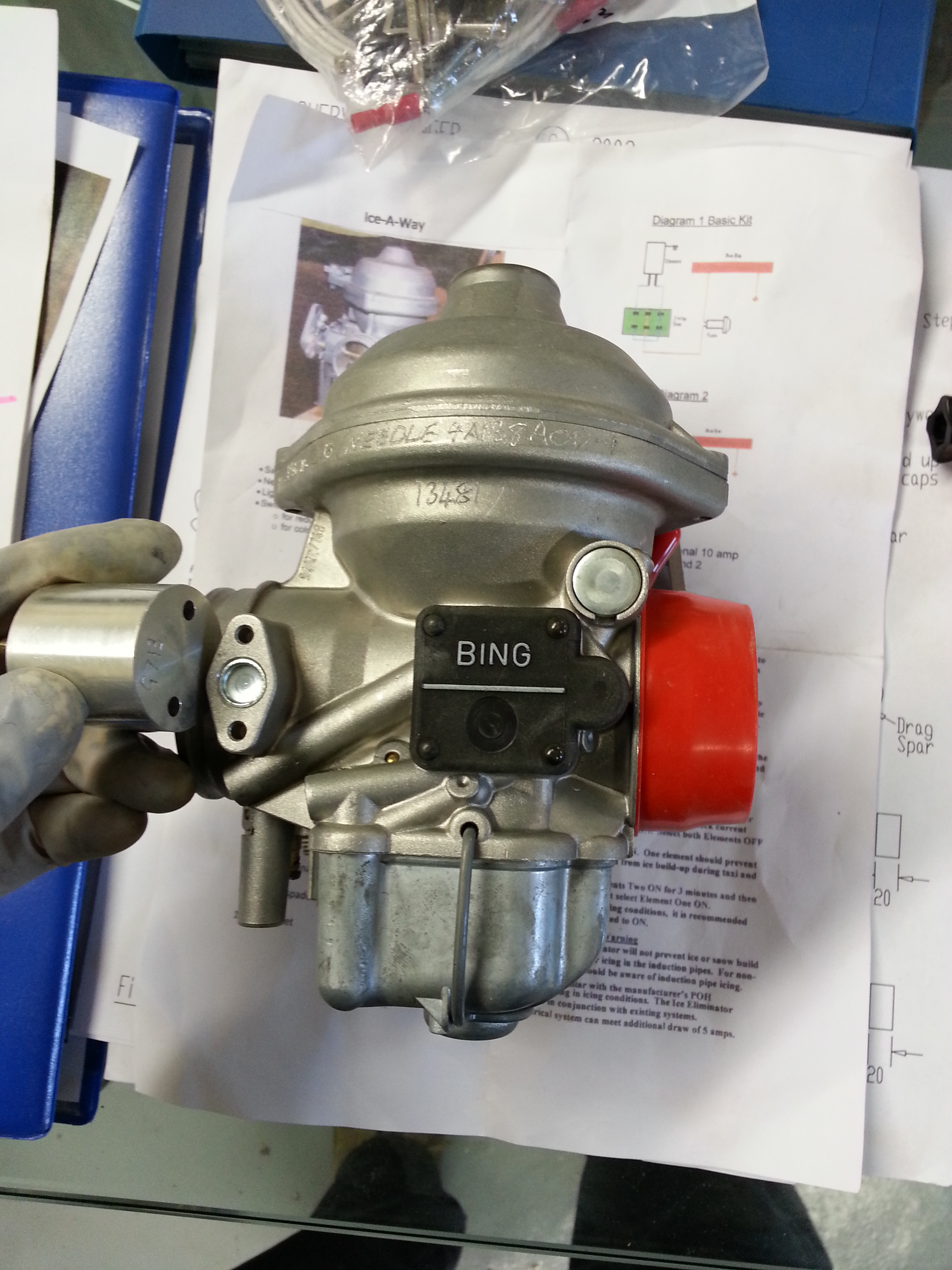
Just need to drill out the holes to 11mm deep and the right diameter to prepare to accept an M4 reamer tap. Checking with Paul on pre drill size as once you have drilled the carb body … Thats it !!
The carb was relatively easy to get off – the engine is unused but around 5 years old, so the fuel pipe was fairly tricky to get off …. NOTE to SELF – What frequency before fuel pipes should be replaced (even unused ones will age harden I guess ?)
Update 6 Jan 2014 – Bob from CIAS has advised pipes are OK … so good news
I have now pre drilled the carb body with 1/8″ drill – well 3.2mm as no one on the planet sells imperial anymore !
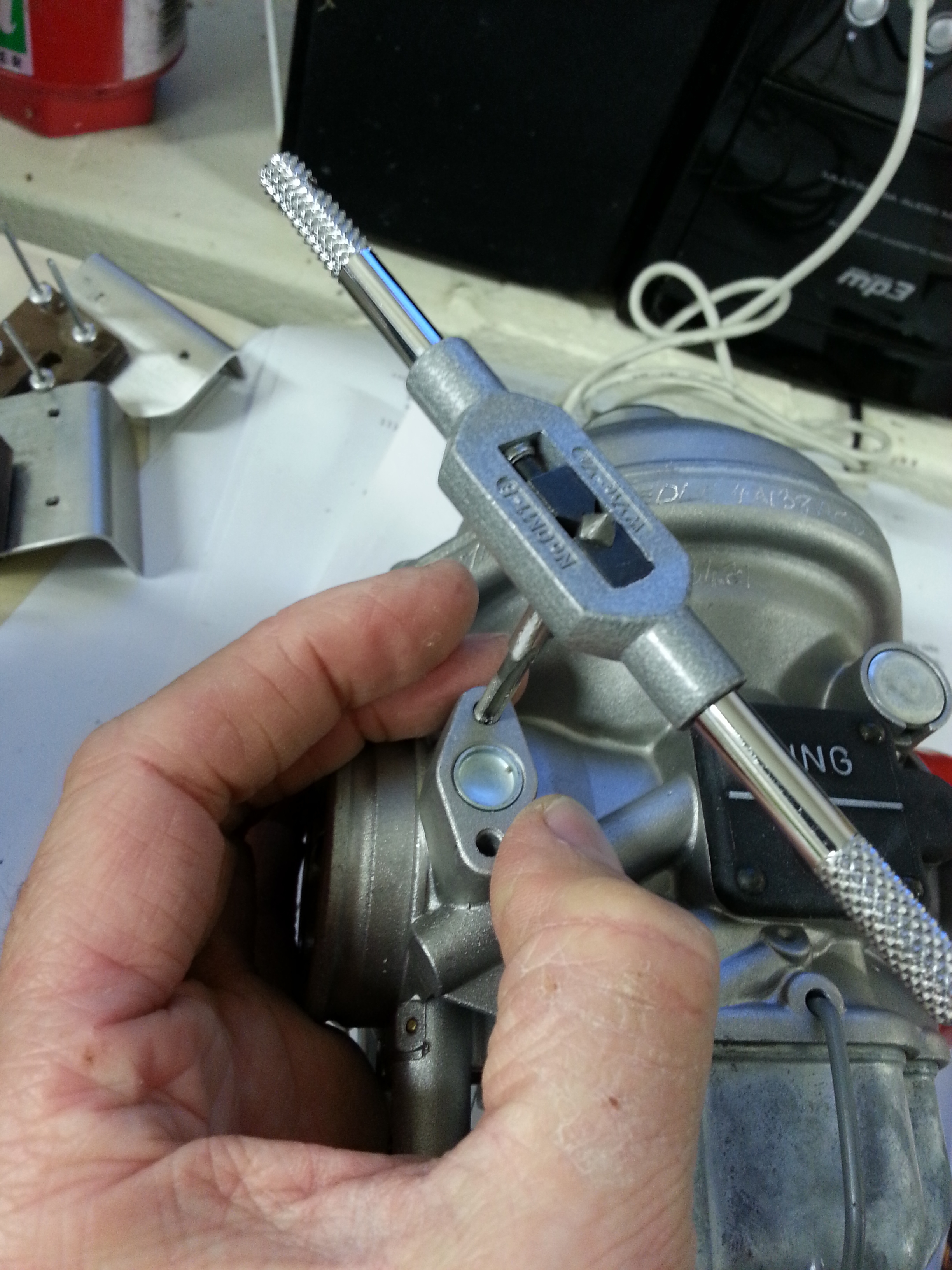
The holes are drilled to a depth of 11mm (he said carefully mixing his standards !) and then tapped. Havent tapped since I was at school ! – turn, cut and then back to break the cut …. a couple of minutes later all done and nicely bolted up.
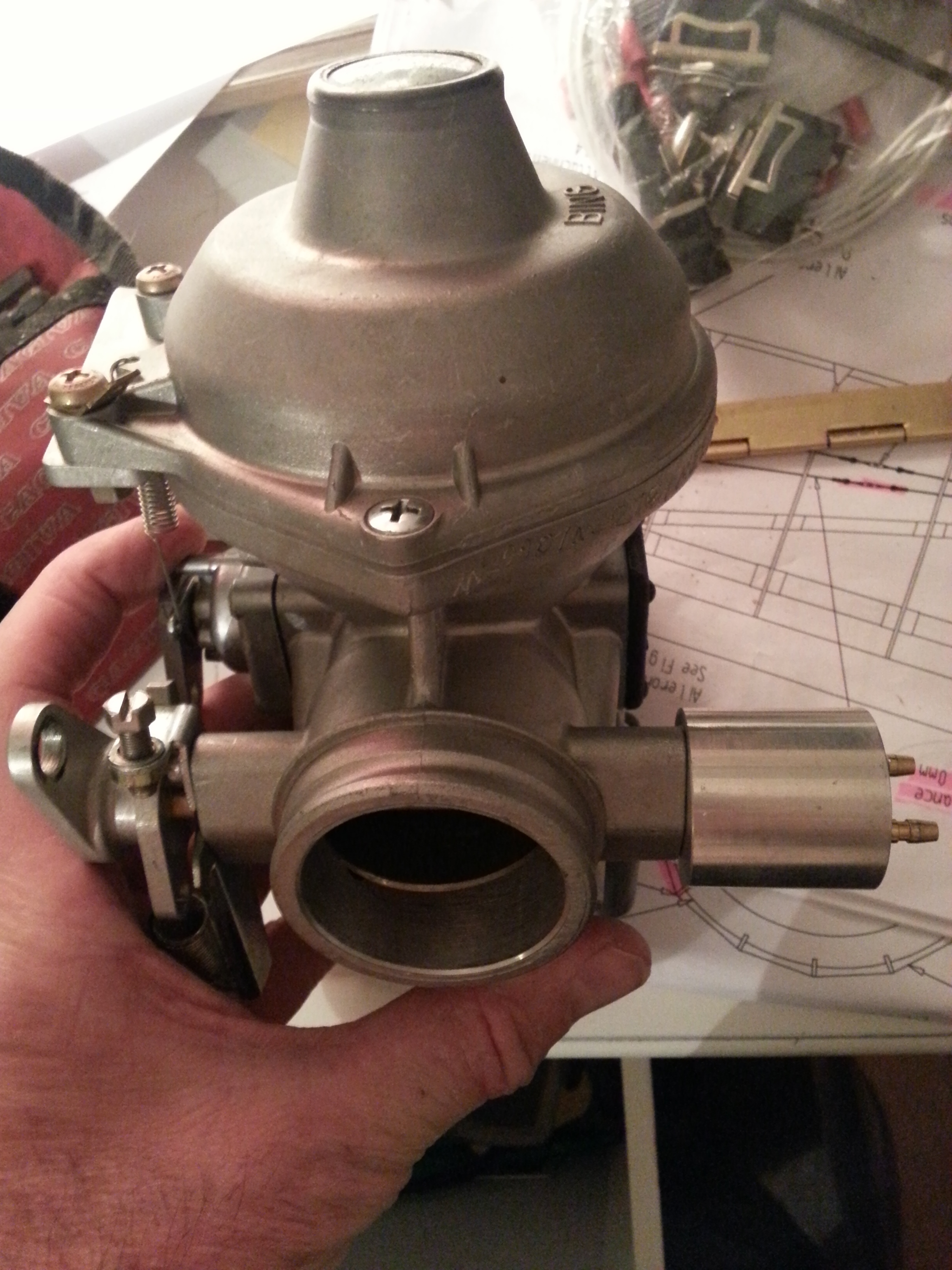
Can go back on the engine and start to run the wires. Just started a hardboard mockup of the dashboard so will locate the two heater unit switches and tell tale lights in a suitable place.
 Jersey Sherwood Ranger